For a country that has lived with dengue as a seasonal inevitability, the emergence of DengiAll, India’s indigenous single-shot dengue vaccine now in advanced trials in Delhi, is more than a scientific milestone. It is a test of whether India can finally shift from managing outbreaks to preventing them. After years of incremental progress, the possibility of a tetravalent vaccine designed for real-world conditions marks a turning point in how the disease is understood ~ and confronted.
Dengue has always been an awkward adversary. Unlike many viral infections, it does not reward partial victories. Infection with one strain offers little comfort, and in some cases increases the danger when the next strain arrives. This peculiar biology has defeated earlier vaccine attempts and complicated public trust. The scars of past controversies, both global and domestic, still shape public perception. Any new candidate, therefore, carries not just scientific expectations, but the burden of restoring confidence. What makes the current effort notable is its design philosophy. Instead of incremental protection, it aims for balance across all four serotypes, recognising that in dengue half-measures can be harmful. The emphasis on a single dose is equally significant. In a country where healthcare access is uneven and follow-up is uncertain, simplicity is not a luxury – it is a prerequisite.
Advertisement
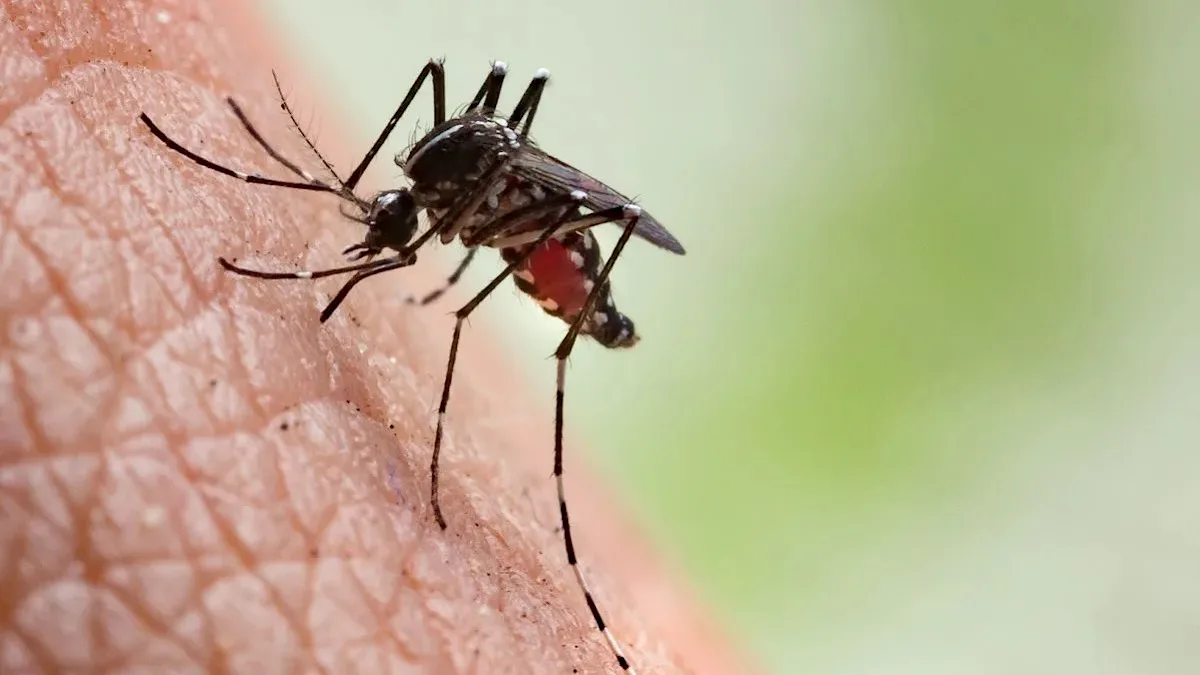
If prevention is to be universal, it must also be practical. Yet, excitement should not be confused with certainty. Dengue does not follow laboratory schedules. Its spread depends on climate, urban density, migration, and the invisible patterns of mosquito ecology. Trials can demonstrate promise, but real validation will come only when populations are exposed to all circulating strains. This is the slow, uncomfortable truth of infectious disease research: nature, not science, controls the clock. There is also a broader context. Climate change is expanding the range and intensity of mosquito-borne diseases. What was once a tropical concern is now a global one. For India, this creates both pressure and opportunity. Pressure, because failure will be costly in lives and public trust.
Opportunity, because success would place the country at the forefront of a field that will only grow in importance. An effective dengue vaccine would also alter the politics of public health. It would reduce the annual cycle of emergency responses, hospital overcrowding and municipal blame games. It would shift resources from crisis management to long-term planning. And it would challenge the assumption that complex biomedical innovation must always be imported. But perhaps the most important dimension is psychological. Dengue has long been treated as unavoidable ~ a fact of life to be endured rather than defeated. A working vaccine would puncture that fatalism. It would signal that even deeply entrenched public health problems can be addressed with patience, investment, and scientific ambition. The road ahead remains uncertain. Regulatory scrutiny will be intense, public expectations high, and the margin for error thin. That is as it should be. In a field shaped by past missteps, caution is not obstruction; it is responsibility