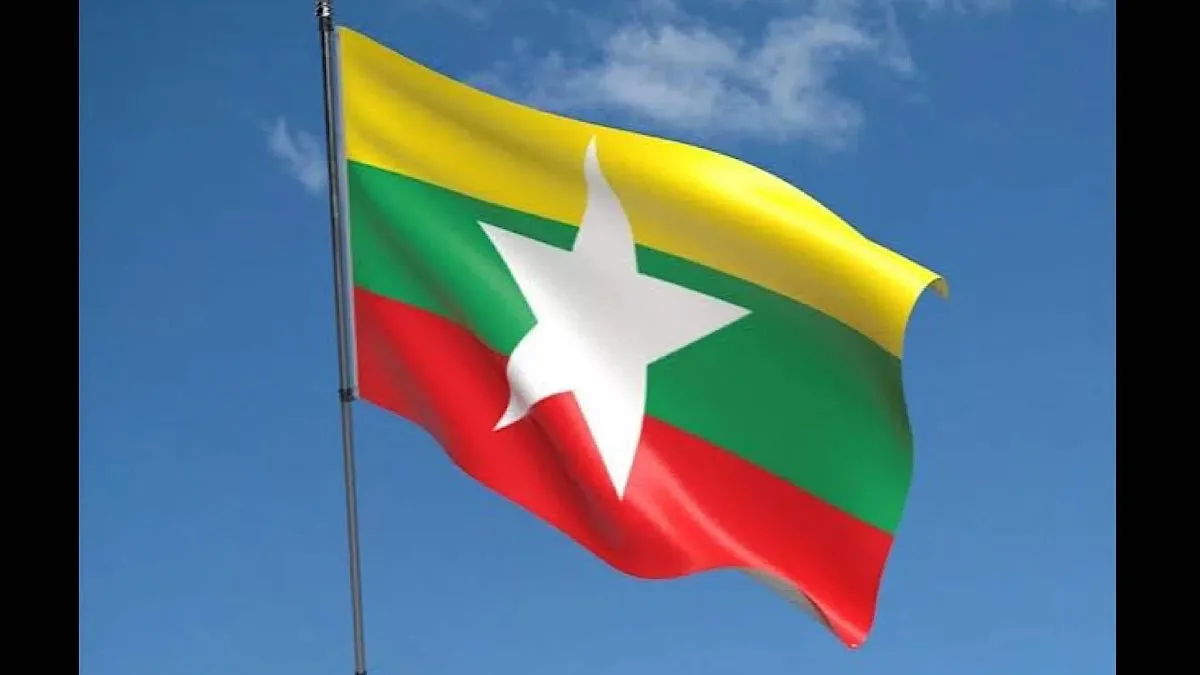
The elevation of General Min Aung Hlaing to the presidency marks not a transition in Myanmar’s politics, but its refinement. What appears to be a constitutional process is, in effect, the formalisation of power already seized during the 2021 coup in the country. The uniforms may recede from view, but the authority they represent does not. For five years, Myanmar has been governed through force, amid mass arrests, aerial bombardments, and a grinding civil war that has fractured the country’s territorial and social cohesion. Yet coercion alone has limits. It isolates regimes internationally, hardens domestic resistance, and erodes administrative functionality.
The shift toward a civilian façade is therefore not ideological; it is tactical. The recent election, conducted with key opposition forces excluded and vast conflict zones effectively disenfranchised, was less an exercise in representation than in calibration. It allowed the military to measure loyalty, distribute patronage, and construct a legislature that mirrors its chain of command. With overwhelming control in parliament, the outcome of the presidential selection was never in doubt. What matters is not the vote, but the veneer it provides. This is a familiar pattern in modern authoritarianism: power does not retreat, it reconfigures. By stepping into a civilian office, General Min Aung Hlaing is attempting to convert de facto control into de jure legitimacy ~ both at home and abroad. Sanctions and diplomatic isolation have imposed costs, but they have not dislodged the regime.
Advertisement
A nominally civilian government, however stage-managed, creates openings: for engagement, for economic negotiation, and for the quiet normalisation of an abnormal order. Yet this transition carries its own risks. The constitutional requirement that the president relinquish direct command of the armed forces introduces a potential fracture within the military hierarchy. Authoritarian systems depend not just on dominance, but on cohesion. If senior commanders perceive a dilution of authority or a concentration of power outside traditional structures, internal rivalries may sharpen. The creation of parallel advisory bodies suggests an awareness of this danger ~ and an attempt to pre-empt it. For Myanmar’s citizens, however, the implications are stark.
The architecture of repression remains intact, merely repackaged. Armed resistance groups still control significant territory; millions remain displaced; political prisoners continue to fill detention centres. There is no evidence that a change in title will produce a change in policy. The deeper significance of this moment lies in what it reveals about the evolution of military rule. In the 21st century, legitimacy is no longer seized solely through force; it is manufactured through process. Elections are held, parliaments convened, offices reassigned. But when outcomes are predetermined and participation constrained, these institutions serve not as checks on power, but as instruments of it. Myanmar is not moving from military rule to democracy. It is moving from visible authoritarianism to institutionalised authoritarianism ~ a system designed to endure, not reform.