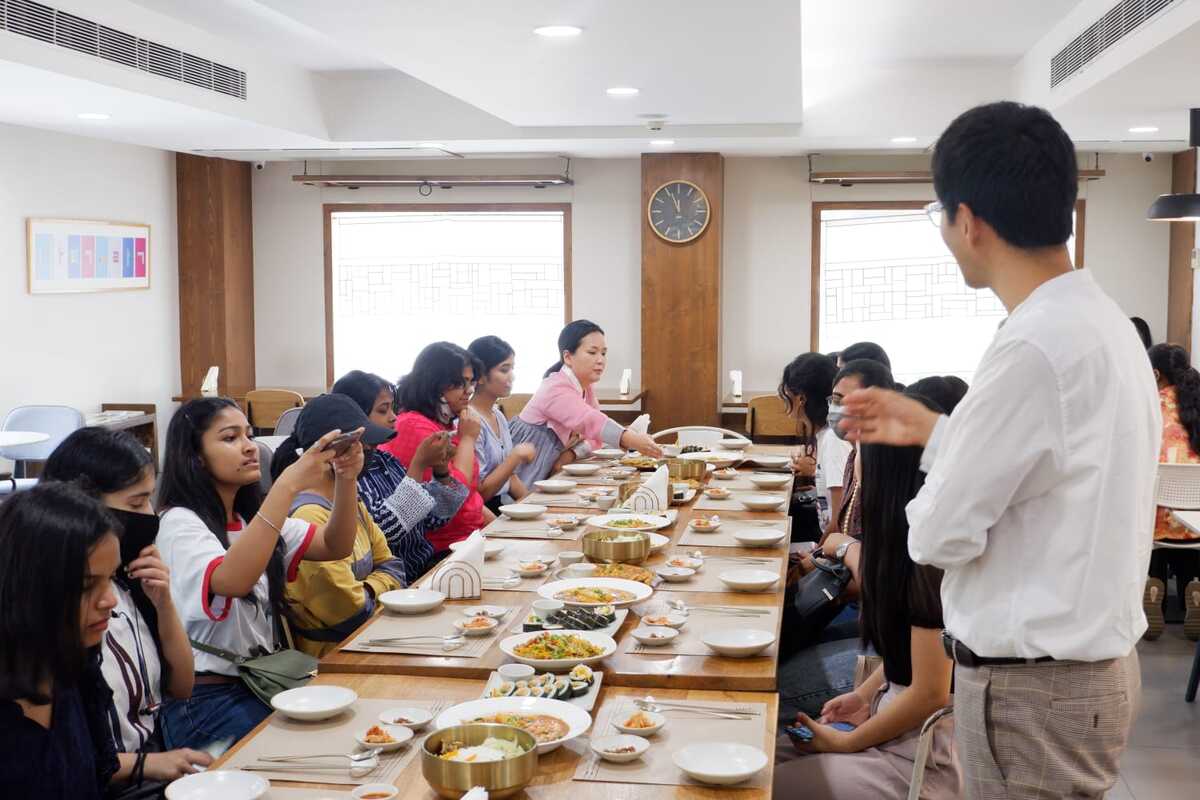
This World Health Day peek into Korean foods for good health
The tea culture in Korea is usually accompanied by traditional Korean snacks and desserts. Some of the most common desserts are Yakgwa, Tteok, Dasik, Gangjeong, etc.
On World Health Day try Korean Tea for good Health
Korean foods and drinks are always considered for their benefit. They play a major part in providing good health. In the whole world, they are praised a lot. So, on the occasion of World Health Day Korean Cultural Center India organized Korean traditional tea and food experience event.
The event was organized for creating awareness of health by maintaining good and healthy food consumption habits.
Advertisement
The cultural similarity between India and Korea is no more unknown, but what brings them even closer is their love for tea and food. In Korean culture, it is more than just sipping tea, but is an experience that calms all five human senses.
Advertisement
It is significant to note that Korean teas are used as a means to meditate and as a way of reducing stress levels and improving overall mental and physical health. Korean tea is considered one of the most healthy tea as it is usually made with a variety of fruits, flowers, leaves, grains, and roots diversifying flavors and tastes which has many health benefits.
The tea culture in Korea is usually accompanied by traditional Korean snacks and desserts. Some of the most common desserts are Yakgwa, Tteok, Dasik, Gangjeong, etc. Mostly made with glutinous rice, honey, and spices, these Korean desserts are equally flavorful and healthy. And the food is seen as more than just a means of survival both in Korea and India, it is something that people of both countries bond upon.
The three teas which were presented at the event were:
1) Omija Cha
Omija-cha or magnolia berry tea is a traditional Korean tea made from dried magnolia berries—omija in Korean. Omija means “five flavors”, which are sweetness, sourness, bitterness, saltiness, and pungency.
Benefits: Omija cha helps in improving kidney and liver function, it is also good for blood circulation and it increases resistance to disease and stress.
2) Daechu Cha
Daechu Cha (대추차)
Daechu-cha is a traditional Korean tea made from jujubes. The tea is deep ruby-brown to rich dark maroon and is abundant in iron, potassium, and vitamins B and C.
Benefits: Daechu cha has antioxidant properties to protect from cancer and plenty of vitamin C and calcium. They help fight depression, circulate blood, and strengthen teeth and bones.
3) Yuja cha
Yuja cha (유자차)
Yuja tea is made from the Yuja fruit, which is commonly known outside of Korea as yuzu. Yuja does not contain much juice, unlike other citrus fruits.
Benefits: Yuja tea is well known for its health benefits. It is said to have more vitamin C than raw lemon juice. The vitamin C in Yuja tea helps the immune system to fight against infections and other diseases/illnesses.
Police have invoked Section 125 of the Bharatiya Nyaya Sanhita against the anaesthetist following a complaint by the child's family, even as the hospital says an unexpected cardiac arrest occurred despite standard treatment protocols.
Once regarded as a journey marked by prolonged recovery, considerable discomfort, and months of rehabilitation, knee replacement surgery is entering a new era of precision and faster healing.
“Doctor, will my face ever go back to the way it was before?" The question sounds simple, but for many people living with Systemic Sclerosis, it carries an ocean of fear, uncertainty, and silent emotional trauma.