Researchers have developed a new type of skin patch that may reduce body fat and obesity by turning energy-storing white fat into energy-burning brown fat.
According to the researchers, brown fats are found in babies and they help to keep the baby warm by burning energy. As humans grow older, the amount of brown fat lessens and is replaced with visceral white fats.
Advertisement
“What we aim to develop is a painless patch that everyone could use easily, is unobtrusive and yet affordable. Most importantly, our solution aims to use a person’s own body fats to burn more energy, which is a natural process in babies,” said Chen Peng, professor at Nanyang Technological University (NTU), Singapore
Advertisement
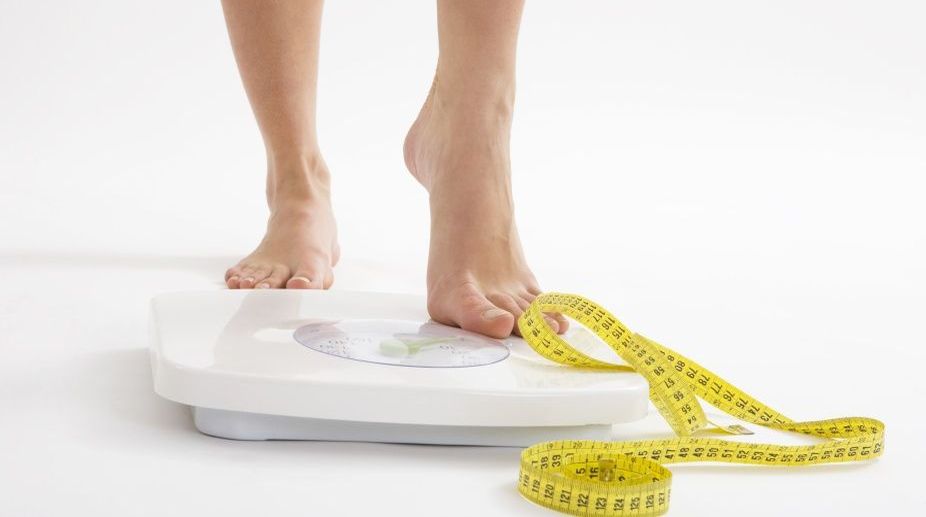
Representational Image (Photo: Getty Images)
The new type of skin patch contains hundreds of micro-needles which are loaded with the drug Beta-3 adrenergic receptor agonist or another drug called thyroid hormone T3 triiodothyronine.
When the patch is pressed into the skin for about two minutes, these micro-needles become embedded in the skin and detach from the patch, which can then be removed.
As the needles degrade, the drug molecules then slowly diffuse to the energy-storing white fat underneath the skin layer, turning them into energy-burning brown fats.
Published in the journal Small Methods, this approach could help to address the worldwide obesity problem without resorting to surgical operations or oral medications.
In a laboratory experiments conducted by the researchers showed that the patch could suppress weight gain in mice that were fed a high fat diet and reduce their fat mass by over 30 per cent, over a period of four weeks.
Representational Image (Photo: Getty Images)
“With the embedded micro-needles in the skin of the mice, the surrounding fats started browning in five days, which helped to increase the energy expenditure of the mice, leading to a reduction in body fat gain,” said Xu Chenjie, assistant professor at NTU.
The treated mice also had significantly lower blood cholesterol and fatty acids levels compared to the untreated mice.
"Weight reducing or anti-obesity drugs, currently available, ought to be used very judiciously," the Minister said while addressing the inaugural session of the 2-day "Asia Oceania Conference on Obesity" (AOCO).
Citing the National Family Health Survey (NFHS-5, 2019–21), he said 24% of women and 23% of men in India are overweight or obese. More than 1 crore people have hypertension, and about 64 lakh are diabetic and receiving treatment, according to data from January to June this year.
A team of researchers has said that lipolysis is more effective in women than in men, which could partly explain why women are less likely to develop metabolic complications than men, despite having more body fat.