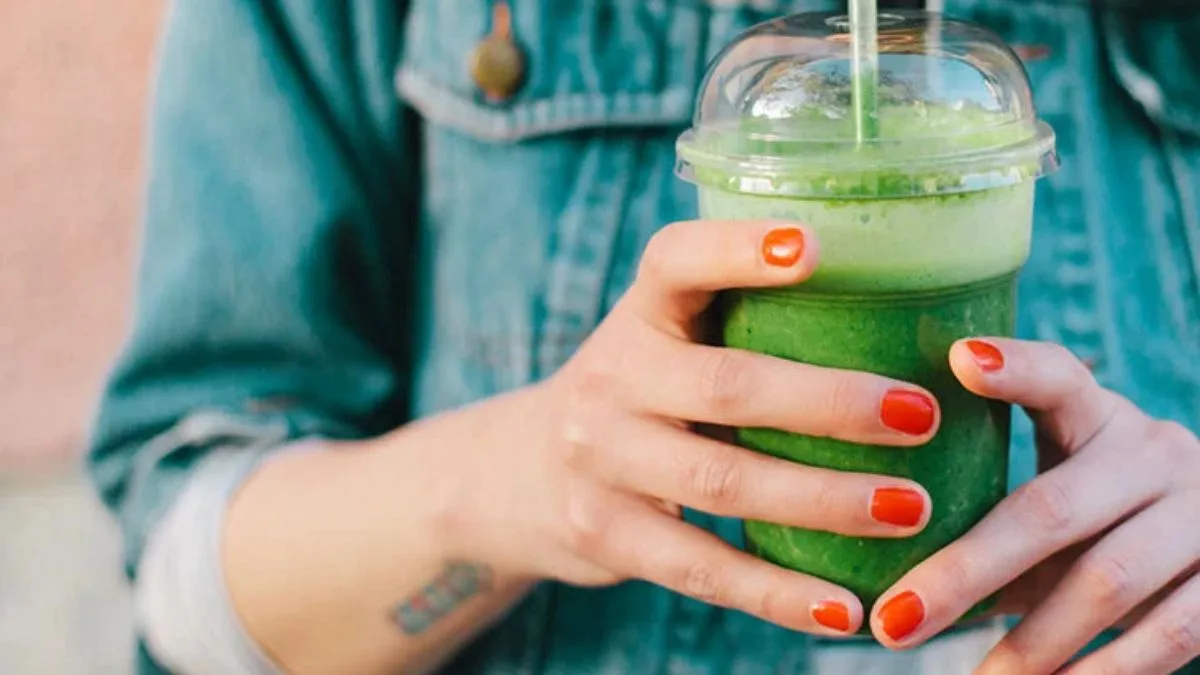
Matcha is everywhere. Not just in cups, but in moisturisers, nail polish, cocktails, protein powders, pasta, candles, tote bags, and hotel lobbies. What began as a shade-grown Japanese tea leaf, stone-ground into a fine powder and used in Buddhist meditation rituals for centuries, has become the defining aesthetic ingredient of our current wellness moment. The global matcha market was valued at around $4.6 billion in 2024. It is projected to reach nearly $9.6 billion by 2035. The numbers are impressive. The reality on the ground is messier.
How a ritual became a reel
The matcha boom in the West did not begin in a tea house. It began on TikTok. The hashtag #matcha has accumulated billions of views. The visual logic is simple: that vivid, unnatural green photographs beautifully. It signals health, calm, and a certain kind of intentional living that resonates with a generation exhausted by hustle culture.
Advertisement
Mentions of matcha on menus grew 46% over four years, according to market research firm Datassential. Retail sales of matcha powder increased 86% in three years, per NielsenIQ data cited by the Associated Press. One California coffee company reported being on track to sell four times as much matcha in 2025 as it did in 2022. The demand curve is not subtle.
But here is the problem with trends built on visual platforms: they are not built on knowledge. Most people buying matcha lattes could not tell you the difference between ceremonial and culinary grade, nor the name of the region it came from, nor why the shading process during cultivation matters. They know it is green and that it pairs well with oat milk. That is enough to spend $9 on it.
The grade confusion nobody wants to talk about
Walk into any mid-range café and you will likely see “ceremonial grade matcha” on the menu. The claim is often meaningless. There is no international regulatory body governing matcha grades. No certification, no audit, no legal definition. The distinction between ceremonial and culinary is largely industry self-labelling, and brands have learned quickly that the word “ceremonial” justifies a significant price premium.
Genuine high-grade matcha from Japan, harvested in spring from shaded tencha leaves, stone-milled slowly to preserve flavour, is an expensive, labour-intensive product. It should taste smooth, slightly sweet, and grassy. What gets scooped into many commercial lattes is culinary-grade powder, often older stock, sometimes from Chinese producers, with a bitterness that is then masked by syrups and alternative milks. The drink being sold bears the same name as a centuries-old Japanese practice it has almost nothing to do with.
The market has also developed a fraud problem. As demand has surged, so has counterfeit and low-quality product flowing through the supply chain. A creeping problem of mislabelled origin and inflated grade claims is making it harder for consumers to know what they are buying, and for serious suppliers to compete honestly.
The supply chain is breaking
The most concrete consequence of matcha’s transformation from ritual to trend is a genuine global supply shortage, and it is getting worse.
Japan produced 5,336 tonnes of tencha in 2024, the raw leaf material used to make matcha, almost three times the volume from a decade earlier. Even that tripling of production has not been enough. Two of Japan’s most respected tea companies, Ippodo and Marukyu Koyamaen, both announced purchase limits in late 2024, citing supply constraints. Tencha auction prices in Kyoto increased 265% between 2024 and 2025. The 2024 and 2025 harvests in Uji, Kyoto’s premier tea-growing region, were hit by record heatwaves and erratic rainfall, with yields falling as much as 40% on some plots.
Cafés in Dublin are receiving supplier quotas. Australian cafés are waiting up to three months for Japanese shipments. Singaporean supermarkets have raised matcha product prices by up to 15%. In the United States, a 15% tariff on Japanese imports pushed prices higher still. Some café owners report wait times for matcha products stretching from the usual one or two months to six months or longer.
And then there are the scalpers. People are buying bulk matcha and reselling it online at 400% markups. “It’s a bit surreal,” one US tea importer told Food Dive in 2025. “It’s not something I would have guessed would have happened three or four years ago, where people are scalping matcha.” That sentence should give anyone pause. We are in a timeline where ceremonial tea is being scalped like concert tickets.
Green is not always clean
The wellness positioning of matcha is largely justified. It contains L-theanine, which modulates caffeine’s effects and may reduce anxiety. It is high in antioxidants. The research is reasonable, if not always as dramatic as brands suggest. None of that is the problem.
The problem is the gap between what matcha actually is and what it has been made to represent. Matcha has become a signifier of a certain lifestyle: slow mornings, clean eating, mindful living, soft aesthetics. That lifestyle is sold back to you in the form of a banana bread matcha latte from a chain café that recently dropped “coffee” from its name and rebranded in pastel green. One such chain now offers flavours including white chocolate matcha and strawberry shortcake matcha. These are not matcha drinks. They are desserts with a dusting of green powder and a wellness price tag.
The beauty industry has made this move too. Search interest in matcha reached an all-time high in July 2025. “Matcha green nails” became the top trending nail style of the year. Matcha face serums, matcha shampoos, and matcha-scented everything appeared across beauty counters globally. The ingredient’s legitimate antioxidant properties in skincare are real, but they are also a convenient justification for slapping the word on anything green. The branding does the heavy lifting. The product is often incidental.
What Japan actually thinks
Traditional tea ceremony practitioners in Japan have watched this boom with something between bemusement and unease. Tea master Keiko Kaneko, interviewed by the Associated Press in August 2025, was among several practitioners who expressed scepticism about the global matcha craze, warning that it dilutes the purity and significance of their practice. The tea ceremony, known as chanoyu, is a meditative ritual with roots going back to the 12th century. The preparation is slow, deliberate, and built around attention. Reducing it to a TikTok aesthetic is not cultural exchange. It is extraction.
Critics have also pointed to the controversy around Poda, a startup that launched a matcha paste in a squeezable tube, with marketing that positioned the traditional preparation method as inconvenient and in need of fixing. The backlash was swift. Dismissing the bamboo whisk, the ceramic bowl, and the deliberate process of preparation as problems to be solved is precisely the kind of move that strips cultural meaning from a practice in the service of convenience and commerce.
Japan’s domestic consumption of matcha has actually been declining for years. The country’s farmers and producers have watched export demand skyrocket while local traditions slowly fade. More than half of Japan’s tea production is now exported. The irony is not lost on people who grew up with matcha as an ordinary, unremarkable part of life, who now see it treated abroad as a luxury status symbol.
The cliché problem
There is a pattern to how Western food culture absorbs ingredients from other traditions. Something is discovered by a certain demographic of wellness-conscious consumers. It earns a health halo, often based on partial or selectively presented science. Social media amplifies the visual appeal. Brands rush in. The thing gets put into everything. The saturation becomes so complete that the original meaning is entirely obscured. Then the backlash starts, and something new takes its place.
We did this with turmeric lattes. We did it with activated charcoal. Also, we did it with acai, with goji berries, with kombucha, with CBD. Matcha is currently at the peak of this cycle, with one important difference: it has a much deeper and more intact cultural tradition behind it than most of its predecessors. That makes the commodification feel sharper.
The cliché problem is not that people are drinking matcha. It is that matcha has become a costume. A pastel green shorthand for being a certain type of person, living a certain type of life, buying into a certain type of wellness identity. The drink is secondary to the signal. And as with all signals, once everyone is sending it, it stops meaning anything.
That requires slowing down. Which is, of course, what matcha was always about.