Yogi reviews SIR, directs teams to step up voter list verification
After visiting several districts and reviewing progress on the SIR during the past couple of days, he has directed all teams to intensify their efforts.
Malhotra expressed satisfaction with the progress of the expressway and stated that it would play a crucial role in decongesting the National Capital Territory (NCT) of Delhi, while also easing the burden on the Delhi-Meerut Expressway and other connecting highways.




X/@hdmalhotra
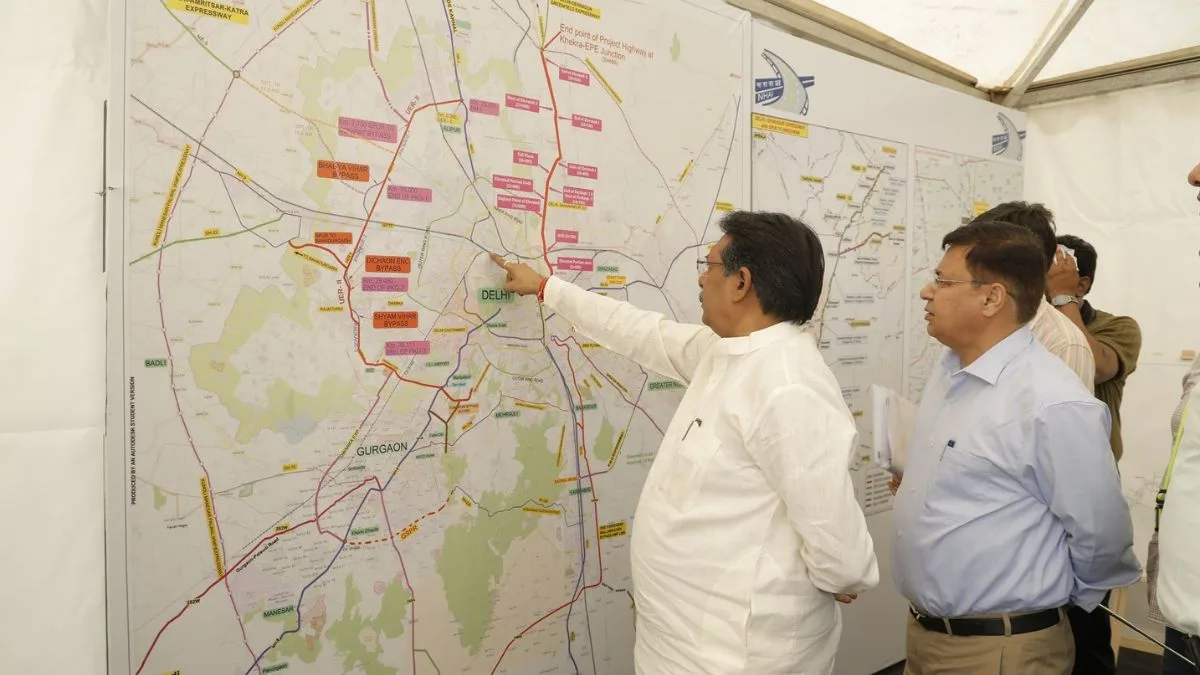
Union Minister of State for Road Transport and Highways and Corporate Affairs, Harsh Malhotra, on Saturday inspected the entire 210-km stretch of the Delhi-Saharanpur-Dehradun Expressway, accompanied by officials of the National Highways Authority of India (NHAI).
Malhotra expressed satisfaction with the progress of the expressway and stated that it would play a crucial role in decongesting the National Capital Territory (NCT) of Delhi, while also easing the burden on the Delhi-Meerut Expressway and other connecting highways.
Advertisement
The Minister took note of various bottlenecks reported by NHAI officials and instructed them to expedite the work and complete the project within the stipulated time frame, ensuring its timely opening to the public.
Advertisement
NHAI officials informed the Minister that the remaining portions of the project are expected to be completed within the next 2–3 months.
The Delhi-Dehradun Expressway, originating from Akshardham Temple in Delhi, will pass through Baghpat, Baraut, Muzaffarnagar, Shamli, and Saharanpur in Uttar Pradesh, and culminate at Dehradun in Uttarakhand.
Being developed at an approximate cost of Rs 12,000 crore, the expressway is designed for a speed of 100 km per hour and will reduce travel time between Delhi and Dehradun from the current 6.5 hours to just 2.5 hours.
The expressway will also feature a spur towards Haridwar and connect to the Char Dham Highway, significantly enhancing connectivity to the hill stations and pilgrimage sites of Uttarakhand and Uttar Pradesh.
As part of its commitment to environmental conservation, the Modi Government has also developed Asia’s largest elevated corridor—measuring 12 km—through Rajaji National Park, as a key component of this expressway project.
Advertisement