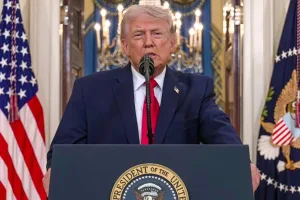
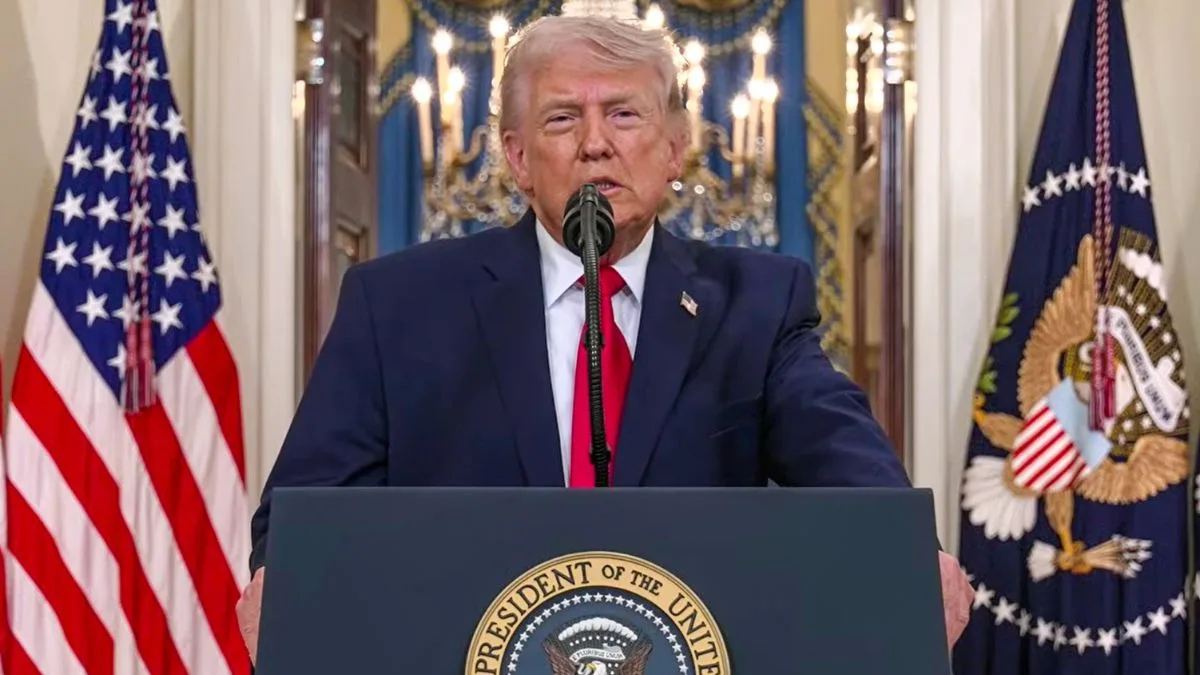
US Supreme Court blocks Donald Trump’s order, upholds birthright citizenship
The 6-3 ruling marks the second time in 2026 when the court invalidated a major Trump initiative. This comes months after it strike down his sweeping global tariffs.
External Affairs Minister S Jaishankar’s visit to the US in February will be his first in seven months. The last visit happened before Trump unleashed his tariff regime on India. And a lot has changed in those seven months.





External Affairs Minister S Jaishankar with US Secretary of State Marco Rubio (Photo: X/@DrSJaishankar)
External Affairs Minister S Jaishankar is travelling to the United States next week. He will be in Washington primarily to take part in the inaugural ministerial meeting on critical mineral supply chains. But behind the scenes, the talks between the two sides are expected to focus on the delayed India-US trade deal and other aspects of the relationship that has come under strain since Donald Trump came to power for a second term early last year.
The free trade agreement between the two biggest democracies in the world has come under renewed limelight, especially after New Delhi concluded its trade deal with the 27-member European Union earlier this week.
Advertisement
The administration of President Donald Trump, which has thrived on using tariffs as a weapon over the last few months, including against India, may be looking for a climbdown. At least that has been the indication.
Advertisement
US Treasury Secretary Scott Bessent, a few days ago, said that there is a path to take the 25 per cent additional tariffs imposed on India for buying Russian oil off, mentioning the Indian purchases by their refineries of Russian oil have collapsed.
And yesterday, Washington, as per sources, told New Delhi that it can resume buying Venezuelan oil to help replace Russian crude imports.
Mark Linscott, non-resident senior fellow on India at the Atlantic Council, summed it up when he commented, “The EU–India deal could… light a fire under efforts to conclude a US–India trade deal and help to move negotiations forward on a comprehensive bilateral trade agreement, as US President Donald Trump and Indian Prime Minister Narendra Modi discussed last year.”
Jaishankar’s bilateral visit to the US in February will be his first in seven months. The last bilateral US visit happened before Trump unleashed his tariff regime on India. And a lot has changed in those seven months. (Jaishankar had visited New York in September for the 80th UN General Assembly session.)
After going downhill and literally crashing, the bilateral ties appear to be coming back on track.
Just days ahead of his Washington visit, the EAM met Sergio Gor, the new US ambassador to India. Also present at the meeting was a three-member American Congressional delegation, comprising Jimmy Patronis, Mike Rogers and Adam Smith. The talks focused on several aspects of the bilateral relationship, including trade, defence cooperation and critical mineral supply chains.
Jaishankar posted after his meeting with Gor that the conversation covered many dimensions of the partnership. The ambassador described the talks as a “highly substantive discussion” covering defence, trade and critical minerals. He importantly added that both countries were working towards shared strategic interests.
Pleased to meet @USAmbIndia Sergio Gor today in New Delhi.
Our conversation covered the many dimensions of our partnership.
Welcomed him and expressed confidence that he would contribute to the strengthening of India – US relations.
— Dr. S. Jaishankar (@DrSJaishankar) January 29, 2026
This meeting is said to prepare the ground for Jaishankar’s engagements in the US – his participation in the inaugural ministerial meeting on critical mineral supply chains on February 4, and talks with Secretary of State Marco Rubio.
It has been reported over the last few days that there has been a renewed push from both sides to move forward to finalise the trade agreement. While acknowledging setbacks in the relationship, India has also maintained engagement with the US even as it was finalising its trade deal with the EU.
In December, PM Modi and President Trump spoke over the phone. The PM had on December 11 last year posted: “Had a very warm and engaging conversation with President Trump. We reviewed the progress in our bilateral relations and discussed regional and international developments. India and the U.S. will continue to work together for global peace, stability and prosperity.”
On January 13 earlier this month, Jaishankar and Rubio also spoke over the phone, and discussed an array of issues, including bilateral trade, critical minerals cooperation, nuclear energy, defence and broader energy ties.
India’s participation in the inaugural ministerial meeting on critical mineral supply chains also underscores its expanding role in international supply-chain diversification efforts. This also assumes significance amidst efforts by the US and its allies to reduce dependence on dominant suppliers, especially China.
Advertisement