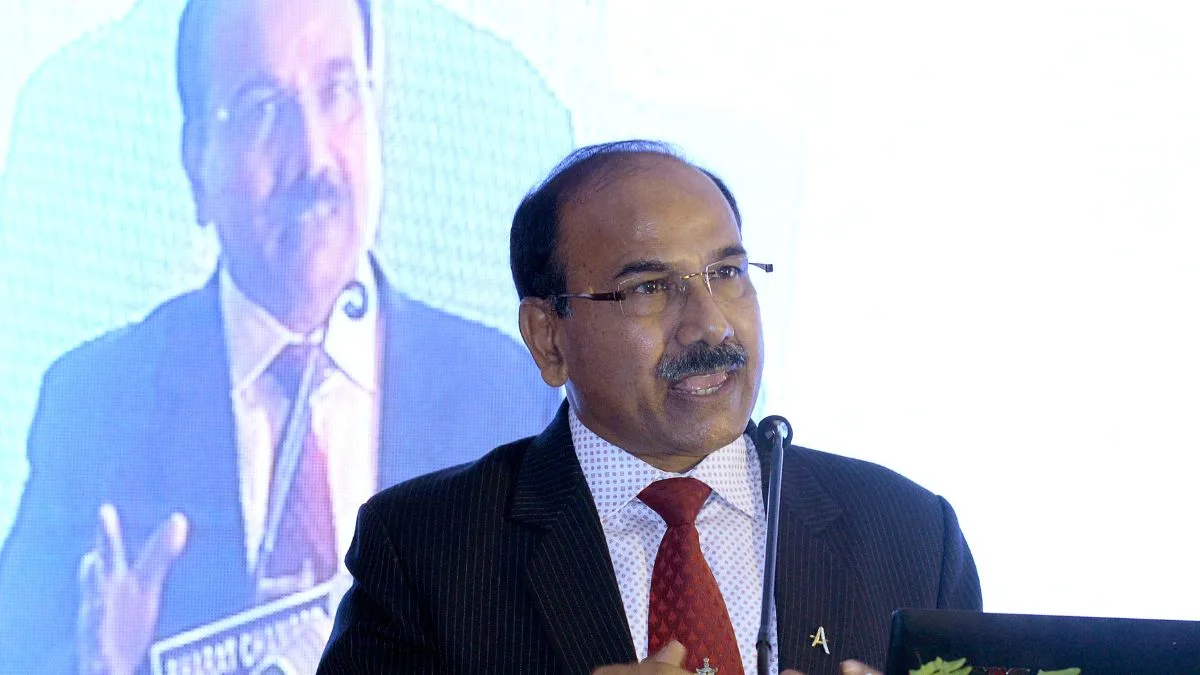
Patanjali Research Foundation signs MoU with Gautam Buddha University
The collaboration is aimed at fostering academic, scientific, and research cooperation between the two institutions, besides facilitating the exchange of knowledge and resources.
Acharya Balkrishna emphasised that farming aligned with nature is the foundation of prosperous and self-reliant villages. Speaking at Patanjali’s agriculture training in Haridwar, he highlighted sustainable and integrated farming as the future of rural growth.





Image Source: Patanjali
At a time when farmers are searching for stable income and sustainable methods, Patanjali’s Samriddh Gram Patanjali Training Centre offered hopeful path forward. A three-day Integrated Agriculture Cluster Training Programme came to a successful end carrying message that farming aligned with nature can make villages prosperous and self-reliant. (Also Read: World Herbal Encyclopedia: Acharya Balkrishna redefines botanical research with a single giant work)
The programme was designed to strengthen rural livelihoods through practical eco-friendly farming practices. More than 150 members of Self-Help Groups (SHGs) took part in the residential training learning new skills while sharing experiences from their own villages.
Advertisement
The final day of the programme began on a meaningful note. A traditional havan was performed. This was followed by a lamp-lighting ceremony that marked the formal closing of the training.
Advertisement
Acharya Balkrishna graced the occasion and blessed the participants. Addressing them, he said that villages can only become strong when farming works in harmony with nature. He stressed that integrated and sustainable farming is the backbone of a self-reliant rural economy.
According to him, farmers should move beyond single-crop farming and adopt multi-dimensional agriculture that protects the soil, water, environment while increasing income.
Throughout the three days, participants were deeply involved in both classroom learning and hands-on field training. Many SHG members shared that programme helped them understand farming not just as tradition but as smart livelihood option.
Block Development Officer (BDO) of Bahadrabad, Manas Mittal, addressed the gathering and highlighted the importance of integrated agriculture models. He said such models strengthen village-level economies and provide long-term livelihood security for farmers and SHG members.
He also praised Patanjali’s contribution, stating that farmers can only become truly self-reliant when governments and institutions work together. Programmes like this, he said, play a big role in connecting policy with ground-level action.
The event also gained international importance with the presence of senior officials from Nepal. The chief guest, Govind Prasad Sharma, Secretary of the Ministry of Environment and Forests, Government of Nepal, shared his views on sustainable agriculture and environmental protection.
He said that farming development and environmental conservation go hand in hand. According to him, such training programmes are the need of the future and also help strengthen cooperation across borders.
The training covered a wide range of topics aimed at increasing income and reducing risk for farmers. Key sessions included beekeeping, mushroom cultivation, climate-smart agriculture, and a unique module called “Doctor of the Earth,” which focused on understanding soil health naturally.
Participants also received training in quality control of FMCG products. That helps them understand how farm-based products can meet market standards. Experts conducted detailed technical sessions giving step-by-step guidance and real-world examples.
Advertisement