Manish Tewari’s post fuels buzz over Congress future
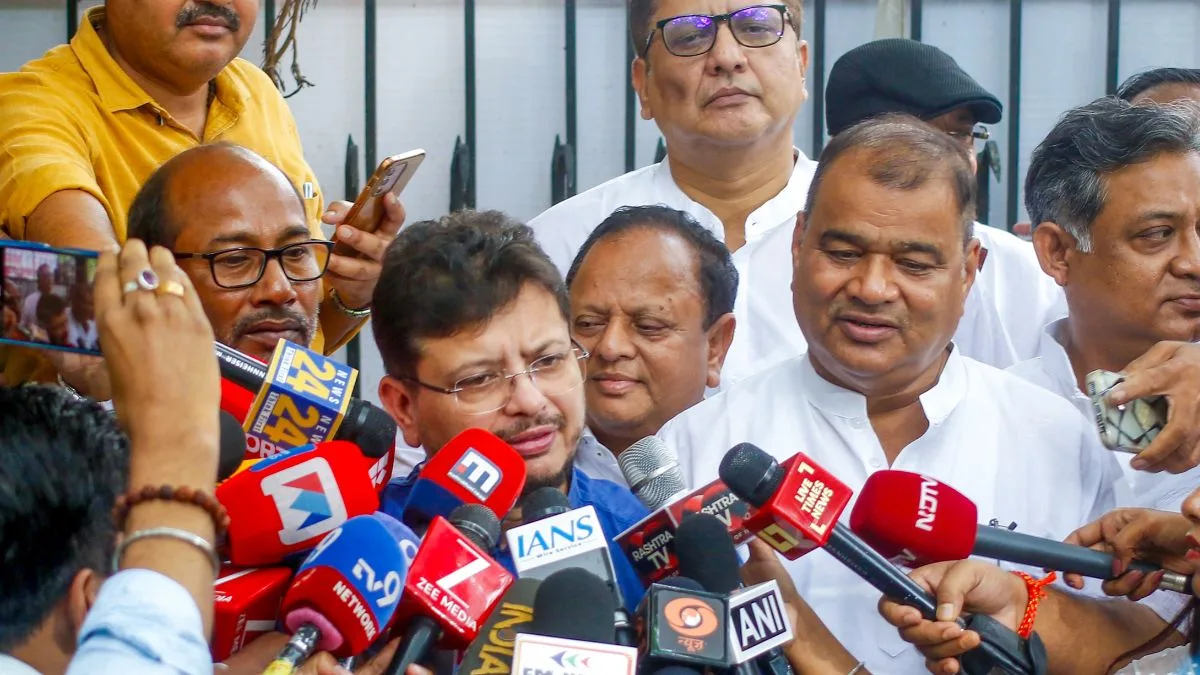
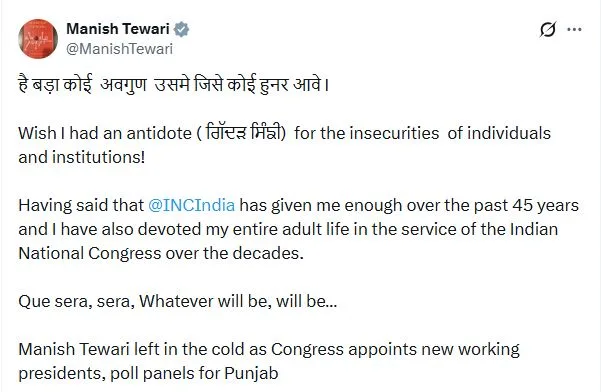
Soon after the announcement, Manish Tewari posted a strongly worded message on social media without naming any individual.
Former Chief Minister Charanjit Singh Channi has not publicly celebrated his appointment as chairman of the Election Campaign Committee and has instead convened a meeting of his supporters.




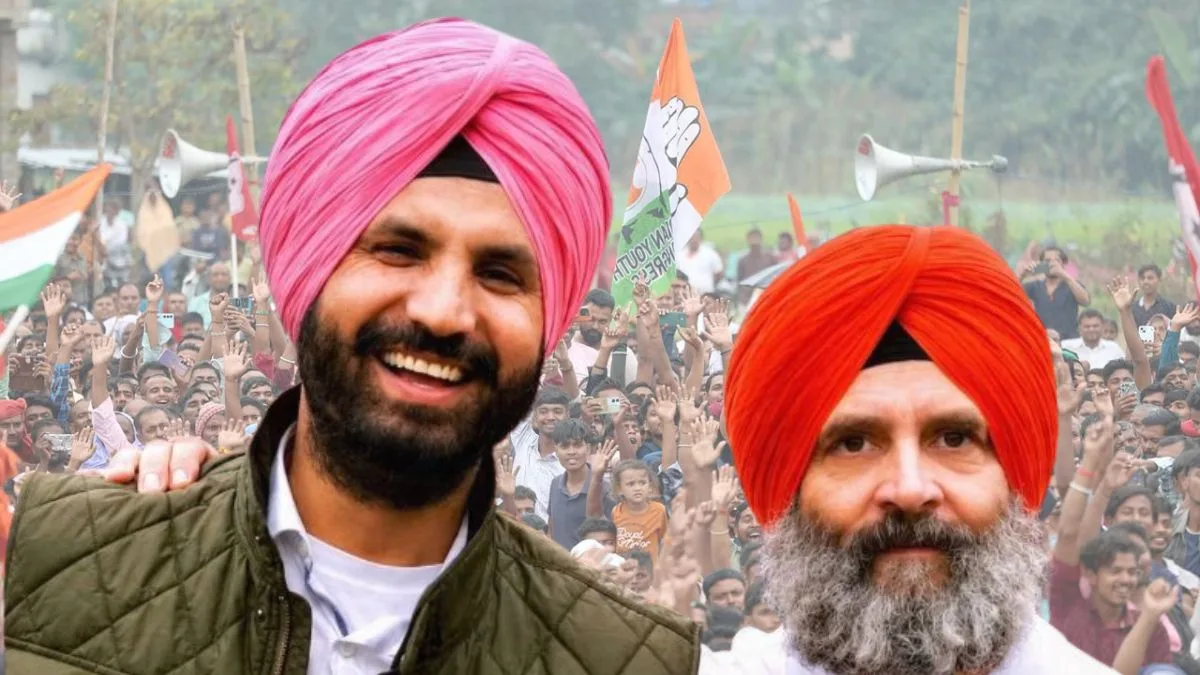
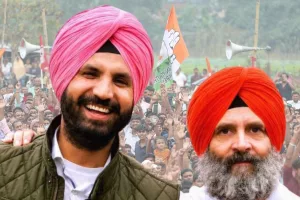
Amarinder Singh Raja Warring and Rahul Gandhi. (Image: X)
The Congress high command’s decision to retain Amarinder Singh Raja Warring as Punjab Congress president while simultaneously accommodating senior leaders Charanjit Singh Channi and Sukhjinder Singh Randhawa in key election committees was intended to project unity ahead of the 2027 Assembly elections in the state. Instead, the exercise has reignited an old question that has repeatedly troubled the party in Punjab can Congress overcome its internal power struggle before taking on its political rivals?
The latest organisational restructuring has exposed visible signs of discomfort within the state unit. Former Chief Minister Charanjit Singh Channi has not publicly celebrated his appointment as chairman of the Election Campaign Committee and has instead convened a meeting of his supporters. Senior leader Sukhjinder Singh Randhawa has also maintained silence despite being appointed chairman of the Core Committee, which will oversee candidate selection and election strategy. Chandigarh MP Manish Tewari’s public expression of disappointment after being excluded from the newly constituted committees has further reinforced the perception that all is not well inside the Punjab Congress.
Advertisement
Advertisement
Political observers believe that the party’s biggest challenge is not organisational restructuring but managing competing leadership ambitions. Punjab Congress has historically witnessed parallel power centres, with state presidents, chief ministers and senior leaders often pulling in different directions. The 2022 Assembly election remains the most prominent example, when prolonged infighting overshadowed the party’s campaign and contributed significantly to its defeat.
The current situation bears similarities to that period. While Raja Warring continues to head the organisation, Channi has been given charge of the election campaign, and Randhawa has been entrusted with ticket distribution through the Core Committee. Although this distribution of responsibilities appears balanced on paper, political analysts say overlapping centres of authority could once again create confusion unless there is complete coordination among the senior leadership.
Congress sources indicate that several influential leaders had expected a change in the state presidency. The decision to retain Raja Warring is believed to have disappointed sections of the party that were backing Channi or Randhawa. If this dissatisfaction deepens during ticket distribution or campaign planning, the Congress leadership could once again find itself spending more time resolving internal disputes than confronting its political opponents.
The Congress high command has attempted to counter this risk through careful social engineering. Dalit leader Charanjit Singh Channi has been entrusted with leading the campaign to consolidate Punjab’s sizeable Scheduled Caste vote bank. Raja Warring remains the principal Jat Sikh organisational face, while Partap Singh Bajwa continues as Leader of the Opposition. Hindu, OBC and minority leaders have also been accommodated in different committees, suggesting that the party is trying to present a broad social coalition rather than relying on a single leadership model.
Regionally too, the appointments indicate a calculated strategy. Malwa, which accounts for the largest number of Assembly seats, has received the most influential organisational responsibilities. Majha continues to command strategic positions, while Doaba has been assigned organisational roles keeping in mind its significant Dalit population and NRI influence.
However, political history suggests that electoral arithmetic alone rarely guarantees success. The Congress entered the 2022 election with experienced leaders and multiple social coalitions but failed to convert organisational strength into electoral victory because factional rivalry repeatedly overshadowed the campaign. That experience appears to have influenced the high command’s decision not to replace Raja Warring despite demands from some quarters.
Another challenge for the party is maintaining discipline over the next two years. Candidate selection, local rivalries and leadership ambitions often intensify as elections approach. If dissatisfaction among senior leaders remains unresolved, it could weaken the Congress’s campaign momentum and provide its rivals with opportunities to consolidate their own support base.
Political analysts also point out that instability within opposition parties often creates space for rival political formations to attempt organisational or political realignments. While there is no evidence at present of any organised effort or so-called “Operation Lotus” in Punjab, prolonged internal divisions could make any party more vulnerable to political defections or attempts by opponents to expand their influence. Whether such a scenario emerges will depend entirely on future political developments rather than any established fact today.
For the Congress, the immediate priority is demonstrating that the newly announced committees represent collective leadership rather than competing power centres. Public messaging alone may not be enough. Sustained coordination between Raja Warring, Charanjit Singh Channi, Sukhjinder Singh Randhawa, Partap Singh Bajwa and other senior leaders will be crucial if the party hopes to present a united challenge in 2027.
The organisational reshuffle has undoubtedly given the Congress a fresh framework for the next Assembly election. Yet the success or failure of that framework will depend less on committee appointments and more on whether the party can avoid repeating the mistakes that undermined its 2022 campaign. If factionalism continues to dominate the political narrative, the Congress risks entering another election carrying the burden of internal conflict instead of projecting itself as a cohesive alternative to the ruling establishment.
Advertisement