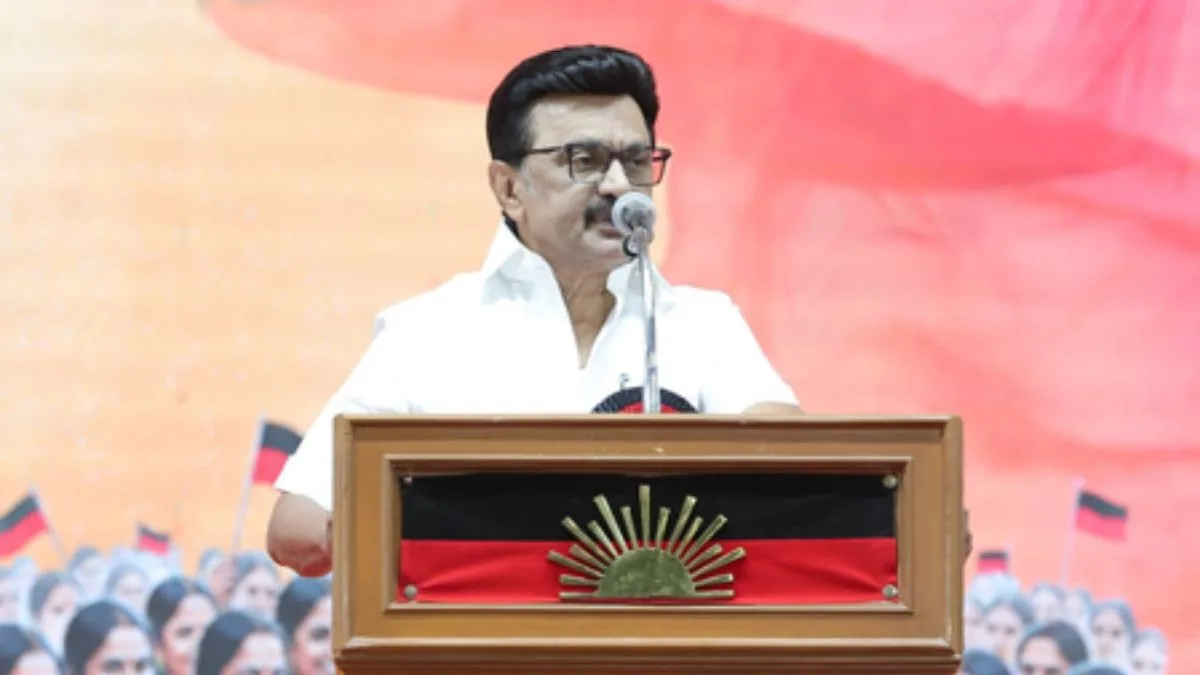
Haryana Chief Minister Nayab Singh Saini said the state government will formulate a policy next year to promote natural and organic farming on Panchayat-owned lands. Around 800 acres of land owned by the Agriculture Department will be leased only to farmers who commit to practicing natural and organic farming on it for at least the next ten years.
The Chief Minister was addressing an “Agriculture Workshop” organised in Kurukshetra under the Natural Farming Promotion and Cluster Formation Programme of the Department of Agriculture and Farmers’ Welfare. On this occasion, Governor of Gujarat Acharya Devvrat and Haryana Agriculture Minister Shyam Singh Rana were also present.
Advertisement
He announced that farmers certified by the Agricultural and Processed Food Products Export Development Authority (APEDA) for natural and organic farming will receive financial assistance of ₹10,000 per acre per year for five years. He further stated that the Haryana State Seed Certification Agency will be designated as a certification body for organic farming certification.
He informed that natural and organic farmers will be provided space in agricultural markets at Panchkula, Yamunanagar, Karnal, Sonipat, Rohtak, Gurugram, Faridabad, Hisar, Charkhi Dadri and Narnaul to sell their produce. Testing laboratories and APEDA-recognised certification centres will also be established to ensure better market access for farmers selling natural and organic produce.
Saini further said that, in collaboration with Haryana Agricultural University, natural farming will be introduced in a 2,000-acre cluster in Kurukshetra district under a new initiative called Smart Agriculture, using the latest technologies. If farmers suffer any losses under this scheme, the Haryana Government will fully compensate them. He also announced that Morni Block will be developed as a Natural and Organic Farming Block.
Providing details of incentives being offered to encourage natural farming, the Chief Minister said Haryana is the first state in the country to protect horticulture farmers from risks arising from weather uncertainties. Under the Chief Minister Horticulture Insurance Scheme, 21 crops have been included.
Urging farmers to contribute towards making Haryana a model state for natural farming, he said the state government stands with farmers at every stage—from seed to market. He emphasized that it is the collective moral responsibility of society to pass on fertile land, clean water and a healthy environment to future generations, which can only be achieved through the adoption of natural farming.
The Chief Minister appreciated the exemplary work carried out by Governor of Gujarat Acharya Devvrat in advancing the natural and organic farming movement and elaborated on the initiatives undertaken under his guidance.
He informed that the Haryana Government launched the Natural Farming Scheme in 2022 and also developed a dedicated portal for the initiative. So far, nearly 2 lakh farmers have registered approximately 3 lakh acres of land on the portal. Of these, 23,930 farmers covering 44,077 acres have been verified for adopting natural farming. During 2025–26, natural farming was practiced on 20,727 acres across the state.
Saini further stated that training centres have been established at Gurukul, Kurukshetra; Hameti, Jind; Mangiana, Sirsa; and Gharaunda, Karnal to provide training on natural farming. A State Advisor has also been appointed at the Gurukul training centre in Kurukshetra for training progressive farmers. So far, 12,188 participants, including young farmers, women and government employees, have been trained. Additionally, 6,234 sarpanches have received one-day online training through the Hameti training centre.
He added that from 2025 onwards, the subsidy for indigenous cows has been increased to ₹30,000. This subsidy is available to farmers possessing at least one acre of land.
To support storage and processing of raw materials, each farmer will be provided ₹3,000 for the purchase of four drums. Under the Natural Farming Scheme, ₹75 lakh has been disbursed to 2,500 farmers for purchasing four drums each, while a total subsidy of ₹2.97 crore has been directly transferred into farmers’ bank accounts for the purchase of 1,171 indigenous cows.