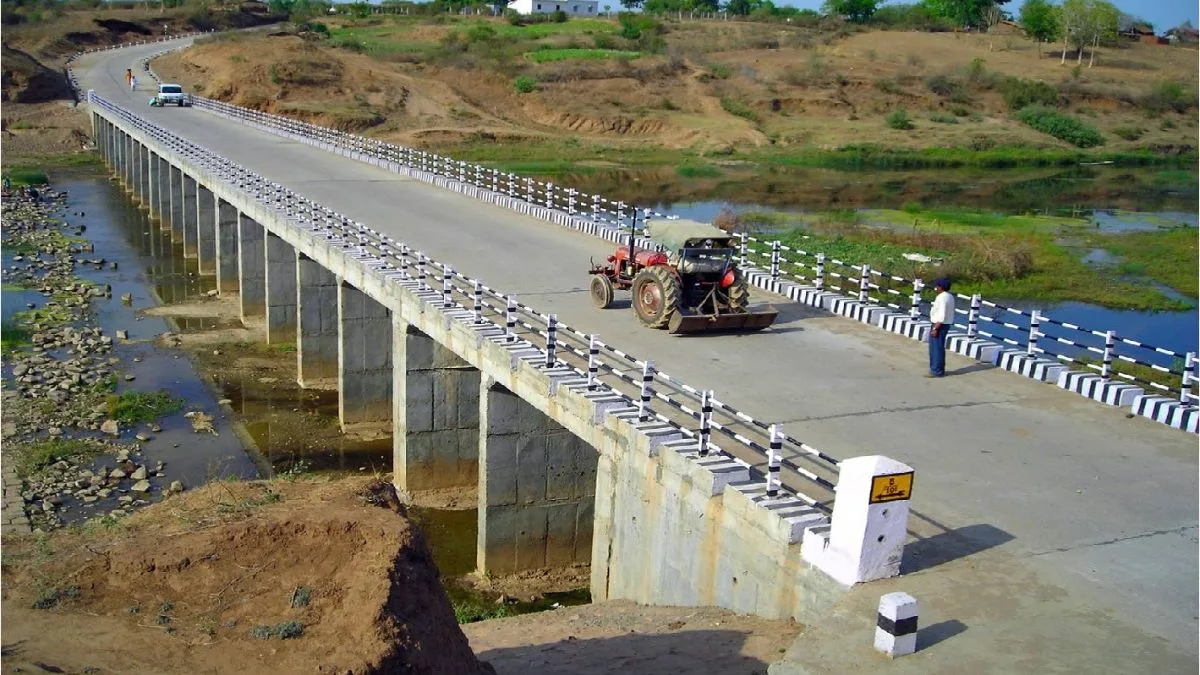
Launched on 25 December 2000 to ensure all-weather connectivity to previously unconnected rural habitations, the the Pradhan Mantri Gram Sadak Yojana (PMGSY) has emerged as a key enabler of agricultural growth, employment generation, improved access to education and health services, and poverty alleviation.
Celebrating 25 years today, the PMGSY stands out as one of India’s most impactful rural infrastructure initiatives.
Advertisement
Budgetary allocations to the PMGSY in recent years reflect the government’s sustained emphasis on strengthening rural road connectivity.
For the financial year 2025–26, the programme has been allocated Rs 19,000 crore, underscoring the continued support for enhancing rural infrastructure, ensuring all-weather road connectivity, and boosting economic opportunities in rural areas.
“Since its inception, the PMGSY has sanctioned a total of 8,25,114 km of rural roads, of which 7,87,520 km have been completed, reflecting nearly 95 percent physical progress as of December 2025,” the government said on Thursday.
Launched in 2000, Phase I of the programme served as the flagship initiative to provide all-weather road connectivity to eligible, previously unconnected rural habitations. It established the foundation for universal rural access by linking villages with markets, educational institutions, and healthcare facilities. Road connectivity projects for a total of 1,63,339 rural habitations have been sanctioned nationwide under Phase I.
Introduced in 2013, Phase II of the programme focused on strengthening and consolidating the existing rural road network. It prioritized the upgradation of economically important routes linking rural markets, growth centers, and service hubs, with the objective of improving transportation efficiency and accelerating rural economic development.
Launched in 2016, the road connectivity project for Left Wing Extremism Affected Area (RCPLWEA) is a targeted intervention for infrastructure development covering 44 most severely affected Left Wing Extremism (LWE) districts and adjoining areas across nine states- Andhra Pradesh, Bihar, Chhattisgarh, Jharkhand, Madhya Pradesh, Maharashtra, Odisha, Telangana, and Uttar Pradesh.
The scheme serves a dual objective: Strengthen security operations by enhancing the mobility of security forces and Promote socio-economic development by improving access to markets, educational institutions, and healthcare services in remote and underserved regions.
Launched in 2019, Phase III of the programme focuses on upgrading 1,25,000 km of Through Routes and Major Rural Links to strengthen connectivity between rural habitations and key socio-economic institutions, including Gramin Agricultural Markets (GrAMs), higher secondary schools, and healthcare facilities. As of December 2025, out of the total target, 1,22,393 km of road have been sanctioned, and 1,01,623 km (83 per cent) have been constructed nationwide.
The PMGSY-III has significantly improved mobility, enhanced access to education and healthcare, facilitated better integration with agricultural markets, increased employment opportunities, and contributed to broader rural socio-economic transformation.
A total road length of 62,500 kilometres is proposed to be constructed during the implementation period from FY 2024–25 to 2028–29, with an overall financial outlay of Rs 70,125 crore.
Phase IV of the PMGSY aims to provide all-weather road connectivity to 25,000 unconnected rural habitations, based on Census 2011 population criteria: Habitats with a population of 500 and above in plain areas, 250 and above in North-Eastern and Himalayan States/UTs, and Habitations located in special category areas, including Tribal (Schedule V) regions, Aspirational Districts/Blocks, and Desert areas.