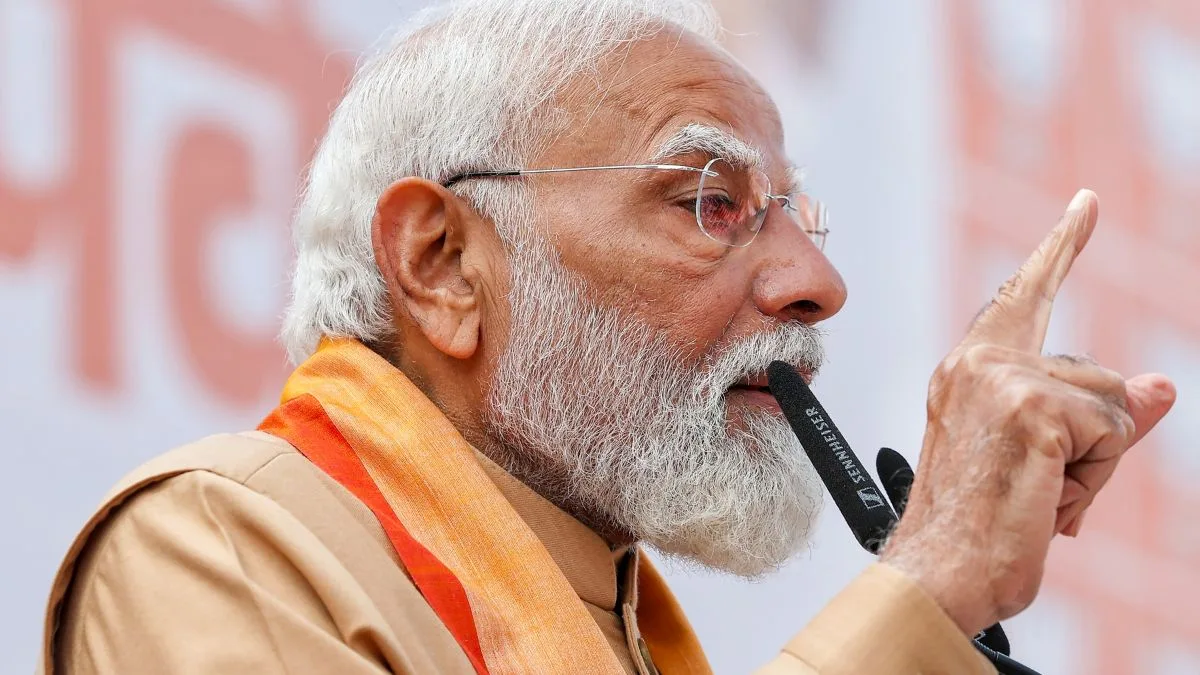
Prime Minister Narendra Modi on Tuesday emphasized Union Minister Giriraj Singh’s insights into India’s textile sector, highlighting the government’s efforts to evolve the traditional industry into a future-ready, employment-generating growth engine aligned with Aatmanirbhar Bharat.
Sharing Singh’s analysis on social media, the Prime Minister noted that initiatives like PM MITRA Parks, the Production Linked Incentive (PLI) scheme, and new Free Trade Agreements (FTAs) are fueling a fresh wave of job creation and export growth.
Advertisement
“In this article, Union Minister Shri Giriraj Singh captures the transformation of India’s textile sector from a legacy industry to a dynamic, people-centric growth engine,” PM Modi stated on X. He added that ongoing reforms are unlocking new international markets while boosting domestic manufacturing capabilities.
Union Minister for Textiles Giriraj Singh said the sector is set to become the largest job creator of the decade under PM Modi’s leadership. Key factors driving growth include a doubling of per capita textile consumption, export increases fueled by FTAs, sustainability-driven opportunities for handicrafts and handlooms, and advancements in technology enhancing productivity and value chains.
Singh described textiles as vital to inclusive development, stressing that the sector has moved beyond its legacy status.
“Textiles is now a future-ready engine of inclusive, sustainable, and women-led growth, reinforcing Aatmanirbhar Bharat and accelerating India’s development,” he said.
Recognizing textiles as a priority due to its labor-intensive nature and potential for large-scale employment—especially for women—the government has launched initiatives like PM MITRA Parks, which integrate the entire value chain from fiber to finished goods with world-class infrastructure.
The PLI scheme further promotes scale, innovation, and competitiveness in man-made fibers and technical textiles.
Additionally, India’s expanding FTA network is expected to provide textile and apparel exporters with preferential access to key global markets, boosting exports and attracting investments. Sustainability initiatives and support for the handloom and handicraft sectors aim to preserve traditional skills while creating new livelihood opportunities.
With coordinated policy support across infrastructure, trade, technology, and sustainability, the government envisions the textile sector as a cornerstone of broad-based growth and a key contributor to India’s ambition of becoming a developed economy.