Days after reports of Jaish-e-Mohammed (JeM), Hizbul Mujahideen (HM), and UN-designated terrorist group Lashkar-e-Taiba (LeT) relocating their bases from Pakistan-occupied Kashmir (POK) to Pakistan’s northwestern Khyber Pakhtunkhwa (KPK), new reports have indicated a covert alliance being formed between LeT and Islamic State Khorasan Province (ISKP) in Pakistan’s Balochistan province. The intelligence reports have indicated Pakistan’s Inter-Services Intelligence (ISI) being the orchestrator of the new coalition.
This emerging coalition of extremist entities not only intensifies the threat to Afghanistan and Balochistan but also signals Pakistan Army’s intent to reignite militancy in Jammu & Kashmir, thereby destabilizing regional peace under the guise of plausible deniability.
Advertisement
Traditionally denounced across the Islamic world as Daesh and deemed un-Islamic by even the Afghan Taliban, ISKP is now being subtly repurposed by the Pakistani military establishment to target Baloch nationalists and elements within the Taliban regime that defy Islamabad’s control.
Recent issues of ISKP’s propaganda magazine “Yalgaar” indicate a disturbing shift, an expressed intent to expand operations into Indian Kashmir, a move that appears coordinated and encouraged by Pakistan’s deep state. Adding another layer to this nexus, Pakistan is reportedly facilitating cooperation between Lashkar-e-Taiba (LeT) and ISKP, using LeT’s logistical networks to bolster ISKP’s terror capabilities.
A recently surfaced photograph shows ISKP’s coordinator in Balochistan Mir Shafiq Mengal handing over a pistol as a present to Rana Mohammad Ashfaq, a senior Lashkar-e-Taiba commander. The image has raised alarms and exposed Pakistan’s expanding terror nexus under ISI’s direct patronage.
Ashfaq, the current Nazim-e-Ala of Lashkar-e-Taiba, oversees the group’s expansion across Pakistan, setting up new markaz (indoctrination and training hubs) and forging operational links with other terror entities of different sects.
Mir Shafiq Mengal, the son of former Balochistan caretaker Chief Minister Nasir Mengal, has long been a key ISI asset. For over a decade, he has commanded a private death squad targeting Baloch nationalists. Since 2015, Mengal has also acted as ISKP’s primary facilitator in Balochistan, arranging safe houses, funding, and arms supplies. His role was also mentioned in a 2015 JIT report issued by Pakistan’s own investigative agencies.
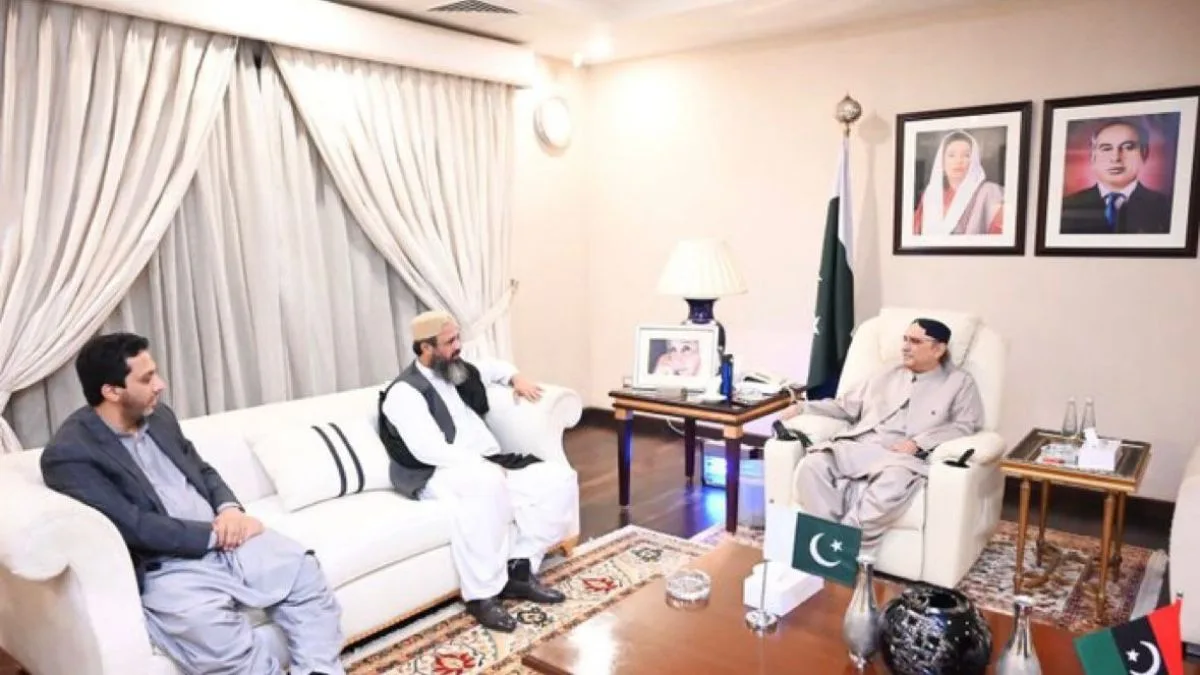
By 2018, ISKP with ISI’s direct financial and logistical backing had established two main operational bases in Mastung and Khuzdar districts. Mengal was appointed as the camp in-charge, responsible for provisioning weapons and funds. His death squad, active since 2010, continued eliminating Baloch rebels on ISI’s orders. Mengal’s deep ties with Pakistan’s political elite are no secret; a 2023 photograph showing him alongside President Asif Ali Zardari reflects his immunity and clout within Islamabad’s establishment.
Following the Taliban’s rise to power in Afghanistan, ISI revamped ISKP’s presence in Balochistan. The Mastung camp was tasked with attacking Baloch insurgents under Mengal’s supervision, while the Khuzdar camp handled cross-border terror missions in Afghanistan. Arms and funds flowed to both sites through ISI intermediaries.
In March 2025, Baloch fighters mounted a massive strike on ISKP’s Mastung facility, killing about 30 terrorists. Retaliating swiftly, ISI instructed Lashkar-e-Taiba to step in. By June 2025, the LeT chief arrived in Balochistan, followed by LeT deputy Saifullah Kasuri, who convened a Jigra, urging jihad against Baloch separatists and vowing to “eliminate anti-Pakistan forces” from the province.
The newly-emerged picture of Mengal and Ashfaq together confirms formal coordination between LeT and ISKP. Analysts believe the partnership aims to target both Baloch insurgents and Taliban factions in Afghanistan, executing ISI’s regional agenda through proxy warfare.
It is now believed that Lashkar might begin deploying its fighters alongside ISKP in operations against Baloch insurgents, mirroring the group’s earlier collaboration with Al-Qaeda during the Afghan jihad. The LeT–ISKP convergence under ISI’s supervision signals a dangerous transformation in Pakistan’s terror ecosystem where ideologically distinct extremist groups are merging into a single, state-backed apparatus to serve Islamabad’s geopolitical and sectarian objectives across South Asia.