Pakistan has, throughout its history, been desperate to create an identity for itself. Its history books have been modified every time a dictator has assumed power. Its current history does not commence from ancient civilizations, including the Indus Valley civilization, which existed in what is now Pakistan, but from the invasion of Sindh by Muhammad Bin Qasim, an Arab military commander in the service of the Umayyad Caliphate in 711 AD. ‘Fifty Years of Pakistan’, published by the Federal Bureau of Pakistan in 1998 de clares Muhammad Qasim as the ‘first Pakistani.’
There has b e en a conscious attempt to avoid linking Pakistan’s history to that of India. Its other history too has been equally distorted. Some examples listed by Pakistan’s newspaper, Dawn, in an article of 15 August 2014, highlight this fact. The fifth-grade history textbook of Khyber Pakhtunkhwa states on the 1965 war, “The Pakistan Army conquered several areas of India, and when India was at the verge of being defeated, she ran to the United Nations to beg for a cease-fire.
Advertisement
Magnanimously, thereafter, Pakistan returned all conquered territories to India.” On the 1971 war, its history books mention, “after 1965 war India conspired with the Hindus of Bengal and succeeded in spreading hate amongst the Bengalis about West Pakistan and finally attacked East Pakistan in December 71, thus causing the breakup of East and West Pakistan.” Written when Pakistan was ruled by a military dictator, the intent was to cover its defeat and surrender of 93,000 prisoners to India. A class five social studies book states, “India is our traditional enemy and we should always keep ourselves ready to defend our b elove d countr y from Indian aggression.”
The Pakistani army is considered as the saviour of the state. For the Pakistani public, India seeks the break-up of Pakistan and is responsible for all its ills, including freedom movements in its western provinces and protests in POJK. On Kashmir, its history books mention that “Maharaja Hari Singh started a brutal campaign to drive out Muslims from Kashmir. Over 200,000 people in the princely State, supported by the tribesmen of the Northwest Frontier Province, were successful in liberating a large area of Kashmir from the Maharaja’s control. Hari Singh was forced to turn to India for help and in return acceded to India.”
The intent was to claim victory in the 1947-48 conflict. The reality of Kashmir is vastly different. Pakistan has neither considered Kashmiris as brothers nor claimed it because of its majority Muslim population. No wonder Pakistan is crushing protests in POJK with brute military power. An op-ed in Pakistan’s Herald Magazine titled, ‘The pursuit of Kashmir’ of 2 February 2019, highlights its true intent, “these two factors (bordering Afghanistan and China as also rivers flowing from the region) make Kashmir a strategically crucial region. In other words, it is a prized territory.” There is some mention of ancient Indus and Harappan civilizations in Pakistan’s history books but these are never linked to its history.
Though Pakistan has exploited these sites for tourism, it has never attempted to connect them to its culture and history. For Pakistan, any historical link to India is considered taboo. Since India placed the IWT (Indus Water Treaty) in abeyance in April last year, Pakistan woke up to the realization that the Indus Valley Civilization exists on its soil and it can claim sole ownership of the Indus basin. The Mohenjo-daro sites, which had been left untouched since evacuations were done in 1965, witnessed a revival after Op eration Sindoor.
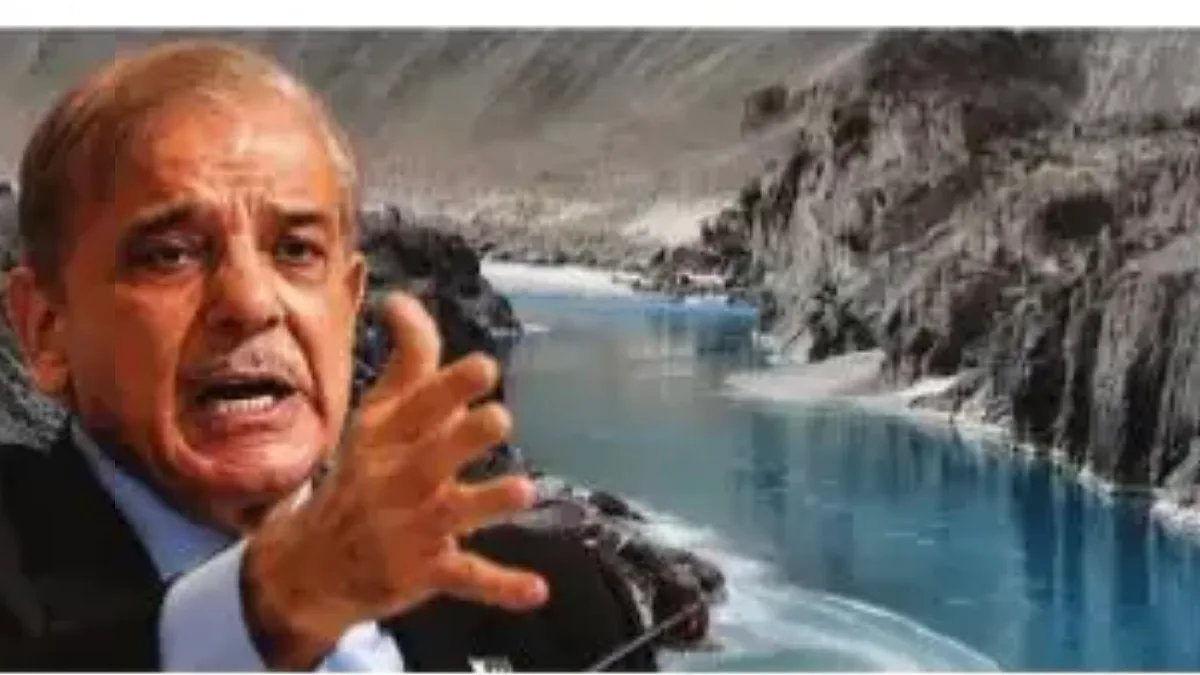
Pakistan rediscovered its love for Hindu culture, solely for selfish interest, aiming to project itself as the primary guardian of the Indus Water Basin. Post Sindoor, Pakistan moved in multiple directions, hoping global pressure would reverse India’s decision. The Permanent Court of Arbitration in The Hague decision on dams under construction on the Western Rivers issued on 15 May was rejected by India on the ground that the treaty is in abeyance. India stated that a treaty ‘built on good faith’ cannot oblige ‘one party to perform in full while the other sponsors violence against it.’
Since holding the treaty in abeyance, India refused to participate in any arbitration or meeting of neutral experts on any subject under the IWT. Pakistan, desperate to keep the issue alive, is paying the cost of both nations. Media reports mention it has already spent USD 600,000 (300,000 per nation) to keep processes ongoing. Pakistan is desperate. Pakistan also approached the UN Security Council, of which it is a rotating member, hoping it would criticize India. Nothing moved.
It recently conducted a one-day global conference on the IWT attempting to garner some level of international support. It was here that its political and military representatives threatened India by militar y action, claiming ‘strangulation of water is an existential threat.’ Their failed marshal, busy running around the globe attempting to negotiate conflicts, in one of his rare meetings with his generals, stated that the Pakistan military would ‘undertake all measures necessary to ensure availability of Pakistan’s rightful share of water as per the directives of the government and aspirations of the people of Pakistan.’
However, he is aware of limitations of his armed forces, and the fact that India’s retaliation would be brutal. Now that everything is failing, Pakistan is playing its final card, claiming the Indus Valley civilization is a major component of its identity. Pakistan’s leaders have now begun singing that they are the true custodians of the Indus heritage, including its water. Despite all its drama of invoking everything possible, all its claims fall flat. Only the Harappa and Mohenjo-daro archaeological sites were located in Pakistan; most others of the same period were discovered along the Ghaggar-Hakra river basin in India.
When these civilizations existed, there was no India or Pakistan nor a LoC. After eight decades, Pakistan, which considered Muhammad Bin Qasim as its first citizen, suddenly realizes the importance of the Indus Valley civilization. Its attempt to copy Russian claims of ancient linkages with Ukraine or the Chinese of links with Tibet and other regions it claims, does not hold water. For a nation which for eight decades systematically erased cultural rights of its minorities, suddenly rediscovering them, is a joke. It would be better for Pakistan to improve its water management systems and stop supporting terrorism rather than attempt fake claims.
(The writer is a retired Major-General of the Indian Army.)