IIT Kanpur licenses innovative oral cancer detection device to Scangenie Scientific
IIT Kanpur has licensed its groundbreaking oral cancer detection device, 'Munh Parikshak,' to Scangenie Scientific, enhancing early diagnosis and health outcomes.
While, hitherto, Bihar lacks a population-based data on the incidence of cancer in the state, earlier studies suggest that cases might increase to 135,000 annually in 2026.




Cancer, mostly caused by oral consumption of tobacco, continues to rise in Bihar despite a total ban on consumption and sale of liquor. While, hitherto, Bihar lacks a population-based data on the incidence of cancer in the state, earlier studies suggest that cases might increase to 135,000 annually in 2026.
These figures top those from a study conducted in 2022 by Shafi, Iqbal and Khaliq, titled ‘Cancer burden in India: A statistical analysis on incidence rates’. This study pegged mean annual incidence in Bihar at 110,448.
Advertisement
Though it is only indicative and cannot be extrapolated for entire Bihar, a PBCR in the Muzaffarpur district by Tata Memorial Center reported an incidence of 712 cases in 2018, with a 50% mortality rate and age-adjusted mortality rates of 24.3 per 100,000 in males and 27.3 per 100,000 in females.
Advertisement
Meanwhile, oral cancer has been wrecking not just individual lives, but breaking the back of whole families, especially at the lower end of the social and economic ladder.
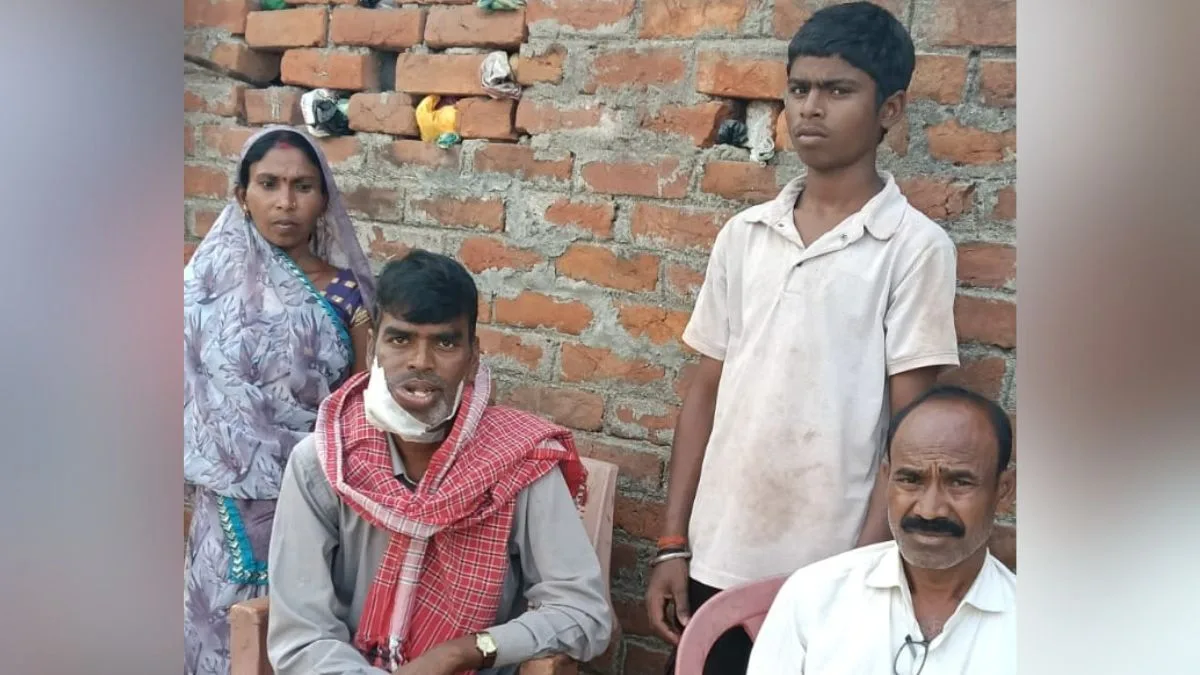
Ravi Das, 40, belonging to a Dalit community from Aurangabad district was diagnosed with mouth cancer around six months ago in Jaipur. He is a daily wage labourer hailing from Berka village in Goh, but has not been able to work anymore owing to the disease and the disfigurement of his mouth.
The burden of the entire family has now fallen on his 13-year-old son Avinash Das.
“I was in school, when I came to know that my father has cancer. I had to drop out of school because there is no one to take care of him. We went to some doctors in Bihar, but they said there was an expense of Rs20-30 lakh for the treatment. We are so poor that we can’t even manage two square meals. I work as a labourer in the day and that is all we have. We have now started treatment at a local homeopathy doctor.” Avinash said.
“I would owe my life to whoever can help my father. Otherwise, he is just going to die, and soon,” Avinash added.
Local social worker, Venkatesh Sharma, who has helped nearly 30,000 cancer patients in the region, laments the way oral cancer has been destroying lives. “I want the government to prohibit tobacco just as they banned liquor. I am so anguished when I see such cases. What wrong has this boy done? But, his teens will die on the altar of cancer. He will never be able to know a normal life.”
A study titled ‘Demographic and epidemiological profile of patients with head-and-neck cancer in Bihar, India: A hospital-based retrospective study’, published in the journal ‘Cancer Research, Statistics and Treatment’, conducted a retrospective analysis of 3230 newly diagnosed, biopsy-proven HNC cases from Bihar, treated at the Department of Head-and-Neck Cancer, Mahavir Cancer Institute and Research Center, Patna, between January 2021 and December 2022.
“This hospital-based study showed a predominance of male patients, with a male-to-female ratio of 5.37:1. The majority of patients were aged between 41-60 years, with significant gender disparities noted across all the age groups (P < 0.05). The oral cavity was identified as the most common site of HNC, accounting for 71.6% in males (n = 1949/2723) and 50.5% in females (n = 256/507).
Within the oral cavity, the buccal mucosa and tongue were the most prevalent subsites. The number of patients from North Bihar was more in comparison to South Bihar. The most common tobacco habits were khaini and betel quid, both widely cultivated in Bihar,” the study found.
Advertisement