India has strongly opposed suggestions that reform of the United Nations Security Council should be limited to expanding only its non-permanent membership, warning that such a move would leave the body’s existing power structure largely intact.
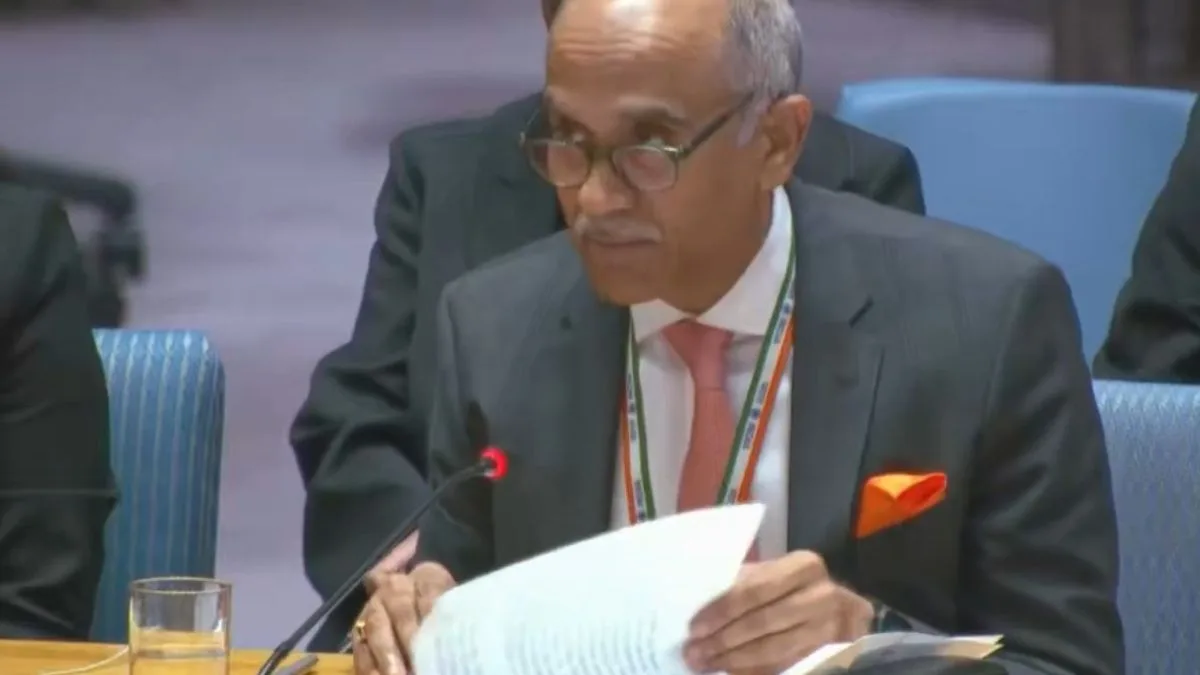
Addressing a meeting of the Intergovernmental Negotiations (IGN) on Security Council reform at the United Nations on Monday, India’s Permanent Representative P Harish said meaningful reform must include an expansion of permanent seats. He argued that anything short of that would fail to address long-standing imbalances within the Council.
Advertisement
“UNSC reform would be grossly inadequate, bordering on failure, if expansion is limited only to the non-permanent category,” Harish said.
He noted that restricting reform to non-permanent seats would not alter the influence of the five permanent members — Britain, China, France, Russia and the United States — who continue to hold the bulk of decision-making authority within the Council.
India targets status quo in reform process
Without naming any specific grouping, Harish criticised countries that continue to resist structural changes to the Council.
His remarks come amid continued opposition from the Uniting for Consensus (UfC) group, which includes Italy and Pakistan and has consistently opposed the creation of new permanent seats on the Security Council.
Harish cautioned against procedural tactics that slow progress in the reform process.
“‘Nothing is agreed until everything is agreed’ must not become a tool to block progress,” he said.
He also argued that negotiations cannot move forward indefinitely without a formal text serving as the basis for discussions.
“IGN cannot be fundamentally different from other UN processes, wherein negotiations are held on the basis of a text,” he said, urging the co-chairs to prepare a negotiating document with defined timelines and milestones.
Permanent seats central to meaningful reform
According to Harish, India’s support for expanding permanent membership is aimed at creating a more balanced and equitable Security Council.
He said the present structure reflects a concentration of authority that has remained largely unchanged since the end of World War II.
Drawing a contrast between the Security Council and the UN General Assembly, Harish said the Assembly reflects democratic principles among member states, whereas the Council’s structure is shaped by provisions embedded in the UN Charter.
“The principle of sovereign equality of states would not be applicable in its entirety, unlike the UNGA, due to such foundational DNA enshrined in the Charter,” he said.
India questions ambiguity over permanent membership
Harish also took issue with the “Elements Paper” prepared by the co-chairs of the IGN process, saying it appeared to invite further discussion on the meaning of permanent membership.
He argued that the UN Charter already settles the matter.
Referring to Article 23 of the Charter, Harish said Security Council membership is clearly divided into permanent and non-permanent categories.
“The definition of a permanent seat needs no further elaboration,” he said.