DGCA begins probe after three Air India planes damaged at Delhi Airport during storm
Due to strong winds, two pieces of ground equipment positioned at adjacent stands and in nearby areas moved from their locations and hit the parked aircraft.
A year after Air India Flight AI-171 crashed in Ahmedabad, killing 260 people, key questions over the cause, black box data, compensation and accountability remain unanswered.




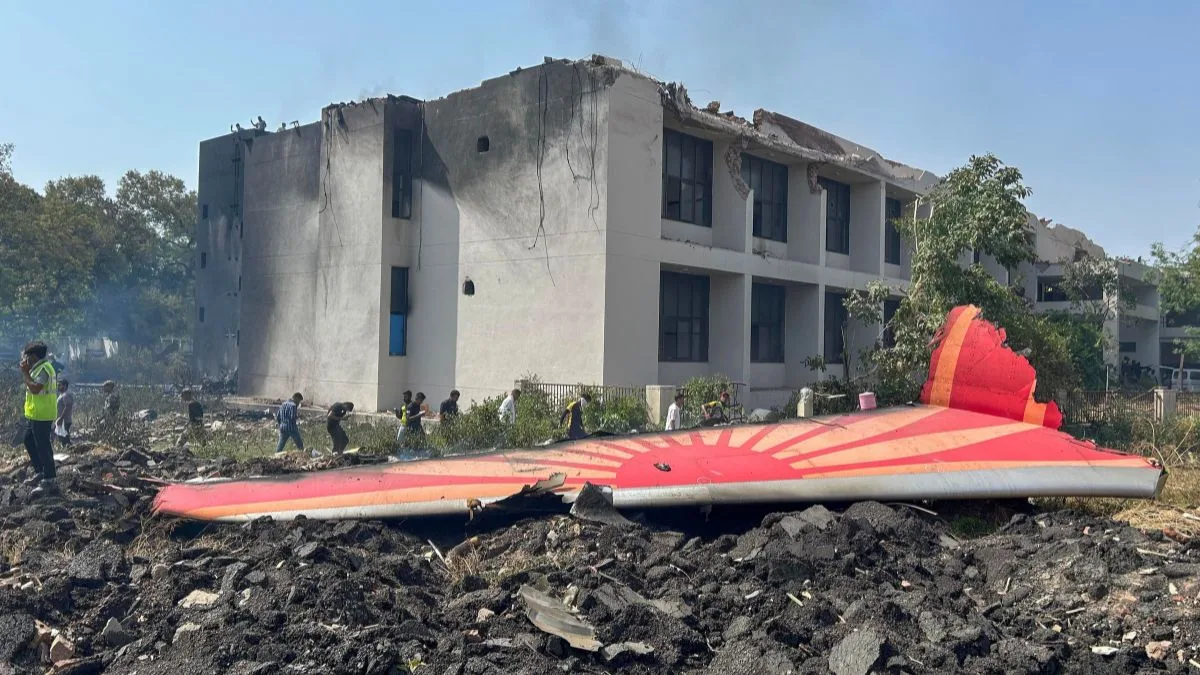
Aircraft debris is seen near the damaged hostel complex of BJ Medical College in Ahmedabad after Air India Flight AI-171 crashed shortly after take-off on June 12, 2025, killing 260 people. | IANS
One year after Air India Flight AI-171 crashed moments after taking off from Ahmedabad for London Gatwick, killing 260 people, families of victims are still waiting for definitive answers. While investigators have released preliminary findings and compensation efforts are underway, several questions around the cause of the crash, cockpit actions and accountability remain unresolved.
The anniversary has renewed attention on the investigation into one of India’s deadliest aviation disasters in recent decades. Victims’ families, politicians and aviation experts are seeking clarity as the Aircraft Accident Investigation Bureau (AAIB) prepares to release further findings, while Air India continues to defend its handling of compensation and rehabilitation efforts.
Advertisement
Air India Flight AI-171, a Boeing 787-8 Dreamliner operating between Ahmedabad and London Gatwick, crashed shortly after taking off from Sardar Vallabhbhai Patel International Airport.
Advertisement
The aircraft went down within seconds of departure and struck the BJ Medical College hostel complex in Ahmedabad’s Meghaninagar area.
According to official figures cited by Air India and Gujarat authorities, 260 people died in the disaster, including 241 passengers and crew members and 19 people on the ground. One passenger survived.
The AAIB is yet to release its final report.
However, preliminary findings released earlier indicated that both engine fuel control switches moved to the cut-off position shortly after take-off, resulting in fuel starvation to the engines.
Investigators have not reached a final conclusion on why the switches moved or whether the action was caused by human intervention, mechanical failure or another factor.
The probe remains ongoing.
Several victims’ relatives have publicly demanded greater transparency.
Hetal Prajapati, whose husband Mahesh Kalawadia died in the crash, has urged the government to release information from the aircraft’s black boxes, arguing that families deserve to know what happened inside the cockpit.
Other families have similarly called for the government to publish whatever findings are available rather than waiting indefinitely for the final report.
One of the most debated aspects of the crash centres on the cockpit and the actions taken in the final moments.
Families have pointed to reports that cockpit voice recordings captured confusion between the pilots after the fuel switches moved.
Some relatives have pushed back against suggestions of pilot error and have urged investigators not to reach conclusions before the full evidence is made public.
Notably, these claims remain part of an ongoing public debate and have not been confirmed by investigators.
Some victims’ families, including relatives of former Gujarat chief minister Vijay Rupani, have alleged that Air India pressured them to sign legal documents while discussing compensation.
Air India has strongly denied those allegations.
The airline says there is “absolutely no deadline or pressure” on families to accept settlement offers and that relatives are free to wait for the final investigation report before making decisions on compensation.
According to Air India:
Air India says more than 22,000 personal items recovered from the crash site were catalogued and documented.
According to the airline:
The Gujarat government has announced a ₹547-crore redevelopment plan for the crash site.
The proposal includes:
Officials say the aim is to transform a site associated with tragedy into a healthcare and education hub.
Several key questions remain unresolved:
Until the AAIB publishes its final findings, many of the theories surrounding AI-171 remain just that: theories.
Advertisement