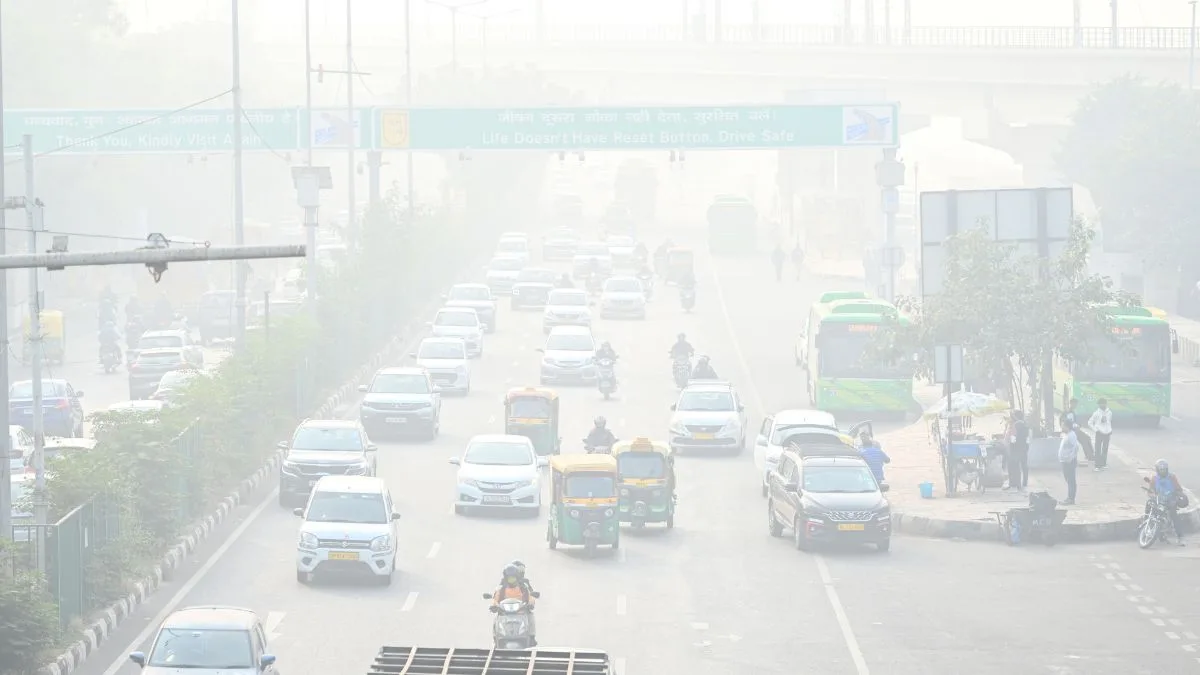
Delhi has topped the most polluted list among 33 states and Union Territories in the country, as per a study by the Centre for Research on Energy and Clean Air (CREA).
The national capital recorded the highest annual average PM2.5 level at 101 micrograms per cubic metre, 2.5 times higher than the Indian standard and 20 times higher than the World Health Organisation (WHO) guideline.
Advertisement
Another interesting revelation made by the study stated that not a single Indian district meets the global air quality standard. And about 60 per cent exceed the national standard for annual PM2.5 levels.
The study also revealed that the pollution struggle is not just restricted to metro cities and smog-filled winters. All the states across the nation are experiencing high levels of pollution.
The report by the independent research organisation Centre for Research on Energy and Clean Air said that after Delhi, Chandigarh recorded the second-highest annual average PM2.5 level at 70 micrograms per cubic metre during the study period from March 2024 to February 2025, followed by Haryana at 63 and Tripura at 62.
The findings in the report are extracted from high-resolution satellite data, offering a broad view of the quality of India’s air. The study stated that not even a single district out of 749 districts met the World Health Organisation (WHO) guideline of 5 μg/m³ for annual PM2.5. And a total of 447 out of 749 districts crossed the National Ambient Air Quality Standards (NAAQS) of 40 μg/m³.
States with most polluted districts
Assam and Delhi have 11 districts each ranked among the 50 most polluted districts. In second place are Haryana and Bihar, with seven districts each.
Every district in Delhi, Tripura, Punjab, Haryana, Himachal Pradesh, Meghalaya, and Chandigarh breached standards except during the monsoon.
Around 82 per cent of districts exceeded the NAAQS during the winter. While during the monsoon, only 10 per cent of districts exceeded the NAAQS, the number shot up to 75 per cent immediately after.
Of the 33 states and Union Territories studied, 28 had at least one district crossing the annual NAAQS. Not a single state met the WHO guideline.
Southern states offer a ray of hope
Puducherry recorded the lowest concentration at 25 µg/m³, followed by Tamil Nadu, Karnataka, Telangana, Kerala, and Andhra Pradesh. Puducherry recorded the lowest concentration at 25 µg/m³, followed by Tamil Nadu, Karnataka, Telangana, Kerala, and Andhra Pradesh. As per Central Pollution Control Board (CPCB) 24-hour average AQI as of 4:00 PM, November 24, 2025, Tamil Nadu dominates with 8 cities recording ‘Good’ air quality, Ariyalur leads at AQI 13. Meanwhile, Ooty, Tamil Nadu logged in AQI at 15; Karur, Tamil Nadu recorded AQI at 16; Tiruchirappalli, Tamil Nadu recorded AQI 16; Thanjavur, Tamil Nadu logged in AQI at 17.