The Congress party on Sunday strongly criticised Prime Minister Narendra Modi’s recent GST reforms, calling them “inadequate” and a “Band-Aid solution” to the deep wounds inflicted on the public by the current tax regime.
Reacting to PM Modi’s address to the nation today, the Prime Minister emphasised the importance of self-reliance and encouraged citizens to prioritise “Made in India” products, as the country gears up to implement significant Goods and Services Tax reforms from tomorrow. The reforms, he said, aim to simplify the tax structure, reduce prices, and boost economic growth.
Advertisement
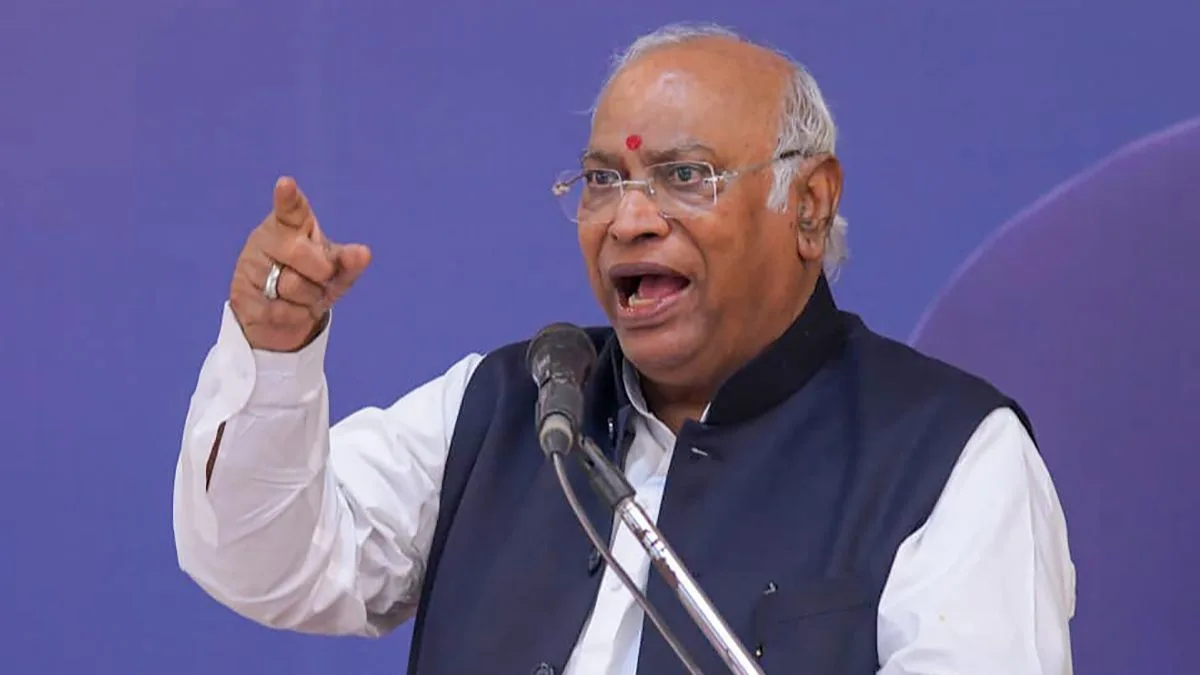
Congress president Mallikarjun Kharge and leader Jairam Ramesh both spoke out against the reforms, questioning their effectiveness in addressing the concerns of the common man.
In a post on handle X, Mallikarjun Kharge remarked: “After devouring nine hundred rats, the cat set off for Hajj! Instead of the Congress’s simple and efficient GST, your government imposed a ‘Gabbar Singh Tax’ by collecting through 9 separate slabs and has collected more than Rs 55 lakh crore in 8 years.”
“Now, by talking about a Rs 2.5 lakh crore ‘savings festival,’ you’re trying to put a small Band-Aid on the deep wounds inflicted on the public,” Kharge said, asserting: “The public will never forget that you collected the highest GST on their dal-chawal-grain, pencils, books, treatment, farmers’ tractors—everything. Your government should apologise to the public!”
In a separate post on X, Jairam Ramesh said : “The Prime Minister addressed the nation today to claim sole ownership of the amendments made to the GST regime by the GST Council, a constitutional body.”
“The Indian National Congress has long argued that the GST has been a Growth Suppressing Tax. It is plagued with a high number of tax brackets, punitive tax rates for items of mass consumption, large-scale evasion and misclassification, costly compliance burdens, and an inverted duty structure,” Ramesh claimed.
He further said: “The current GST reforms are inadequate. Outstanding issues include the widespread concerns of MSMEs, sectoral issues, and the key demand of the states made in the true spirit of cooperative federalism—namely, the extension of compensation for another five years to fully protect their revenues—remains unaddressed.”
The Congress has been demanding a GST 2.0 since July 2017, citing the need for a more simplified and efficient tax regime. The party’s Nyay Patra for the 2024 Lok Sabha Elections also included a pledge to reform the GST regime. The current GST reforms aim to simplify the tax structure, reduce prices, and boost economic growth. However, the Congress believes that these reforms do not go far enough in addressing the concerns of the common man.