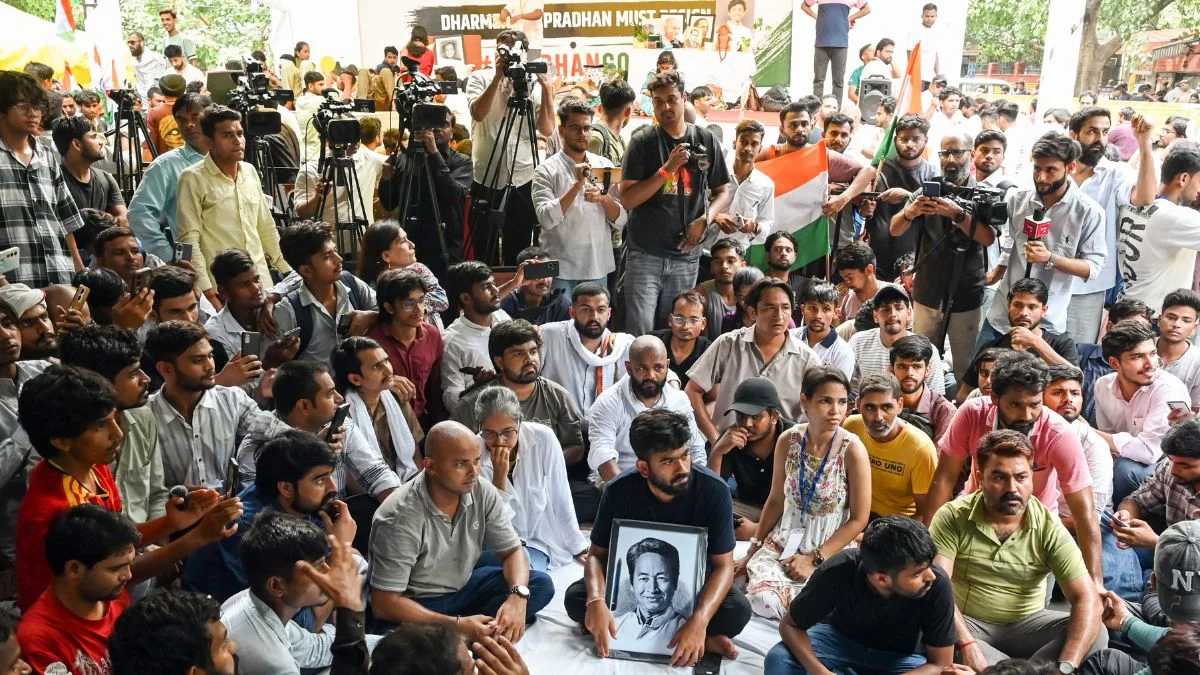
‘Zero conviction in 152 paper leaks’: Rahul Gandhi says India’s education system ‘rigged’ under current dispensation
Rahul Gandhi has alleged that the education system has been “rigged” under the current dispensation.
The party also plans to run a village-level campaign to defend Gandhi’s legacy.




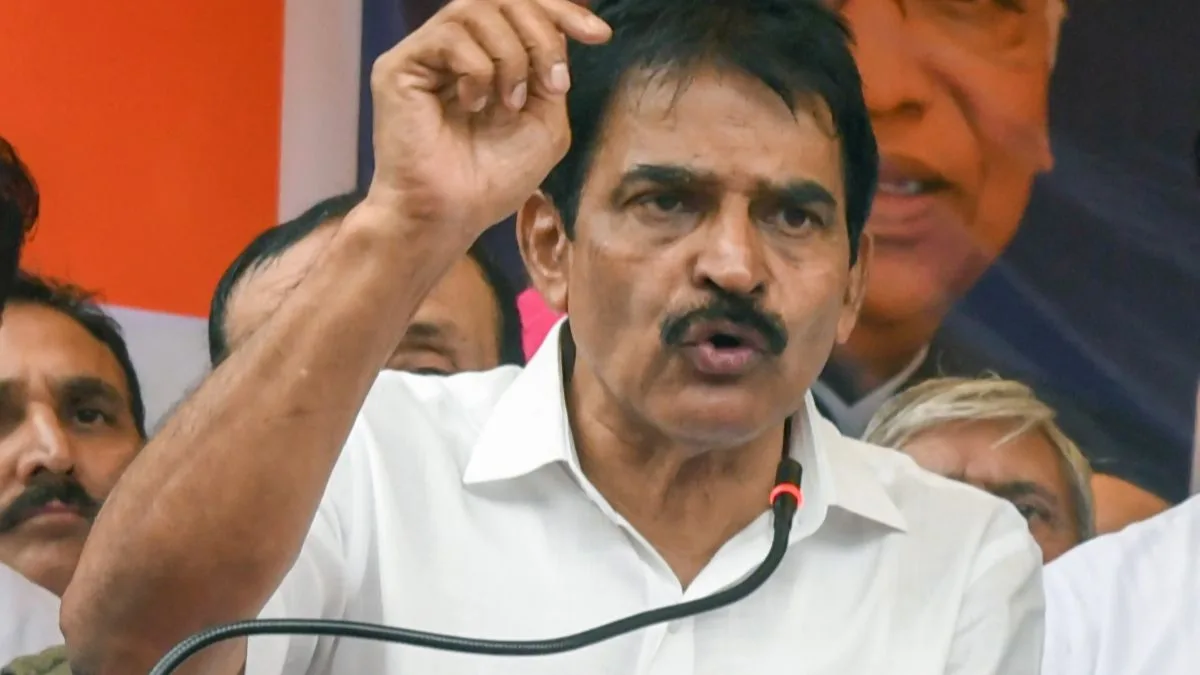
File Photo: IANS
The Congress party Tuesday announced a massive nationwide agitation scheduled for Wednesday, December 17, to oppose the Union government’s alleged attempt to repeal the Mahatma Gandhi National Rural Employment Guarantee Act (MGNREGA).
Additionally, the party revealed plans for a village-level campaign on the 141st Foundation Day of the MGNREGA, December 28, aimed at defending Mahatma Gandhi’s legacy and protecting rural labourers’ rights.
Advertisement
The escalation follows the government’s introduction of the Viksit Bharat — Guarantee for Rozgar and Ajeevika Mission (Gramin) (VB-G RAM G) Bill, 2025, in Parliament. While the government claims the new legislation enhances rural employment by increasing guaranteed work to 125 days, the Opposition views it as a strategic move to dismantle the demand-driven right to work and centralize control.
Advertisement
Congress General Secretary (Organisation) K C Venugopal took to social media to announce the party’s leadership in a “people’s movement” against the Bill. He hailed MGNREGA as a landmark UPA achievement that provided a critical lifeline during crises like the pandemic. “Our struggle is not against an ordinary Bill; it is a fight to defend a hard-won right that sustains millions’ survival, dignity, and hope,” he said, urging protests at all District Headquarters on December 17.
The party plans to transform its Foundation Day into a symbolic homage to Mahatma Gandhi, directing workers to organize events in every mandal and village, prominently featuring Gandhi’s portraits to protest what they call a “direct attack on Bapu’s legacy” following the removal of his name from the scheme.
Key changes in the new NDA Bill include:
Funding Shift: Transition from fully central funding to a 60:40 cost-sharing model with states (90:10 for Himalayan and Northeastern states).
“Agricultural Pause”: A 60-day halt on public works during peak agricultural seasons to prioritize farm labor, which Congress argues denies workers their legal employment rights.
Centralized Budgeting: Replacement of the demand-driven approach with normative allocations controlled by the Centre.
Earlier, Priyanka Gandhi and senior Congress leaders criticized the government’s “obsession” with renaming schemes, emphasizing that dropping Gandhi’s name signals a deeper intent to erode the legal right to work.
Leader of the Opposition Rahul Gandhi, on social media platform X, accused Prime Minister Modi of harboring a “deep dislike” for poor citizens’ rights. He called MGNREGA the “living embodiment” of Gandhi’s Gram Swaraj vision, essential during the COVID-19 pandemic. “For ten years, this government has weakened it; now it aims to erase it completely,” Rahul Gandhi declared.
Opposition allies such as the TMC and DMK also voiced concerns, criticizing the financial strain the Bill places on states already facing fiscal challenges. The government, however, defends the Bill as a step toward a modernized “Viksit Bharat 2047,” focusing on creating sustainable rural assets like water security and climate-resilient infrastructure.
As the Winter Session intensifies, the battle over MGNREGA is moving beyond Parliament to the streets, with Congress pledging continued protests until the Bill is referred to a Standing Committee for detailed examination.
Advertisement