Extraction of minerals from the Indian offshore: Opportunities and challenges
The mineral economy of India is at a crucial moment of structural transition.
Prime Minister Narendra Modi and Chinese President Xi Jinping met on the sidelines of the SCO Summit in Tianjin. The leaders agreed that India and China must cooperate to realise the Asian century and maintain peace along the border, with consensus on deepening strategic communication, expanding cooperation, and safeguarding common interests.




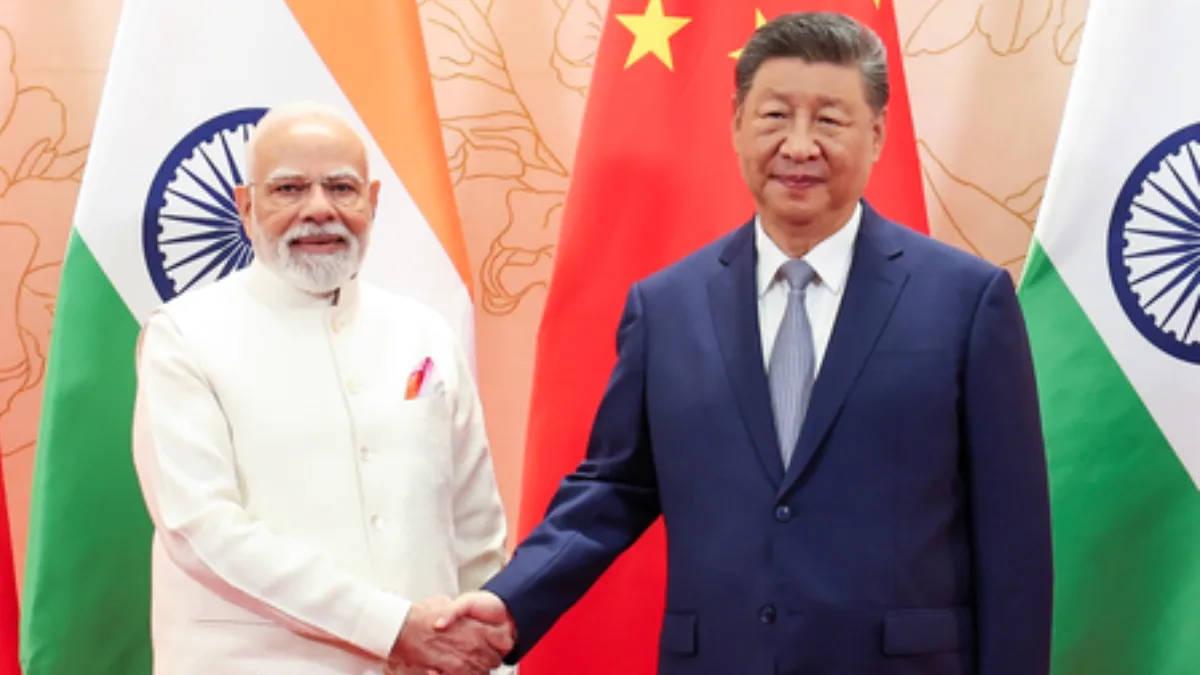
Tianjin: PM Modi meets Xi Jinping (Photo Credits: IANS)
The Ministry of External Affairs on Friday said that the Prime Minister Narendra Modi and his Chinese President Xi Jinping, at the SCO Summit in China, agreed that India and China must grow and cooperate if there is to be an Asian century and a functioning multipolar world order with a multipolar Asia at its heart.
Foreign Secretary Vikram Misri, in a presser, said, “The Prime Minister is on a visit to Tianjin for the SCO summit taking place here. Prime Minister’s first engagement this morning was a bilateral meeting with President Xi Jinping of the People’s Republic of China. We released a statement on that meeting. This is the second meeting between the two leaders in the space of less than a year. Their last meeting was in Kazan in October last year, where they had laid down certain strategic guidelines for the development of bilateral relations and set out certain goals to be achieved by the two sides.”
Advertisement
On PM Modi’s bilateral meeting with Chinese President Xi Jinping, Misri stated, “They both agreed that the two countries were primarily focused on their domestic development goals, and in this, they were partners rather than rivals. It was also an element of consensus between them that a stable and amicable relationship between India and China can be to the benefit of the 2.8 billion people who live in the two countries.”
Advertisement
“The common interests of the two countries outweigh their differences, and the two leaders also shared a consensus on the fact that differences should not be allowed to be turned into disputes. It was also understood that India and China must grow and cooperate if there is to be an Asian century and a functioning multipolar world order with a multipolar Asia at its heart,” he added.
#WATCH | Tianjin, China: Foreign Secretary Vikram Misri says, “The PM had a separate meeting with Cai Qi, member of the CCP Politburo Standing Committee. There was originally a proposal from the Chinese side for Mr. Cai to host a banquet for the Prime Minister on behalf of… pic.x.com/UtadDpCvf7
— ANI (@ANI) August 31, 2025
Both leaders expressed satisfaction with the progress achieved and the steps taken since their last meeting in Kazan, noting that bilateral ties had continued to gather momentum, particularly in the sphere of people-to-people exchanges, stated MEA.
They discussed their respective views on the principles guiding India-China relations, which they felt would shape future cooperation across other areas as well, stated the MEA.
The two leaders agreed that their countries remain primarily focused on domestic development objectives, seeing one another more as partners than as competitors in this pursuit, as per MEA.
They also shared the understanding that a stable and cordial relationship would serve the interests of the 2.8 billion people living in India and China, said Misri.
Emphasizing that the commonalities between the two nations far outweigh their differences, they concurred that disagreements must not be allowed to escalate into disputes, added Misri.
The boundary issue was discussed, with both leaders noting last year’s disengagement and the maintenance of peace in border areas, apprised Misri.
PM Modi stressed that peace and tranquillity along the border are essential for the smooth progress of bilateral ties.
Both sides agreed to uphold peace through existing mechanisms and to prevent disturbances in overall relations.
President Xi proposed four steps to advance ties: enhance strategic communication and trust, expand exchanges and cooperation, ensure mutual benefit and win-win outcomes, address each other’s concerns, and strengthen multilateral coordination, stated Misri.
Advertisement