India announces $450 million relief package for Lanka after Cyclone Ditwah
External Affairs Minister S Jaishankar on Tuesday announced India’s decision to offer a reconstruction package of USD 450 million to Sri Lanka post ‘Cyclone Ditwah’.
The cyclone ‘Montha’ over the Bay of Bengal has intensified into a severe cyclonic storm and is likely to make…




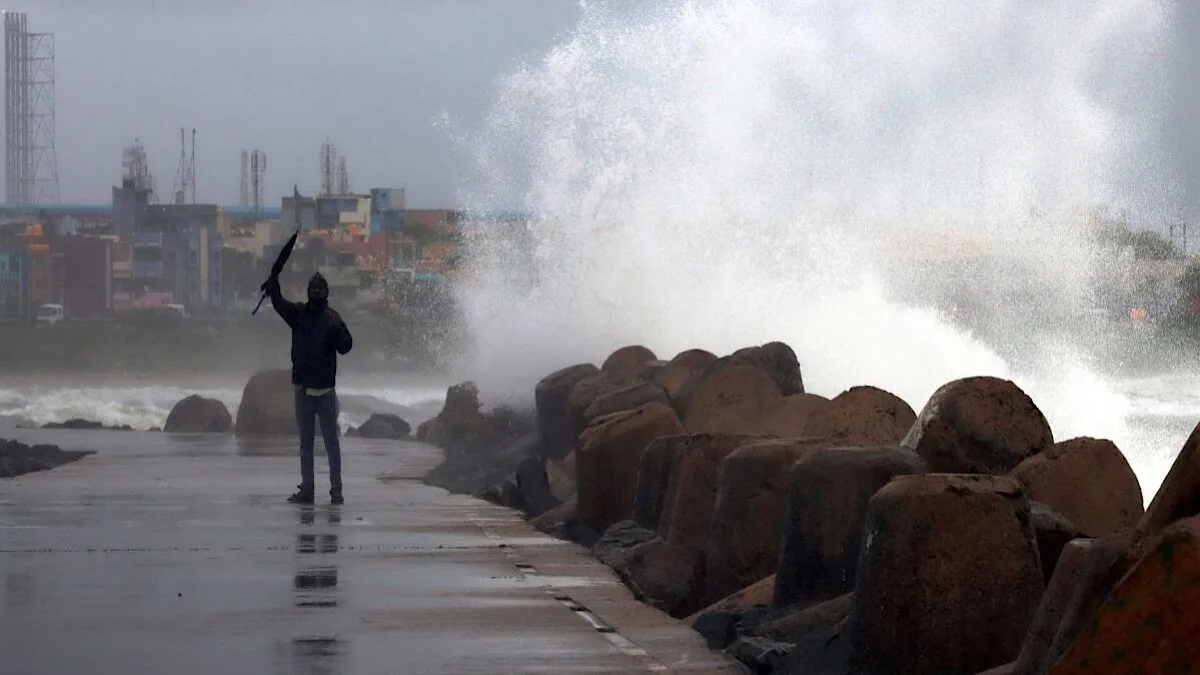
Representative image
The cyclone ‘Montha’ over the Bay of Bengal has intensified into a severe cyclonic storm and is likely to make landfall over Andhra Pradesh coast near Kakinada on Tuesday evening.
In view of the cyclone, a red alert has been issued in Andhra Pradesh with authorities evacuating people from vulnerable areas ahead of the landfall.
Advertisement
Andhra Pradesh Chief Minister Chandrababu Naidu has directed officials to stay alert and monitor the cyclone’s movement every hour.
Advertisement
Besides Andhra Pradesh, states of Odisha, Telangana and Tamil Nadu are also bracing for the impact as Indian Meteorological Department (IMD) has predicted heavy rains accompanied by gusty winds.
While the government is racing against time to prepare for the cyclonic storm’s landfall to minimise the its impact, it has also asked people to take precautionary measures and avoid going out during the storm and follow the instructions of the local administration.
Below is your guide to the Dos & Don’ts during a cyclone:
Before the cyclone
1. Check your house, secure loose tiles and carry out repairs of doors and windows.
2. Remove dead branches or dying trees close to the house, anchor removable objects such as lumber piles, loose tin sheets, loose bricks, garbage cans, sign-boards etc. which can fly in strong winds.
3. Keep some wooden boards ready so that glass windows can be boarded, if needed.
4. Keep a hurricane lantern filled with kerosene, battery operated torches and enough dry cells.
5. Keep some dry non-perishable food always ready for use in case of emergency.
During the cyclone
1. When the cyclone starts, listen to the radio for weather warnings and keep monitoring for alerts and updates.
2. Help each other, and pass on the information to your neighbours and relatives.
3. Ignore rumours and avoid spreading unverified information. Always believe in the official information coming from government sources.
4. When your area is under cyclone warning, get away from low-lying beaches or other low-lying areas close to the coast.
5. Leave early before your way to high ground or shelter gets flooded.
6. If your house is securely built on high ground, take shelter in the safe part of the house. However, if asked to evacuate do not hesitate to leave the place.
7. Board up glass windows or put storm shutters in place. Provide strong suitable support for outside doors.
8. Get extra food, which can be eaten without cooking. Store extra drinking water in suitably covered vessels.
9. If you have to evacuate the house, move your valuable articles to upper floors to minimize flood damage.
10. Ensure that your hurricane lantern, torches or other emergency lights are in working condition and keep them handy.
11. Small and loose things, which can fly in strong winds, should be stored safely in a room.
12. During the cyclonic storm, do not go out and switch off the electrical mains in your house.
13. Last but not the least, remain calm and do not panic.
Don’t during a cyclone
1. DO NOT venture out even when the winds appear to calm down. The ‘eye’ of the cyclone might be passing. Winds might intensify and gush again and cause damage. Be safe inside till it is officially announced that the cyclone has passed.
2. Do not worry about your property as saving lives matter the most.
3. Do not ignore official warnings or instructions of the local administration.
Advertisement