Women hail free bus rides in state buses starting Monday
Women commuters hailed the West Bengal government’s scheme of allowing women to travel free in state-run buses starting today.
I revisited the ancient town of Alberobello, about two hours by bus from Monopoli with a change in the little town of Turi.




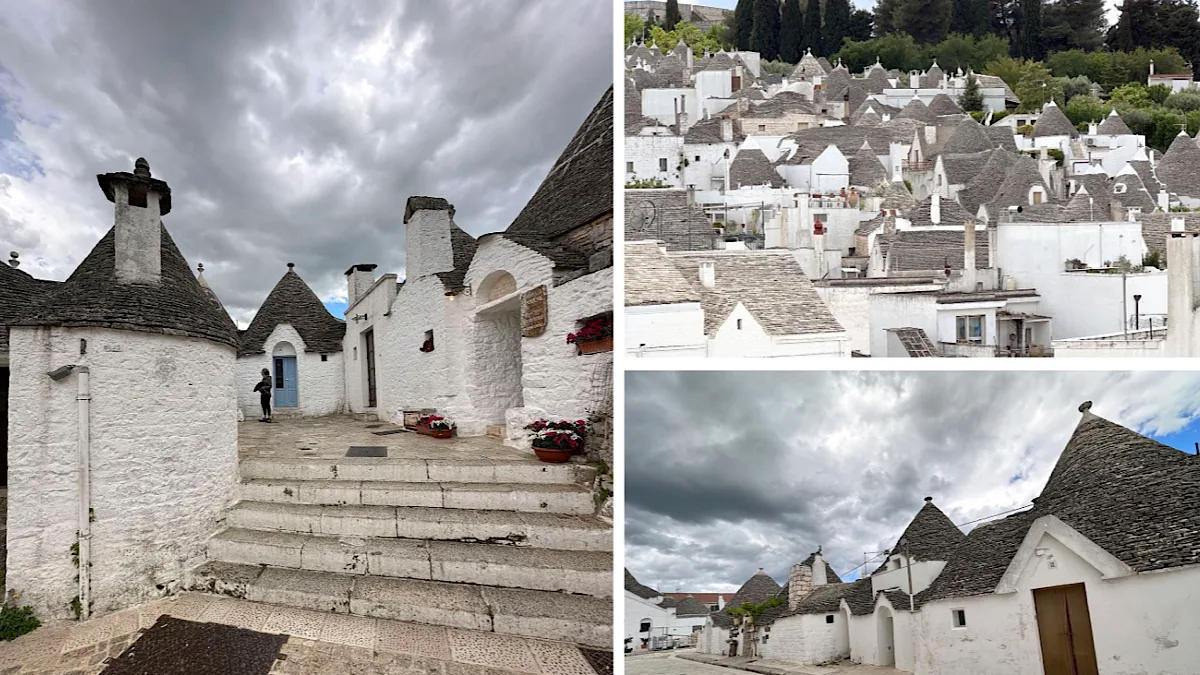
Photo:SNS
I revisited the ancient town of Alberobello, about two hours by bus from Monopoli with a change in the little town of Turi. Although I was there last year, Alberobello never loses its magical charm. It feels like a place born from a fairy tale—nestled in the heart of the Itria Valley between the Apulian provinces of Bari, Brindisi, and Taranto.
Although the day was overcast and somber, the whitewashed homes had not lost their lustre. Their conical roofs still rose with quiet dignity beneath the darkened sky. Built entirely of dry stone without mortar, these dwellings—known as trulli—are Alberobello’s claim to fame, timeless testaments to the ingenuity and resilience of its people.
Advertisement
The origins of the trulli are as fascinating as their appearance. Local lore tells us that, in the 14th century, residents began building these temporary-looking homes to evade the heavy property taxes imposed by the ruling nobles. Because trulli could be dismantled quickly, they helped townspeople avoid taxation on “permanent” dwellings—a clever act of quiet rebellion turned architectural wonder.
Advertisement
Over the centuries, what began as necessity became beauty. The clustered cones of Alberobello now form one of Italy’s most striking landscapes—a living museum of limestone and light. In 1996, UNESCO recognized this extraordinary town as a World Heritage Site for preserving an architectural tradition found nowhere else on earth.
Today, many trulli have been restored and transformed into cozy inns, restaurants, and boutiques. Wandering through the serpentine lanes, one can see how Alberobello remains a special place where its rich history is quietly preserved beneath its conical roofs.
Advertisement