Special | Shera returns to the spotlight: Why Ravneet Bittu is revisiting a controversial chapter of Punjab’s militancy
Bittu's recent posts are widely being viewed as part of his response to criticism he has faced over his opposition to Satluj.
A film meant to revisit Punjab’s troubled past has now sparked a heated debate over history, facts and accountability. As questions grow louder, the makers of Satluj are being asked to back their claims with evidence.




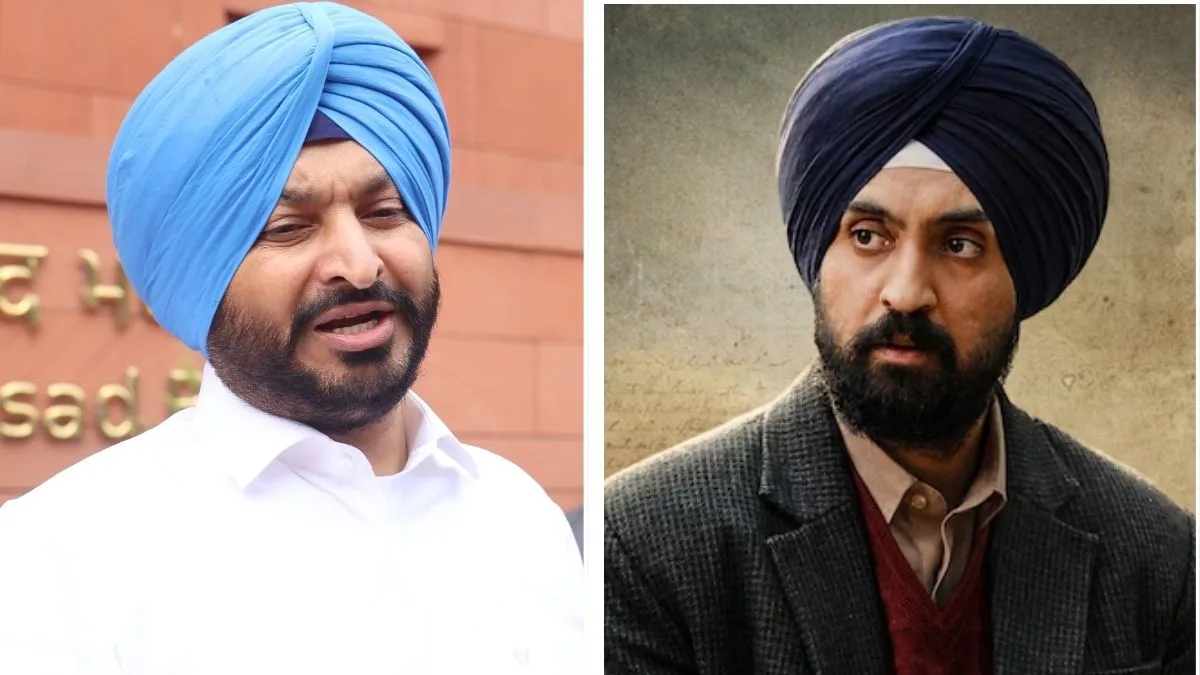
Image Source: X
Union Minister of State for Railways Ravneet Singh Bittu has strongly criticised the makers of the film ‘Satluj’, saying they cannot use “creative freedom” as a shield while presenting disputed claims as if they are proven historical facts.
In a statement issued on Sunday, Bittu said that Punjab’s tragic history should not be selectively presented to support a particular narrative. According to him, the state’s painful past deserves a fair and fact-based representation rather than one-sided storytelling.
Advertisement
A major concern raised by the minister is the film’s claim that 25,000 people went missing or were illegally cremated during Punjab’s troubled years.
Advertisement
Bittu challenged the film’s producer and director to publicly present all documentary evidence, official government records, judicial findings, and authenticated data that fully support this number.
He questioned whether the figure was based on verified facts or simply an estimate or allegation.
“If this number has not been conclusively established by any final judicial decision, why has it been shown as an accepted historical fact?” he asked. He also questioned why viewers were not informed that the figure remains disputed and has not been officially confirmed.
Bittu also accused the filmmakers of leaving out several important parts of Punjab’s history during the years of terrorism.
The Union Minister, who is the grandson of former Punjab Chief Minister Beant Singh, said people deserve answers about what he described as selective portrayal of one of the state’s darkest periods. Beant Singh was assassinated by Khalistani militants in Chandigarh in 1995.
Bittu asked why the film does not give equal attention to the killings of innocent civilians, including Hindus, bus passengers, shopkeepers, government employees, labourers and ordinary citizens who lost their lives in terrorist attacks.
He also questioned why the sacrifices made by Punjab Police personnel, security forces and many brave citizens who fought terrorism have not been shown with the same importance.
According to him, thousands of families that suffered because of terrorist violence appear to be largely missing from the film’s narrative.
The minister argued that every victim of Punjab’s violent past deserves equal remembrance, regardless of religion, community or political belief.
He said one side of history should not be highlighted while the suffering of many other victims is pushed into the background.
Bittu further questioned why controversial claims in the film were presented without clearly explaining whether they were allegations, estimates or officially verified facts.
He maintained that filmmakers have a responsibility to distinguish between disputed claims and established history instead of presenting both in the same way.
Bittu called on the makers of ‘Satluj’ to publicly release the evidence supporting the figure of 25,000 missing or illegally cremated people within a reasonable period.
He said that if the filmmakers are unable to provide credible and verifiable proof, they should issue a public clarification stating that the number is not an officially verified count.
The minister also warned that legal and constitutional options could be explored if historical facts are found to have been misrepresented before the public.
Concluding his statement, Bittu said Punjab suffered enormously during the years of terrorism and every innocent victim deserves justice and recognition.
He stressed that history should not be rewritten through selective storytelling or emotional narratives that overlook verified facts.
“Punjab’s history cannot be rewritten through selective storytelling. Truth must prevail over propaganda, facts over fiction, and evidence over emotion,” he said.
Advertisement