Kajol offers prayers at Dakshineswar Kali Temple | Watch
The visit has led to speculation surrounding her visit leading many to question if she is going to shoot a new film in the city.
While we have been introduced to Tanaji as a warrior, the song “Maay Bhavani” portrays him as a family man with glimpses of the endearing bond he shared with his wife.




(Instagram/@ajaydevgn)
The makers of Tanhaji: The Unsung Warrior has released their new song. The song cherishes the Marathi tradition of worshipping the Goddess around the festival of colours ‘Holi’. On Thursday, Ajay Devgn took to his official Instagram handle to share the new song from the film.
Advertisement
View this post on Instagram
Advertisement
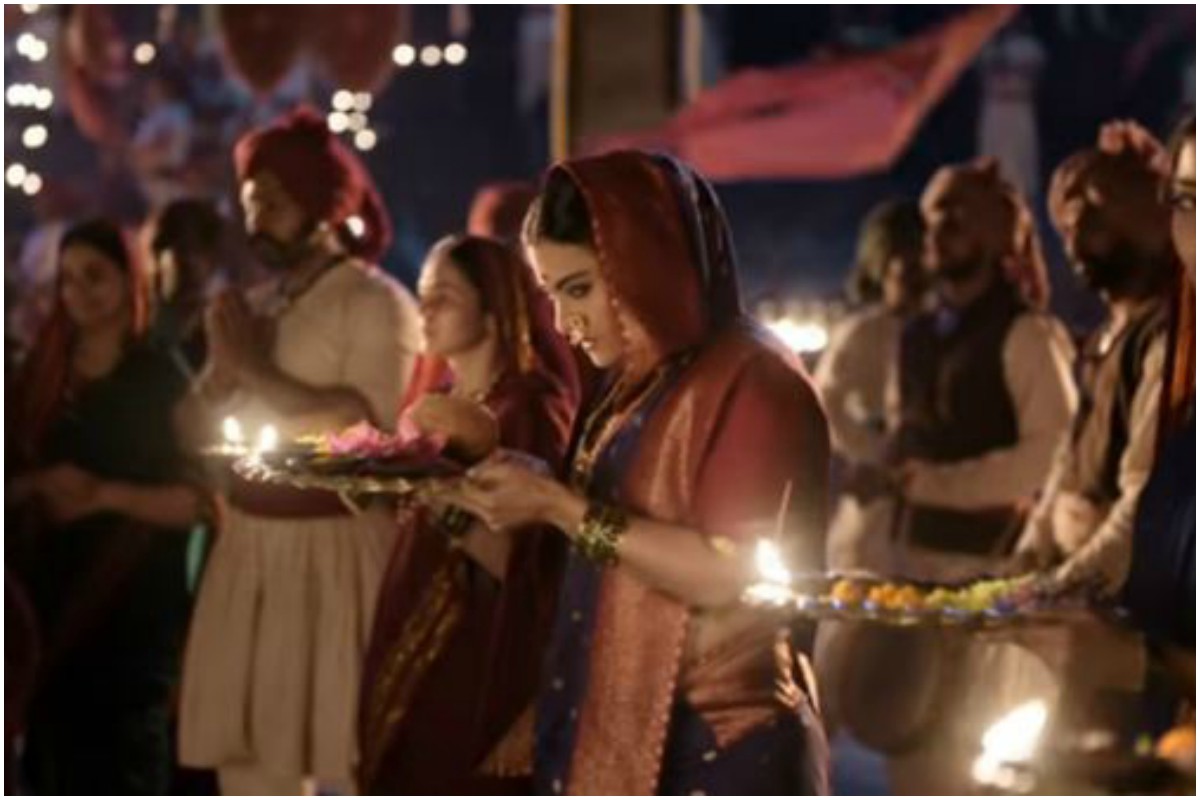
“Maay Bhavani” is set against a festive background with Savitribai Malusare presiding over a puja. While we have been introduced to Tanaji as a warrior, the song “Maay Bhavani” portrays him as a family man with glimpses of the endearing bond he shared with his wife.
In the video, Kajol can be seen sitting on Ajay’s lap as he gazes at the sky. Ajay is taken by surprise and asks Kajol, “Ye kay ahe? (What is this)” Kajol responds, “Maa Bhavani bhagwan Shankar ke god me baithe to sahi aur mai apne pati ki god me baithu to galat? (It is right when Goddess Bhavani sits on God Shankar’s lap but I am wrong if I sit on my husband’s lap?)” The conversation questions the thinking which makes our society worship female figures but ignore the human feelings of the women around us.
The video then moves to a grand social gathering where Kajol leads a group of women to worship their idol, “Maa Bhavani”, as they celebrate what looks like Shimgo festival. The festival is mostly celebrated in Konkani communities and marks the arrival of the Goddess, days ahead of the Hindu festival of colours, Holi.
Composed by Ajay-Atul, “Maay Bhavani” has been sung by Sukhwinder Singh and Shreya Ghosal. Directed by Om Raut, Tanhaji: The Unsung Warrior releases on January 10, 2020.
Watch Trailer
Advertisement