Uttarakhand CM Dhami wants early completion of construction projects in poll year
Uttarakhand Chief Minister Pushkar Singh Dhami wants all construction projects completed before October as state elections are scheduled for early 2027.
Tourists heading to the hills look for relief from the heat in the plains. But, they are surprised when they get no relief from the heat. They also complain of missing the view of snow-peaked Himalayan ranges.




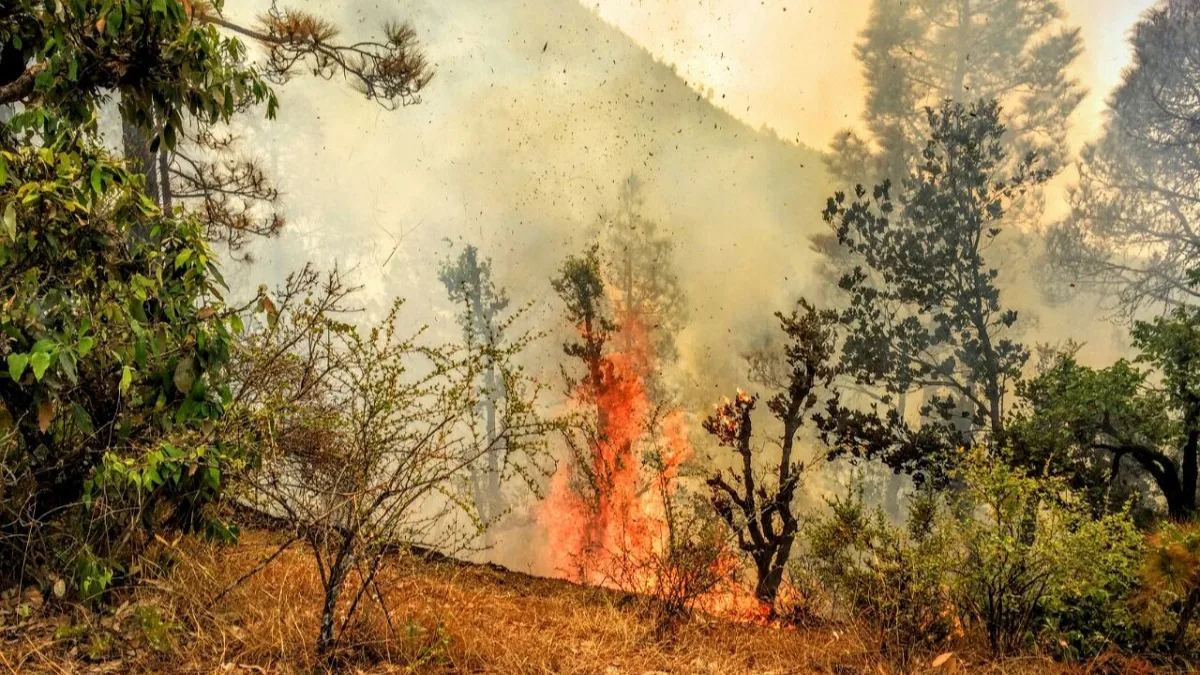
Photo: SNS
With a boom in tourism activities in the hills, Uttarakhand has seen drastic changes in its climate. A state, which thrives on tourism, has so much to offer. From pilgrimage, adventure, wellness, wildlife, nature, culture, leisure to hill stations, Uttarakhand offers wide choices to tourists.
The Himalayan ranges are mostly in the Kumaon and Garhwal region. Peaks like Nanda Devi (7,816m) and Nanda Kot (6,861), apart from the Panchachuli peaks and Mt Trishul, are sought-after destinations in the summers.
Advertisement
Tourists heading to the hills look for relief from the heat in the plains. But, they are surprised when they get no relief from the heat. They also complain of missing the view of snow-peaked Himalayan ranges.
Advertisement
Till the rains arrive, the excessive heat is another botheration for the tourists, who spend thousands of rupees to be in cooler climes. They also complained about forest fires in May, blocking their view of mountain ranges.
The fires are not only generating excessive heat, it is also generating smoke, which is clouding the view of the mountain ranges. It is also leading to high temperatures.
A tourist from Palta, Barrackpore in West Bengal, Das, had come to the hills with his family with the hope of seeing the Himalayan range. But he was devastated. “We had come all this distance (Binsar) to see the range. But what we see is smoke everywhere.”
Another set of tourists, retired friends from Chandannagar, Hooghly, West Bengal, were visiting Chaukori with their wives just to see the Nanda Devi range. Armed with a telephoto lens, they left disappointed. “Our dream of capturing the range in our cameras has remained a dream. The forest fires have ruined our visit,” said one of the friends.
A dentist from Barrackpore, on a trail of the mountain peaks also complained of the smoke blocking his view at Binsar.
Vivek Pandey, who runs a quaint little space with five-six rooms, Chestnut Grove in Vijaypur, said the fires have been a spot of bother not only for the tourists but also for nature lovers like him.
“We get a lot of tourists who tell us they expected the weather to be cleaner and greener and the forest fires have ruined their visit. We have had incidents where the guests have checked out early as they had no sighting of the Himalayan ranges,” Pandey said.
“It is disappointing for us, not only from the business point of view but also for our love for nature. Whenever we see or hear of a forest fire, we try to stop it on our own without bothering to call for any help,” he added.
Padma Shree awardee Anil P Joshi, an environmentalist, who runs Himalayan Environmental Studies and Conservation Organization, felt the recurrence of forest fires in the last decade and a half, even in winters. If there is no winter rain, it is catastrophic for the hills, he said, attributing this phenomenon to global warming.
“We have been noticing that if there is no rain in winters, the summer become treacherous. Also, when the soil is run out of moisture due to heat, leave settings go higher. During fire, the leaves catch fire first and then it leads to canopy fire. This means destruction of trees, which are mostly chir pine in Uttarakhand,” Joshi said.
He agreed that villagers also are to blame for the fires. “It cannot be denied that the villagers are lighting these fires many a times for the simple reason that there is a practice that the chir pine leaves would be collected to turn it into carbon which would enrich the soil. But the forest fires have a damaging effect on the forests. With little moisture in the top soil, the fire dries up even that. This means the soil becomes frail and when it rains, the top soil is washed away. This also makes regeneration of natural species very difficult,” the nature scientist said.
He also cites high tourist flow as another reason for the forests to suffer, environmentally. “The number of vehicles in the hills has also gone up by many folds, leading to more carbon dioxide release. This CO2 travels upwards and sticks at the glaciers. When the sun shines, its rays are no more reflected by the glaciers. As a result, the glaciers get heated and melt,” Joshi warned.
Joshi and his team is now working at preventing fires through water. “We propagate making waterholes in the forests, which will store the rain water. The water on the surface would mean more moisture to the top soil, leading to more green plants. This fresh growth will prevent forest fires,” Joshi said.
Around 1.72 hectares of forest have been damaged by fires in 97 days till the last week of May. So far in the fire season, about one hectare of forest has been destroyed by fire, said a report by Dainik Jagran.
Hemendra Bartwal, a political analyst and journalist, who has his ancestral house in Pouri town, under Pouri Garhwal district in Uttarakhand, agreed that each year the fires play havoc with the pollution and tourism.
He said during his childhood days the forest fires were very rare and never reached his house, which is very close to the forest. But in the last 10-15 years, these first fires have gone up manifold, he said, which is altering the climate of the area, he added.
“The population has gone up. Many govt accommodations have come up in the forests after unrestricted cutting of trees. Vehicular traffic has also gone up, leading to pollution. Tourism infrastructure is crumbling. The dry grass forms a carpet on the ground and is unsuitable for the livestock. This carpet also restricts further growth of fresh grass, which is why the villagers burn the dry grass. After trains, fresh grass grows, which helps them feed their livestock,” Bartwal said.
The veteran journalist said the government has tried to tell the villagers that they should not put in these fires and also offered them with incentives but it has not worked.
“The timber mafia has its own agenda. Since cutting trees in the hills is a crime, the mafia encourages the burning of grass. When the grass burns, the pine tree roots and its base is also burnt to a certain extent. The trees become weak and fall. Then the forest dept auctions these trees, helping the timber mafia,” Bartwal added.
Advertisement