A new rice cultivation technique developed and tested in West Bengal has shown the potential to reduce carbon emissions from paddy fields while maintaining soil fertility and increasing crop yields, raising hopes for a more sustainable future for rice farming.
The findings, published in the internationally reputed journal Advanced Science, are the outcome of a two-year study led by Arnab Majumdar of Imperial College London, in collaboration with researchers from IIT Kanpur, IISER Kolkata, Jadavpur University, the University of Kalyani, Odisha University of Agriculture and Technology (OUAT), the University of Reading (UK) and the University of Ulsan (South Korea).
Advertisement
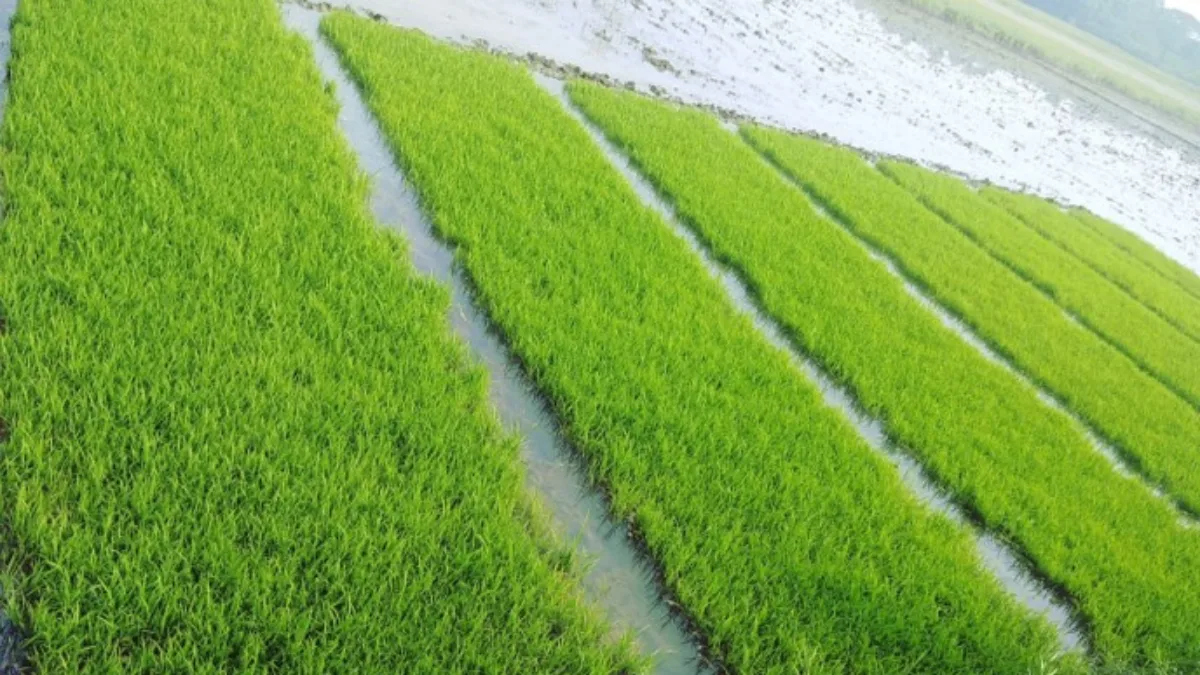
The research was conducted across 12 paddy fields in Nadia district of West Bengal, where scientists tested a newly developed Furrow Tillage Field (FTF) system. The method combines features of conventional ploughing and no-tillage farming to overcome the drawbacks of both.
Advertisement
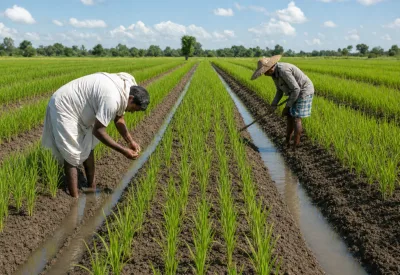
Agriculture is one of the major sources of greenhouse gas emissions because disturbing the soil during cultivation releases stored carbon into the atmosphere. While conventional ploughing improves nutrient availability for crops, it also leads to greater carbon loss. No-tillage helps conserve soil carbon but can reduce nutrient availability and crop performance.
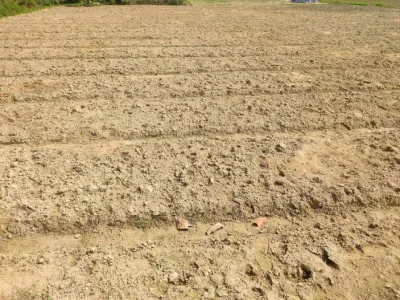
The newly developed Furrow Tillage system seeks to strike a balance. Instead of ploughing the entire field, farmers leave the central planting bed undisturbed while maintaining narrow water-filled furrows on either side. This arrangement creates favourable soil conditions that help retain carbon while ensuring that plants continue to receive the nutrients they need.
“Our study addresses a problem that has challenged agricultural scientists for decades,” said Arnab Majumdar, who led the project. “Furrow Tillage breaks the long-standing trade-off between reducing carbon emissions and maintaining soil nutrients. Until now, farmers generally had to compromise one to achieve the other.”
According to Majumdar, the new system reduced daily carbon emissions from the soil by about 40 per cent compared with conventional deep tillage, bringing them close to the levels seen in no-tillage farming. At the same time, it maintained nutrient availability similar to conventional ploughing and produced an average rice yield of 5.14 tonnes per hectare, around 15 per cent higher than no-tillage fields.
“These results make Furrow Tillage a promising development for sustainable agriculture,” he said.
The researchers also found that the new field design encouraged healthier soil microbial communities that help recycle nutrients and retain carbon in the soil. Together with the unique bed-and-furrow layout, these microorganisms played a key role in reducing the amount of carbon released into the atmosphere.
Tarit Roychowdhury of Jadavpur University said the technology could have a far-reaching impact if adopted on a larger scale.
“If even 30 per cent of the conventionally tilled rice fields across South and Southeast Asia adopt Furrow Tillage, it could lead to a substantial reduction in carbon emissions from agriculture across the region,” he said. “The impact could be particularly significant for India, which produces more than 27 per cent of the world’s rice.”
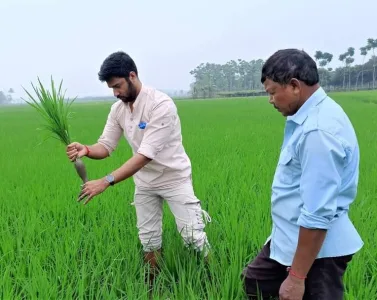
The study brought together experts in agriculture, environmental science, soil chemistry, plant biology and microbiology. Researchers monitored carbon released from the fields, analysed soil nutrients, studied plant growth and examined soil microorganisms to understand how the new farming system worked.
While the results are encouraging, the scientists stressed that further long-term studies in different soil types and climatic conditions are needed before the technique can be recommended for widespread adoption.
Supported by the National Postdoctoral Fellowship Scheme and the UKRI Marie Skłodowska-Curie–UKRI Postdoctoral Fellowship, the research offers a promising pathway towards reducing agriculture’s environmental footprint without compromising food production at a time when climate change poses growing challenges to global farming.
Advertisement