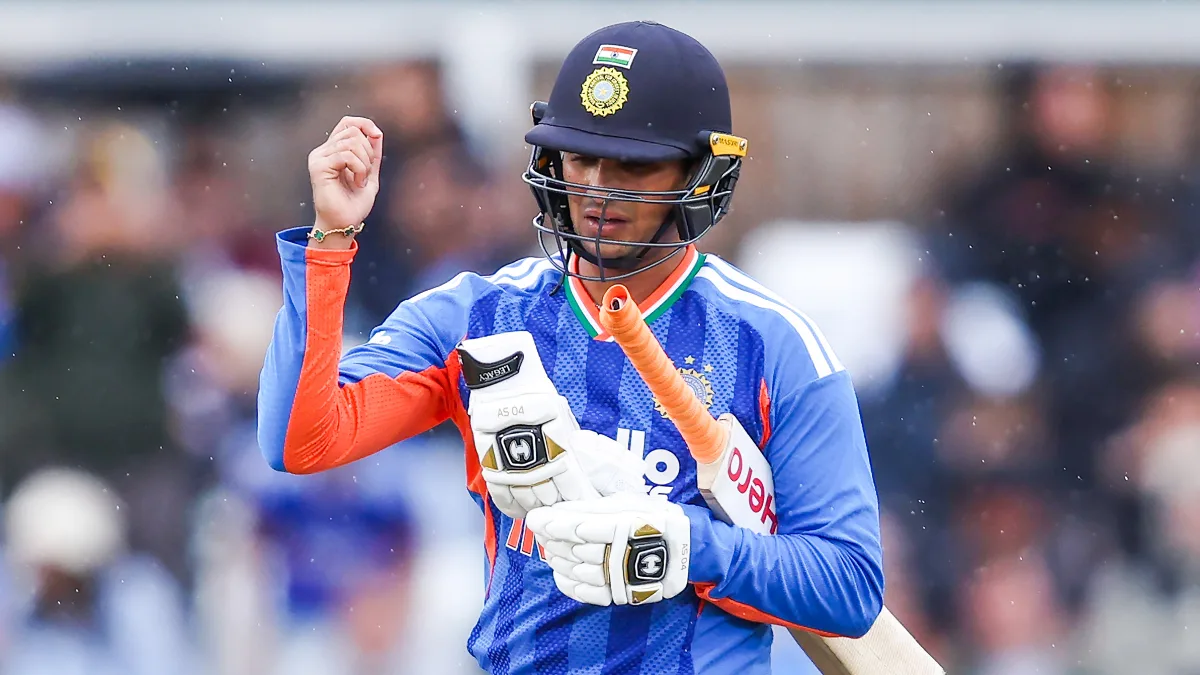
The Delhi High Court on Tuesday examined the growing legal challenges surrounding personality rights in the age of artificial intelligence while hearing a plea filed by Indian cricketer Abhishek Sharma, who has sought protection against the alleged unauthorised use of his name, image and likeness across online platforms.
Justice Jyoti Singh scrutinised several web links flagged by Sharma as allegedly violating his personality rights and observed that disputes involving manipulated online content often lie on a “thin line” between defamation and personality rights.
Advertisement
The matter has been listed for further hearing on July 9.
Court weighs AI manipulation and personality rights
During the hearing, Sharma’s counsel argued that the case was not about the publication of an ordinary photograph but the alleged manipulation of an existing image using artificial intelligence.
According to the cricketer, an original photograph featuring him and his manager was digitally altered using AI, changing its appearance and context to create a misleading image without his consent.
The petitioner contended that such manipulation amounted to an unauthorised exploitation of his personality and falsely associated him with content he had no connection to.
While hearing the submissions, Justice Jyoti Singh remarked that the rapid rise of online content had blurred the distinction between defamation and personality rights.
“We also find this every day where there is a thin line between defamation and personality rights. It is in a flux. There is a little overlap. Defamatory matter may have personality rights element,” the Court observed.
Meta raises concerns over scope of claims
Appearing for Meta, advocate Varun Pathak informed the court that two of the eight URLs currently under consideration were no longer accessible.
On one of the remaining links, Pathak argued that it resembled a “paparazzi kind of” post and did not amount to a violation of personality rights.
He further submitted that false or objectionable content would ordinarily fall under defamation or privacy law rather than personality rights.
Meta also highlighted the practical difficulties faced by intermediaries in complying with broad takedown requests.
According to the company, Sharma had initially identified around 25 URLs, but the list of allegedly infringing links later expanded to nearly 4,000.
Pathak argued that accepting such an expansive interpretation would effectively require online platforms to “clean up the internet” of all content critical of the plaintiff, regardless of whether it actually violated personality rights.
Growing AI-related legal battles
The case is the latest in a series of personality rights disputes before the Delhi High Court involving celebrities seeking protection against the unauthorised commercial use or digital manipulation of their names, photographs and identities.
With AI tools making it increasingly easy to generate realistic images and videos, public figures have increasingly approached courts to curb deepfakes, manipulated visuals and other unauthorised uses of their likeness.
In recent rulings involving actors, sportspersons and other public personalities, the Delhi High Court has recognised the need to protect personality rights while continuing to examine how such claims intersect with defamation, privacy and freedom of expression in the digital age.