Broken Chains
The rescue of a dozen workers from an industrial unit in western Uttar Pradesh is more than another criminal investigation.
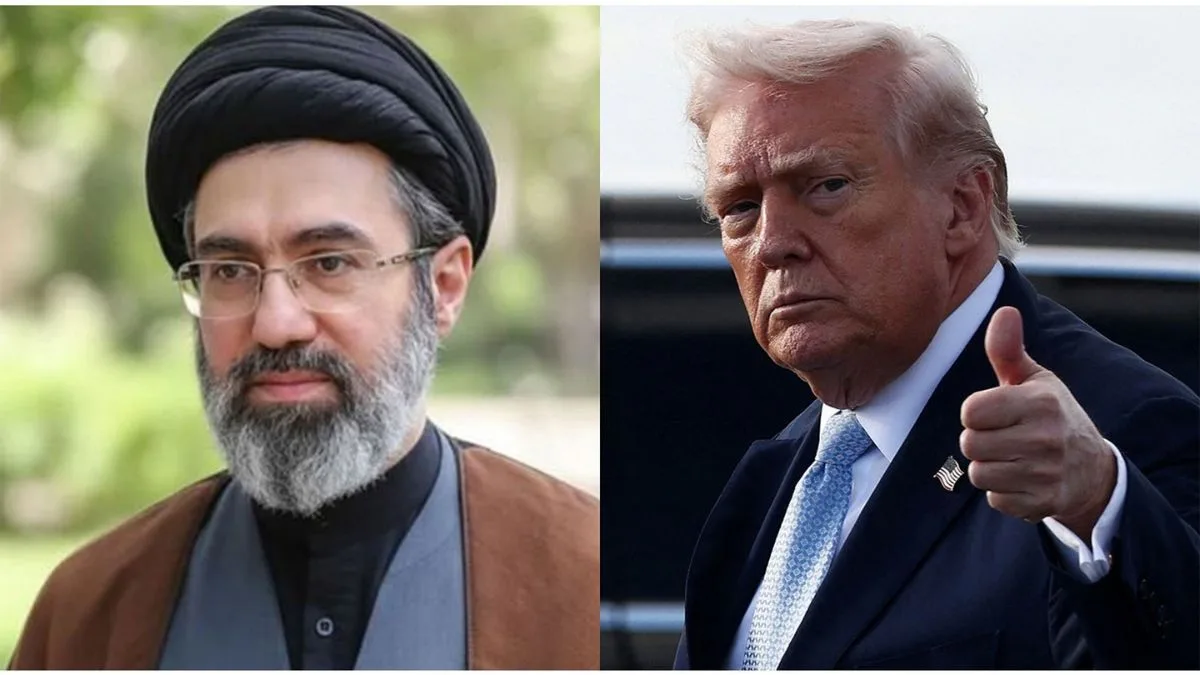
The United States and Iran have entered a fragile tactical truce after signing the landmark Memorandum of Understanding (MoU) on 17 June 2026, halting months of devastating direct warfare.




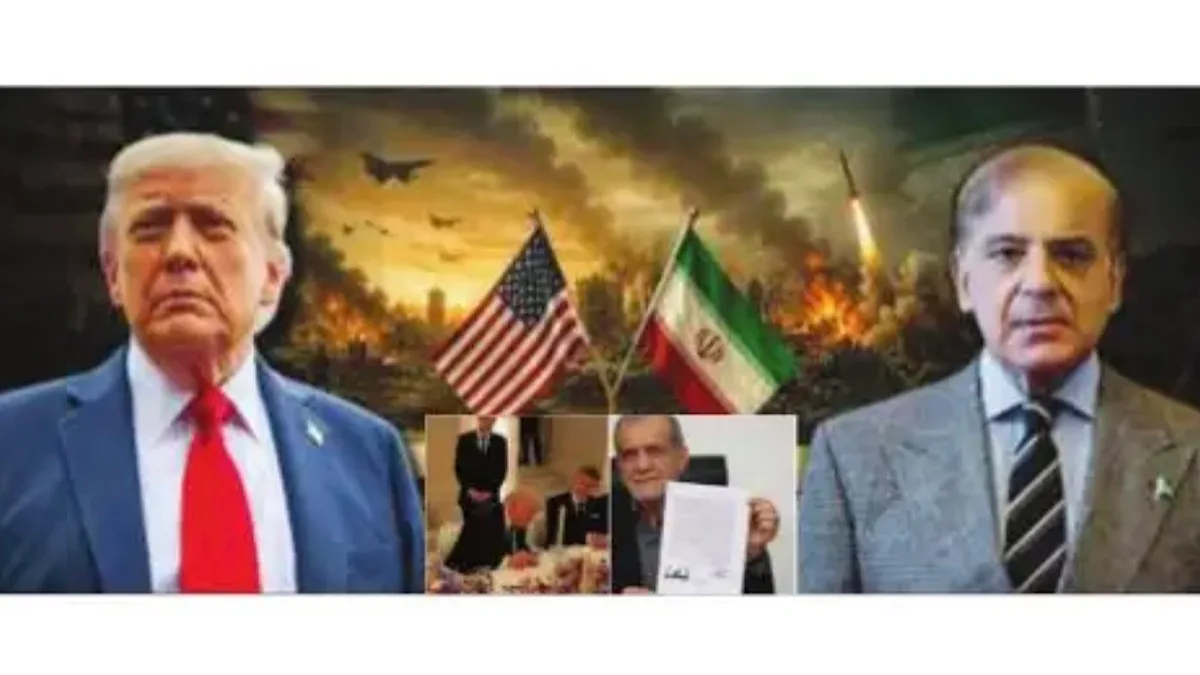
Photo:SNS
The United States and Iran have entered a fragile tactical truce after signing the landmark Memorandum of Understanding (MoU) on 17 June 2026, halting months of devastating direct warfare. Following a conflict that began with major U.S.-Israeli airstrikes, the interim deal establishes a 60-day negotiating window aimed at hammering out a comprehensive peace settlement. As part of the initial de-escalation, Washington has lifted its destructive naval blockade on Iranian ports, while Tehran has moved to reopen the critical Strait of Hormuz to toll-free commercial shipping and agreed to dilute its enriched uranium under international oversight.
The US-Iran war has hopefully resulted in two important outcomes. The first is that the US should have realised that it cannot bully into subjugation each and every nation, while the second is that Iran will have to change the objective of its nuclear programme to utilising its enriched uranium for peaceful purposes only. Both these outcomes are good for the world. Let us address the first outcome. The recent war against Iran has fundamentally challenged American assumptions about international power dynamics. By demonstrating that even overwhelming conventional and technological superiority cannot guarantee political submission, the conflict has forced the United States to confront the structural limits of sheer military dominance in asymmetrical conflicts.
Advertisement
At the outbreak of the conflict ~ initiated by sweeping joint U.S. and Israeli airstrikes on Iranian infrastructure and military sites ~ Washington expected to rapidly degrade Tehran’s defensive capabilities and force the regime to yield on long-standing nuclear, regional, and political issues. However, the reality of the ensuing months exposed the severe friction between military supremacy and actionable geopolitical outcomes. Rather than collapsing under coercive pressure or accepting American terms, Iran leveraged its vast geographical depth, domestic resilience, and agile asymmetric capabilities ~ such as drone strikes and mobile missile launches ~ to absorb heavy blows while simultaneously imposing catastrophic costs on the global economy.
Advertisement
By severely disrupting or entirely blocking critical maritime and energy routes in the Strait of Hormuz, Tehran managed to wield an asymmetrical deterrence that directly counterbalanced American technological dominance. Perhaps the most defining realization for U.S. strategists was that the destruction of physical infrastructure and the decapitation of leadership do not automatically translate to political capitulation. While the massive bombardment inflicted heavy damage upon Iran’s conventional military assets and nuclear facilities, it proved incapable of eliminating the adversary’s will to fight or the technical knowledge required to maintain its strategic posture.
Furthermore, instead of fracturing the Iranian public and undermining the ruling establishment ~ as some in Washington initially hypothesized ~ external attacks served to consolidate internal hardline control and strengthen the resolve of the “axis of resistance,” rendering regime change politically and practically unfeasible. This stark dichotomy between tactical firepower and strategic victory forced the United States to recalibrate its approach. The trajectory of the war ~ culminating in conditional ceasefires, memoranda of understanding, and a return to technical negotiations rather than a definitive surrender ~ demonstrates that modern, highly capable middle powers can effectively neutralize traditional unipolar dominance.
It has signalled to Washington that military coercion is not a standalone substitute for comprehensive diplomacy, and that even the world’s strongest military power struggles to dictate the internal policies and regional behaviour of a determined sovereign state. Ultimately, the 2026 conflict marks a defining moment in the evolution of American foreign policy. It has made the U.S. realize that sheer military dominance cannot unilaterally force a resilient nation into submission. Future American engagement in the Middle East ~ and globally ~ must accept the reality of multipolarity and the limitations of hard power, pivoting away from maximalist demands and recognizing that sustainable geopolitical stability is only achievable through mutual negotiation, de-escalation, and a realistic appraisal of an adversary’s asymmetric leverage.
The conflict exposed the limits of coercion, as Iran’s core structure endured despite severe military losses and the assassination of its leadership. While the conflict began with American demands for unconditional surrender, the resulting agreement secured Iran’s survival, respect for its political sovereignty, and concessions regarding sanctions relief. While the US and Israel demonstrated overwhelming firepower, they could not secure the political transformation or regime change they initially sought. The conflict highlighted limits to American hegemony, showing that modern superpowers must rely on negotiations and compromises rather than just dictating terms.
Now, let’s turn to the second outcome. Iran has officially agreed to dilute its highly enriched uranium for civilian use, according to an interim MoU signed with the United States. This diplomatic shift follows intense geopolitical pressure and military escalation. However, while Iran has committed to down-blending its near-weapons-grade material, it continues to aggressively defend its baseline sovereign right to enrich uranium for civilian energy. The International Atomic Energy Agency (IAEA) is tasked with supervising the dilution process.
In exchange, the U.S. has immediately waived critical oil sanctions. A $300 billion regional reconstruction fund will also be unlocked upon a final, permanent agreement. Despite agreeing to eliminate its weapon-adjacent material, Iranian leadership rejects the narrative that they have abandoned their nuclear identity. Iranian President Masoud Pezeshkian emphasized that Tehran will never relinquish its right to domestic uranium enrichment. While the interim deal forces Iran to step back from the nuclear brink, a “war of words” remains.
Senior Iranian officials, including Deputy Foreign Minister Kazem Gharibabadi, note that full inspector-access to sensitive, previously attacked sites is strictly conditional on the final lifting of all international sanctions during the 60-day negotiation window. International Atomic Energy Agency (IAEA) chief Rafael Grossi confirmed that inspections will take place to monitor compliance. However, actual physical entry into critical underground sites damaged during the war remains frozen pending a final comprehensive treaty. Because inspectors have been blocked for months, the international community cannot fully verify the current state or precise location of the material.
Ultimately, while the international community has successfully forced Iran to take concrete steps toward down-blending weapon-ready materials, Tehran is leveraging its civilian programme as a permanent geopolitical shield. Interestingly, Iran’s former Supreme Leader, late Ayatollah Ali Khamenei had issued a religious decree (fatwa) declaring that the production, stockpiling, and use of nuclear weapons are forbidden (haram) under Islamic law. However, this decree remains a subject of intense international debate and scrutiny. Iranian officials have repeatedly cited this fatwa in international forums (such as the IAEA) as proof that Iran’s nuclear programme is strictly peaceful and that building a nuclear bomb goes against their religious ideology.
Western analysts and international observers, however, often describe the pronouncement as “the phony fatwa,” pointing out that there is no officially published written text of the fatwa in standard registries of Khamenei’s religious rulings. It has largely been delivered via speeches and diplomatic letters rather than formal religious decrees. Some Iranian officials and advisors have occasionally noted that while the fatwa bans weapons, shifting geopolitical situations or existential threats could potentially lead to a re-evaluation of the stance by the Supreme Leader. Recent analyses of the Supreme Leader’s statements even suggest the edict was meant to restrict the use of nuclear weapons, rather than explicitly banning their production, leaving room for a nuclear deterrent.
Minimizing the number of nuclear-armed states reduces the statistical risk of accidental detonation, miscalculation, or nuclear war. Restricting the spread of nuclear materials lowers the chances of non-state actors or terrorist groups acquiring the technology. However, Iran has demonstrated that traditional nuclear deterrence is not strictly necessary for its survival or regional influence. Instead, Tehran has successfully built alternative deterrents through its vast ballistic missile programmes, strategic regional proxy networks, and the ability to project force to disrupt global supply lines like the Strait of Hormuz. Despite the US-Iran truce, relations remain highly volatile and mired in deep skepticism.
High-level technical talks currently taking place in Switzerland face immediate friction, driven by public disagreements over the unfreezing of billions in Iranian assets. President Pezeshkian’s refusal to include Iran’s ballistic missile programme in negotiations, and the constant threat of ongoing Israeli military operations in Lebanon threaten to disrupt the ceasefire. The ongoing 60-day talks are critical. Unless the two nations can bridge the gap between US demands for zero uranium enrichment and Iran’s demand for immediate, permanent sanctions relief, this truce could end up as a brief pause before a return to open hostilities.
The writer, a retired IFS officer, served as India’s Ambassador to Kuwait and Morocco and as Consul-General in New York
Advertisement