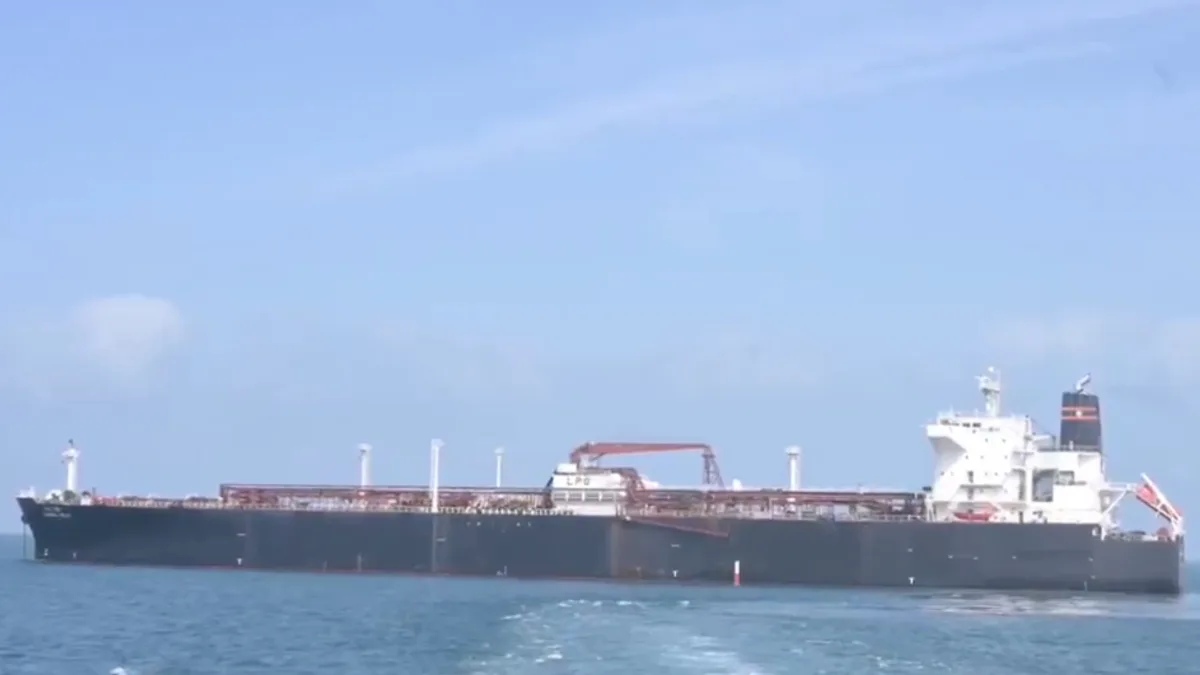
India’s energy lifeline received a major boost after three Indian-flagged crude oil tankers successfully crossed the Strait of Hormuz and began their journey towards Indian ports with more than 8.6 lakh metric tonnes of cargo.
The safe movement of the vessels comes after months of uncertainty around the crucial maritime route, which plays a major role in global energy transportation.
Advertisement
Union Minister of Ports, Shipping & Waterways Sarbananda Sonowal announced the successful transit, highlighting efforts to protect India’s maritime interests.
In a post on X, he said: “Safe passage secured! 3 Indian-flagged crude oil tankers, Desh Vaibhav, Desh Vibhor and Sanmar Herald carrying over 8.6 Lakh MT of cargo with 94 Indian crew members have successfully transited the Strait of Hormuz today and are en route to India.
Under the decisive leadership of Hon’ble PM Shri @narendramodi ji, GoI is working on highest priority to secure India’s maritime interests. Our Ministry is actively coordinating with all relevant agencies to guarantee the absolute safety of Bharat’s seafarers and energy lifelines.”
The three vessels — Desh Vaibhav, Desh Vibhor, and Sanmar Herald — are expected to reach Indian ports between June 24 and July 1.
Desh Vaibhav is scheduled to arrive at Vadinar Port on June 24, while Desh Vibhor is expected to reach Sikka Port on the same day. Sanmar Herald, which crossed the Strait of Hormuz on June 20, is set to arrive at Paradip Port on July 1.
India focuses on maritime energy security
The transit took place amid changing regional dynamics around the Strait of Hormuz, one of the world’s most important energy corridors. The United States had earlier lifted restrictions on maritime movement through the Strait of Hormuz on June 18 following a diplomatic breakthrough aimed at reducing regional tensions.
The move allowed oil tankers to resume operations through the strategic channel, easing pressure on global energy supply routes.
The safe passage of the vessels highlights the importance of uninterrupted crude oil movement for India, which relies heavily on imported energy supplies.
Officials said coordination among multiple agencies continues to ensure the safety of vessels and crew members operating in sensitive international waters.
The successful transit is being seen as an important operational milestone, reflecting both developments in the Gulf region and India’s continued focus on protecting its maritime and energy lifelines.