Air raid warnings, missile interceptions and competing claims from Washington and Tehran marked a fresh escalation across the Gulf on Wednesday, as Kuwait and Bahrain activated defensive measures while the United States military said it had successfully thwarted a series of Iranian missile and drone attacks across the region.
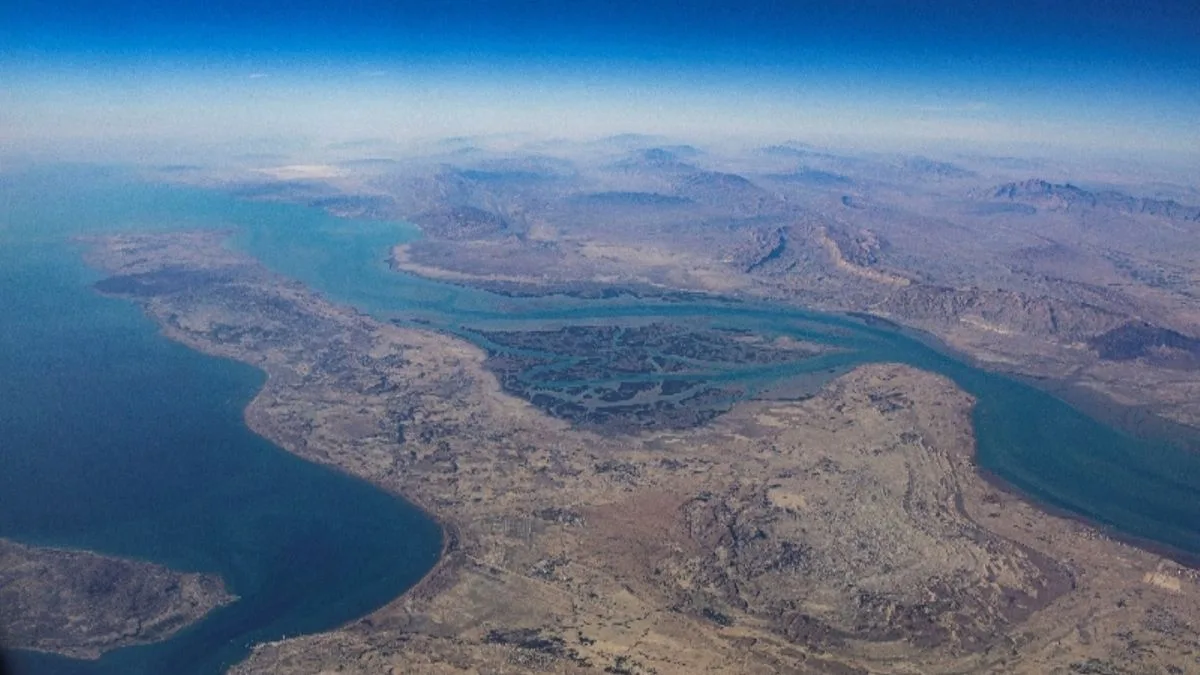
The latest developments come amid rising tensions involving Iran, the United States and Israel. According to the US military, American forces not only intercepted incoming threats but also carried out protective counter-strikes on Iran’s Qeshm Island, widening the scope of an already volatile regional confrontation.
Advertisement
CENTCOM details missile interceptions
The US Central Command (CENTCOM) said Iran launched multiple ballistic missiles towards neighbouring countries, but claimed none reached their intended targets.
In a statement, CENTCOM said two missiles fired towards Kuwait either fell short or broke apart en route, while three missiles launched at Bahrain were intercepted by American and Bahraini air defence systems.
“Iran launched several ballistic missiles toward regional neighbors; however, all failed to hit their intended targets,” CENTCOM said.
The US military also said it intercepted two Iranian ballistic missiles aimed at US forces in Kuwait.
“These missiles were immediately defeated and no American personnel were harmed,” CENTCOM said in a post on X.
Kuwait intercepts missiles and drones
According to the Kuwaiti Army’s General Staff, the country’s air defence systems engaged incoming missiles and drones after residents in several areas reported loud explosions.
Military authorities said the sounds heard across the country were linked to interception operations being carried out by air defence units.
“Kuwaiti air defenses are currently confronting hostile missile and drone attacks. The General Staff of the Army notes that if explosion sounds are heard, they are the result of air defense systems intercepting the hostile attacks,” the military said.
Meanwhile, Bahrain’s Interior Ministry activated warning sirens and advised residents to remain calm and move to the nearest safe location as precautionary measures were implemented.
Public urged to avoid debris and follow official updates
Following the interceptions, Kuwaiti authorities urged residents not to approach debris, shrapnel or unidentified objects that may have fallen during the operations.
Ministry of Defence spokesperson Colonel Saud Abdulaziz Al-Otaibi asked citizens and expatriates to immediately report suspicious remnants through the emergency hotline 112. He also urged the public to rely only on official information channels and avoid circulating unverified reports.
“The General Staff of the Army calls on everyone to cooperate and adhere to the issued guidelines to preserve the security and safety of all,” the military said in a subsequent advisory.
Iran claims American bases in Kuwait were hit
Iran’s state-run broadcaster IRIB presented a sharply different account, claiming that American military facilities in Kuwait had been struck in retaliation for what Tehran described as hostile US actions in the Persian Gulf, the Strait of Hormuz and Qeshm Island.
“Following the hostile actions of the U.S. in the Persian Gulf, the Strait of Hormuz, and Qeshm Island, American bases in Kuwait were hit,” IRIB reported.
The broadcaster’s claim could not be independently verified.
IRGC claims strikes on US military assets
Iran, however, painted a very different picture of the confrontation. The Islamic Revolutionary Guard Corps (IRGC) said its forces had carried out a coordinated operation targeting American military assets across the Gulf, describing the action as a response to recent US military moves in the region.
Iranian media reports said the targets included the headquarters of the US Fifth Fleet in Bahrain, along with an American airbase and military helicopters elsewhere in the Gulf. Tehran claimed the strikes were launched after a communications tower south of Qeshm Island was allegedly hit by US forces.
Separately, Iranian outlets reported that the IRGC Navy fired missiles at a vessel identified as Panaya. The action was linked to what Tehran described as an earlier attack on an Iranian tanker near the Strait of Hormuz that allegedly damaged the ship’s engine room.
Iranian state media also carried warnings from the IRGC that any threat to navigation and security in the Strait of Hormuz would invite a strong military response.
Washington disputed the account, insisting that none of the claimed strikes had achieved their objective. US Central Command said no American military installation was hit and maintained that all incoming missiles and drones were either intercepted or failed before reaching their targets.
“All Iranian attacks on American forces failed. U.S. forces remain vigilant and ready to defend against unwarranted Iranian aggression,” CENTCOM said.
The latest exchanges have heightened concerns about a broader regional conflict, with Gulf countries reinforcing security measures amid fears that continued military action between Iran and the United States could further destabilise the region.