The United States carried out fresh strikes on Iranian targets near the Strait of Hormuz on Monday, even as President Donald Trump claimed negotiations with Tehran were moving in a positive direction and hinted at a wider regional agreement.
According to the US Central Command (CENTCOM), American forces targeted missile launch sites and Iranian boats allegedly attempting to deploy naval mines in southern Iran. The development comes at a sensitive moment, with Washington and Tehran trying to preserve a ceasefire that began on April 8 after weeks of military confrontation that disrupted global energy markets and raised fears of a wider regional war.
Advertisement
“US forces conducted self-defence strikes in southern Iran today to protect our troops from threats posed by Iranian forces,” CENTCOM spokesperson Timothy Hawkins said in a statement cited by CNN and Xinhua.
He added that the targets included missile launch positions and mine-laying boats near the strategic Strait of Hormuz, one of the world’s most critical oil shipping routes.
“US Central Command continues to defend our forces while using restraint during the ongoing ceasefire,” Hawkins said.
The latest action marks another flashpoint in an already tense ceasefire period. Earlier this month, US forces had struck Iranian military infrastructure after accusing Tehran of carrying out missile, drone and small boat attacks on American naval assets in the Gulf region.
Trump says Iran talks could lead to ‘great deal’
Even as military activity continued near Iranian waters, Trump projected optimism about ongoing negotiations with Tehran.
In a lengthy post on Truth Social, the US President said discussions with Iran were “proceeding nicely” and warned that the outcome would either become a “Great Deal for all” or push the region back toward a larger conflict.
“It will only be a Great Deal for all or no Deal at all — Back to the Battlefront and shooting, but bigger and stronger than ever before — And nobody wants that!” Trump wrote.
Trump also claimed that Iran’s enriched uranium stockpile would either be handed over to the United States for destruction or dismantled under an internationally supervised arrangement involving Tehran itself.
“The Enriched Uranium (Nuclear Dust!) will either be immediately turned over to the United States to be brought home and destroyed or, preferably, in conjunction and coordination with the Islamic Republic of Iran, destroyed in place,” he said.
The remarks appeared to align with reports that Iran has, in principle, agreed to give up its highly enriched uranium stockpile as part of a broader US-backed framework aimed at ending the conflict.
Strait of Hormuz remains under pressure
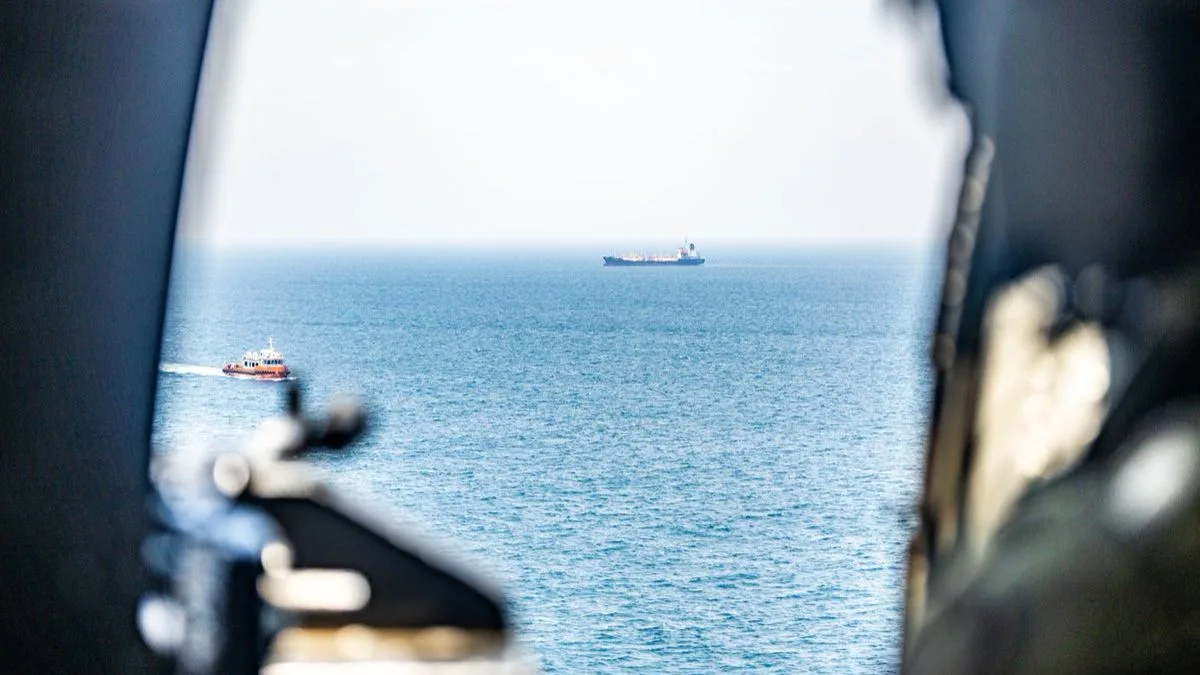
The Strait of Hormuz has remained at the centre of the crisis, with Iran continuing to exercise tight control over shipping movements despite increased US naval deployments and blockade measures.
Last week, CENTCOM claimed that the American naval blockade around Iranian ports had already diverted nearly 100 vessels and disabled four others.
CENTCOM commander Admiral Brad Cooper had said the restrictions were effectively choking trade linked to Iranian ports and increasing economic pressure on Tehran.
Meanwhile, Iran has maintained that talks with Washington have made progress on several issues, though concerns remain over what it describes as shifting American positions during negotiations.
Iranian Foreign Ministry spokesperson Esmaeil Baqaei said both sides had reached conclusions on “a large portion” of discussion points, but cautioned against assuming that a final agreement was imminent.
“The frequent changes in the positions of American officials complicate every negotiation,” he said.
The conflict between the two countries has also triggered concern among Gulf nations and global markets due to the impact on energy flows through the region.