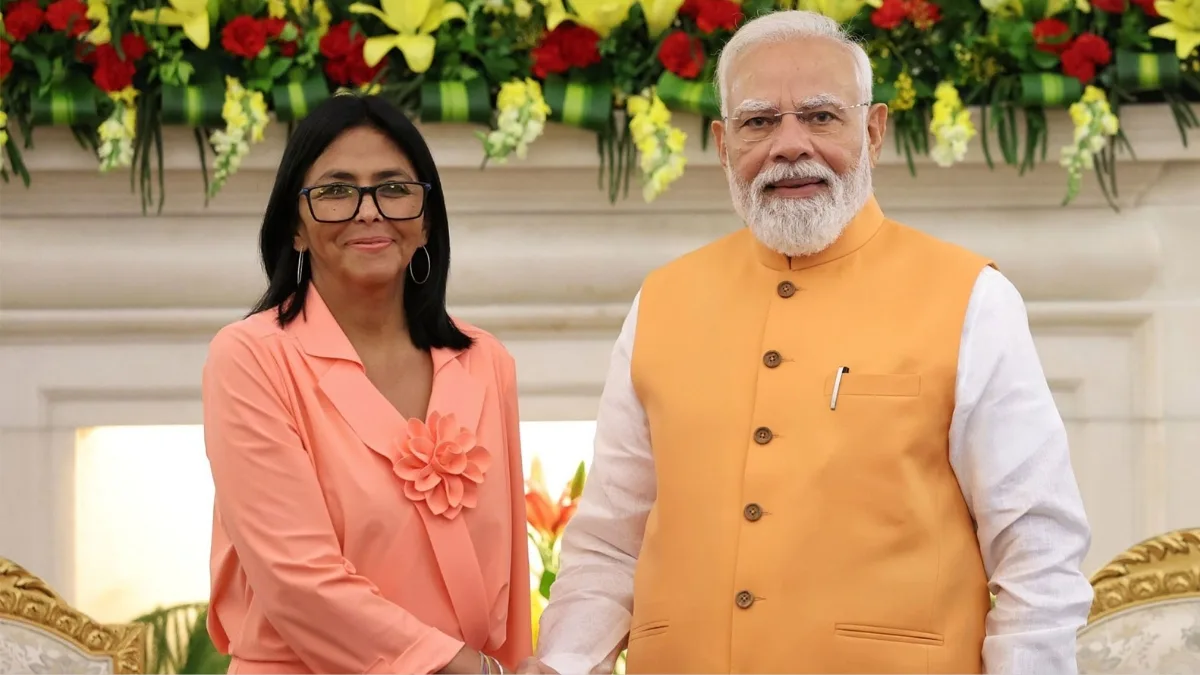
As Prime Minister Narendra Modi prepared to leave for Abu Dhabi on Friday, tensions in the Gulf region sharpened further with the United Arab Emirates condemning the attack on an Indian-flagged vessel near Oman and Iran launching a fierce attack on the UAE during the BRICS Foreign Ministers’ Meeting in New Delhi.
The parallel developments have put maritime security and regional stability firmly in focus ahead of Modi’s bilateral engagements in the UAE. Diplomats expect discussions around shipping routes, Gulf security and regional tensions to feature prominently during the visit.
Advertisement
In a statement issued on Friday, the UAE’s Ministry of Foreign Affairs described the attack on the Indian vessel near Omani waters as a “terrorist attack” and warned that such incidents threaten international navigation and regional stability.
The ministry said targeting commercial vessels represented a dangerous escalation and reaffirmed the UAE’s support for all efforts aimed at safeguarding Indian shipping interests and freedom of navigation.
Without naming any country, Abu Dhabi also warned against using the Strait of Hormuz as a tool for “economic coercion or blackmail”, calling it a threat to regional security and global energy supplies.
India had earlier condemned the attack, with the Ministry of External Affairs saying commercial shipping and civilian mariners continued to be targeted despite international concerns.
“The attack on an Indian-flagged ship off the coast of Oman is unacceptable,” the MEA said, adding that all Indian crew members aboard were safe and had been rescued by Omani authorities.
The ministry reiterated that targeting civilian shipping and obstructing maritime commerce must be avoided.
Iran attacks UAE during BRICS meeting in Delhi
Separately, at the second session of the BRICS Foreign Ministers’ Meeting in New Delhi, Iran sharply criticised the UAE over its position on the regional conflict.
According to the Embassy of Iran, Deputy Foreign Minister for Legal and International Affairs Kazem Gharibabadi accused the UAE of “supporting and facilitating the military aggression against the Islamic Republic of Iran”.
“A party that itself contributed to the creation and escalation of tensions lacks any legitimacy to level political accusations and claims against Iran,” he said.
Gharibabadi also cited a 1974 United Nations General Assembly Resolution, arguing that countries facilitating aggression could themselves be treated as aggressors under international law.
“Therefore, the UAE is an aggressor, not merely an accomplice to aggression,” he said.
The Iranian official further claimed Tehran had warned regional countries, including the UAE, against assisting the United States or Israel during the conflict.
He alleged that attacks on Iran had led to thousands of casualties and accused Abu Dhabi of direct involvement in aggression against Tehran.
Araghchi urges BRICS nations to unite against ‘bullying’
Iranian Foreign Minister Seyed Abbas Araghchi also addressed the BRICS meeting, calling on member nations to stand united against what he described as American coercion.
He said many countries were familiar with similar pressure tactics and urged BRICS nations to respond collectively and more assertively.
According to ANI, Araghchi said such practices should be consigned to the “dustbin of history”.