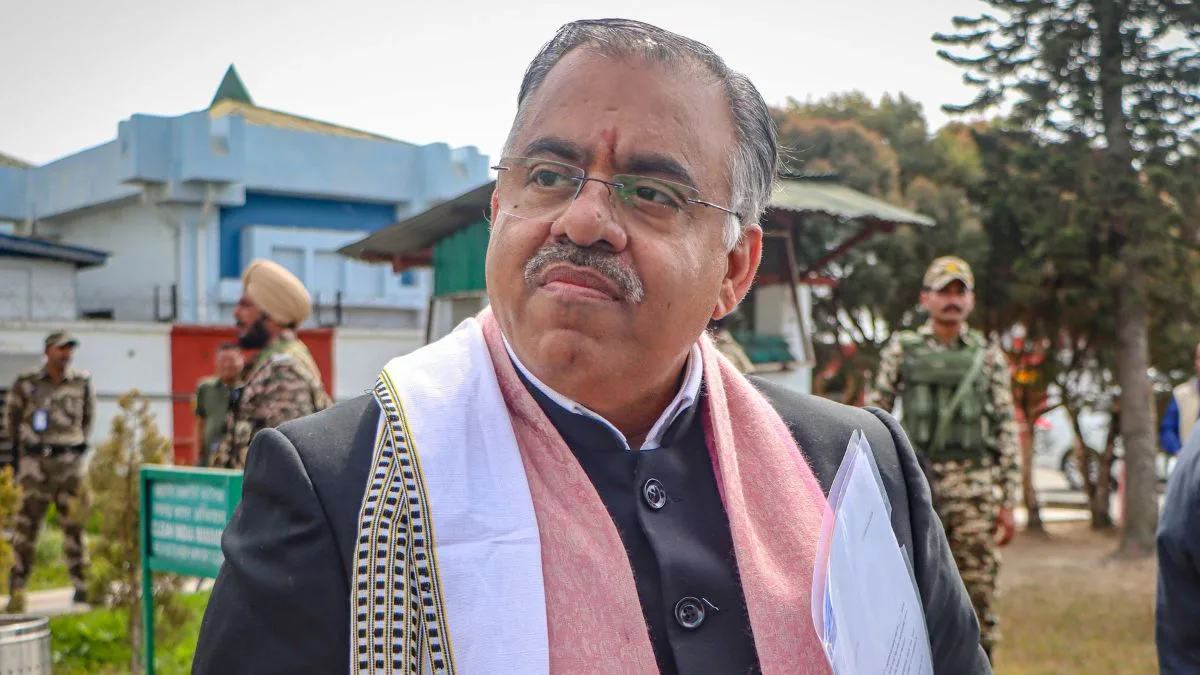
Rajya Sabha polls: Tarun Chugh named BJP candidate from MP, Ravneet Bittu missing from list
The latest candidate line-up is viewed by political analysts as a calculated move to balance organizational experience with emerging regional equations.
Following mega electoral successes in Assam and West Bengal, the BJP is activating a hyper-local booth-level micromanagement formula in Uttar Pradesh — the country’s largest and politically most crucial state, often seen as the gateway to power in New Delhi.





BJP (Photo: ANI)
Following mega electoral successes in Assam and West Bengal, the BJP is activating a hyper-local booth-level micromanagement formula in Uttar Pradesh — the country’s largest and politically most crucial state, often seen as the gateway to power in New Delhi.
Against the backdrop of the party’s underwhelming performance in the 2024 Lok Sabha polls, the BJP has launched an aggressive organisational reset across the state ahead of the high-stakes 2027 Uttar Pradesh Assembly elections, reportedly appointing around 1.76 lakh booth-level in-charges to strengthen its grassroots machinery ahead of the key electoral battle.
Advertisement
The move follows the party’s electoral gains in states such as Assam and West Bengal, where booth-level management and hyper-local outreach were seen as among the key factors for the outcome. The BJP leadership believes a similar strategy in UP could help it regain lost ground and reinforce voter base against strong opponents — the Samajwadi Party and the Congress.
Advertisement
The booth in-charges will oversee activities at individual polling booths, monitor voter lists, ensure error-free electoral rolls, maintain direct contact with voters, and communicate government welfare initiatives to those who matter.
The aim is to create a highly localised and disciplined organisational structure across all Assembly constituencies in the state, say party leaders. The focus on a detailed micro-management model that assigns responsibility for every booth to a dedicated worker can minimise slippages, improve voter mobilisation, and rebuild the party’s grassroots dominance before 2027, they add.
Basically, the aim is to increase the strike rate in the 403-member Assembly, recover the seats lost in the 2022 state elections, and reverse the setbacks suffered during the 2024 Lok Sabha polls.
The strategy is aimed at countering the Samajwadi Party’s ‘PDA’ — Pichhda, Dalit, Alpsankhyak social coalition, which emerged as a formidable electoral force in 2024. The aim is to rebuild ties with key social groups, especially non-Yadav OBCs and non-Jatav Dalits, sections that showed signs of drifting away from the party in the Lok Sabha elections. A specific focus will also be on constituencies where the party underperformed over the last three election cycles.
“By strengthening the cadre network and direct voter engagement, the BJP hopes to ensure that welfare schemes translate into electoral support, dependence on allies is reduced, and organisation is improved at the local level. Cadre-building also helps eliminate reliance on external parties,” say observers.
The fact is that the 2027 Uttar Pradesh election is far more than a state contest for the BJP.
The state is central to national politics. The BJP’s reduced tally in the 2024 general elections — when the SP-Congress alliance restricted the NDA to 36 of the state’s 80 Lok Sabha seats — dented the perception of the party’s invincibility in the Hindi heartland.
The increased deployment at the ground level is, therefore, more than just the strengthening of the organisation. It is also a political reset aimed at reclaiming the psychological and electoral advantage ahead of the 2029 general election, observers add.
With 43 seats, the INDIA bloc gained 37 seats from the 2019 Lok Sabha elections, while the BJP-led NDA, with 36 seats, lost as many as 28 seats.
Advertisement