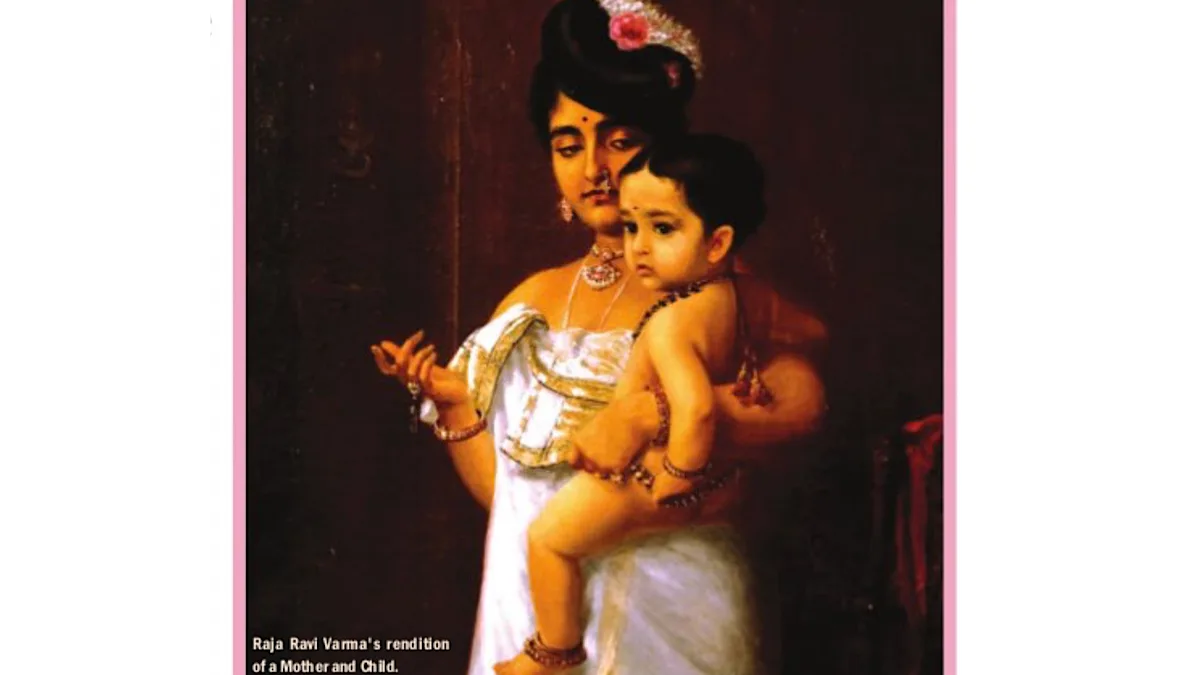
Motherhood has perhaps suffered more from sentimentality than any other human experience. Across generations, mothers have been sculpted into impossible abstractions of sacrifice and virtue until they cease to resemble living women at all. Popular imagination insists upon the mother as endlessly forgiving, endlessly self-erasing and endlessly patient, as though love becomes sacred only after a woman dissolves herself completely into the lives of others.
Literature, however, has always known otherwise. The mothers who remain with us long after novels end are rarely saints. They are contradictory, difficult, radiant, lonely and fiercely alive. They carry tenderness beside rage, devotion beside regret. They wound and protect in equal measure because they feel human. In ‘Beloved’, motherhood appears not as decorative virtue but as something mythic in emotional scale. A mother’s love for her children exceeds morality itself, shaped by slavery, memory and historical violence until care becomes inseparable from terror. The novel refuses to romanticise maternal devotion into something gentle and consumable.
Advertisement
Instead, it presents a love vast enough to wound and save simultaneously. There is a similarly difficult tenderness in ‘Mother Mary Comes to Me’, where motherhood unfolds through fracture, estrangement and a love that survives despite itself. What lingers most hauntingly is the recollection of a dying mother sending a WhatsApp message that feels less like conversation and more like a final confession of love. Not a fading handwritten letter preserved between pages, but a fleeting digital message carrying the emotional weight of an entire lifetime. Love survives pride, estrangement and history itself. Perhaps that is why motherhood so often escapes realism and enters mythology.
In Bengal especially, the maternal imagination has always occupied a sacred centre. Here, the mother is never merely domestic. She nourishes worlds, destroys demons, shelters wanderers and waits beside rivers carrying the scent of incense, monsoon earth and steaming rice. Within the traditions of ‘Chandi Mangalkavya’ and ‘Devi Mahatmya’, goddesses are not distant abstractions of benevolence. They rage, intervene, protect and transform destinies. In songs devoted to ‘Kali’, devotion becomes indistinguishable from conversation. The goddess is quarrelled with, pleaded with and surrendered before as one would before one’s own mother. ‘Kali’ is never imagined as remote divinity enthroned beyond grief and desire. She is simply Maa.
This maternal imagination reaches one of its most tender articulations in ‘Annada Mangal’, particularly in the episode of “Annapurna o Ishwari Patuni .” After witnessing the perseverance of the sailor ‘Ishwari Patuni’, Goddess Annapurna asks him what boon he desires. ‘Ishwari’ asks for nothing extravagant: “Amar shontan jeno thaake doodh e bhaat e.” “May my children live with rice and milk, if nothing else.” There is something almost unbearably moving about the simplicity of that wish. Not wealth. Not glory. Merely nourishment. Merely the hope that one’s children may survive with dignity. Perhaps every mother, in some quiet corner of her heart, spends her life making this prayer.
And perhaps that is why the deepest understanding of motherhood arrives not through grand declarations, but through domestic memory. Through ordinary evenings that later reveal themselves as sacred. There are mothers who govern households through authority, and there are mothers who transform homes into conversations. The rarest among them become not merely caretakers, but companions in one’s becoming. There are homes where afternoons disappear into discussions of Bangla gaan, where evenings dissolve into binge-watching ‘Bridgerton’ together, pausing to analyse fictional characters as though they were distant relatives from North Kolkata. Homes where the smell of chaand ageing books lingers beside half-open windows while monsoon rain darkens the city outside into softness.
In such homes, life does not feel hurried. It feels inhabited. Perhaps the greatest inheritance these mothers leave behind is not protection alone, but perspective. They teach their children that empathy is not weakness, but intelligence. That before forming opinions, one must attempt to stand inside another person’s sorrow. They teach curiosity instead of cynicism, conversation instead of fear, softness without fragility. Perhaps that is why ‘Unishe April’ remains one of the most devastating meditations on motherhood in Bengali cinema. Motherhood is stripped of sentimental perfection and revealed instead as something painfully human. Beneath resentment, loneliness and distance survives an aching desire to be understood. Mothers are not archetypes.
They are women carrying unfinished dreams, private griefs and entire selves beyond motherhood itself. And yet, despite all these complexities, mothers so often remain the first refuge we ever know. Perhaps that is why they become our first muses. Not because they are flawless, but because they teach us how to imagine care itself. Before we understand literature, we understand the cadence of a mother’s voice calling us home. Before we encounter philosophy, we encounter ethics through ordinary acts of kindness repeated quietly over years.
The first homeland we ever inhabit is maternal. Perhaps this longing is what echoes through ‘The Shield of Achilles’, where ‘Thetis’ leans over her son’s armour hoping to glimpse tenderness within a brutal world: “Of any world where promises were kept, Or one could weep because another wept.” Is that not what mothers spend their lives attempting to build? A world where tenderness survives history, disappointment and time. Because some people do not merely raise us. They become the atmosphere in which our souls first learn how to breathe.