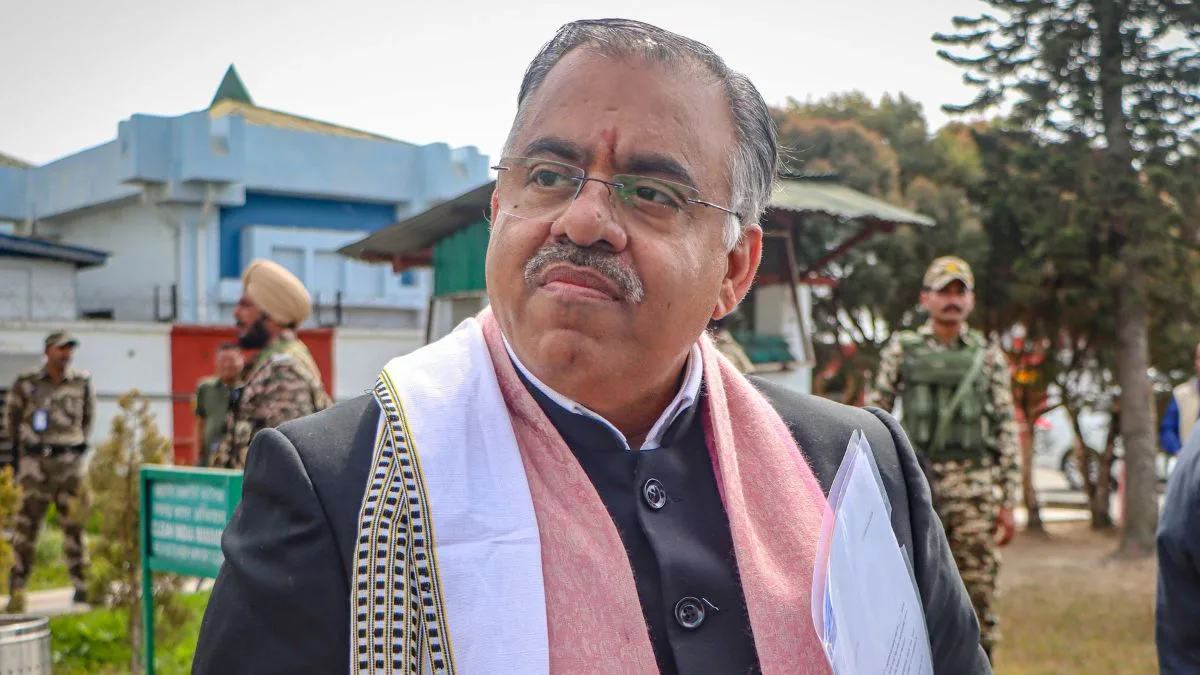
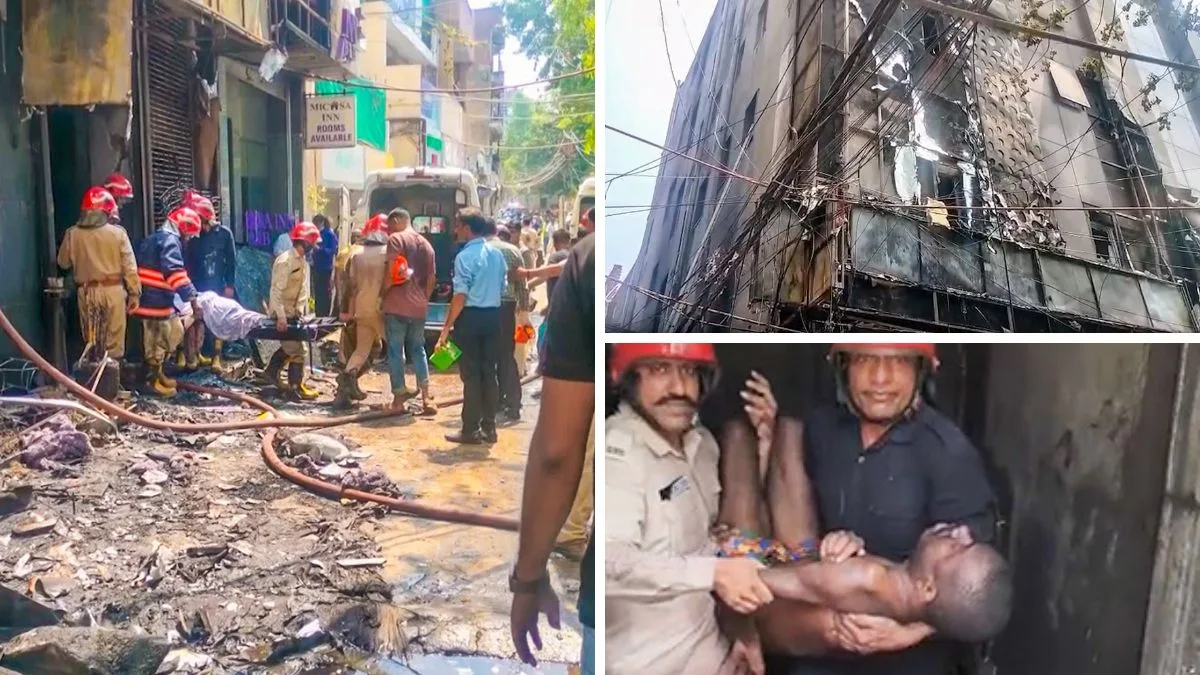
HS council’s new chief pushes for measure to prepare students face competitive exams
The West Bengal Council of Higher Secondary Education (WBCHSE) is conducting a Competitive Guidance Program for the science students of Class XII.
If there is one thing Indians love more than arguing about politics, cricket, or why our neighbor’s child got 99% in exams, it is food.




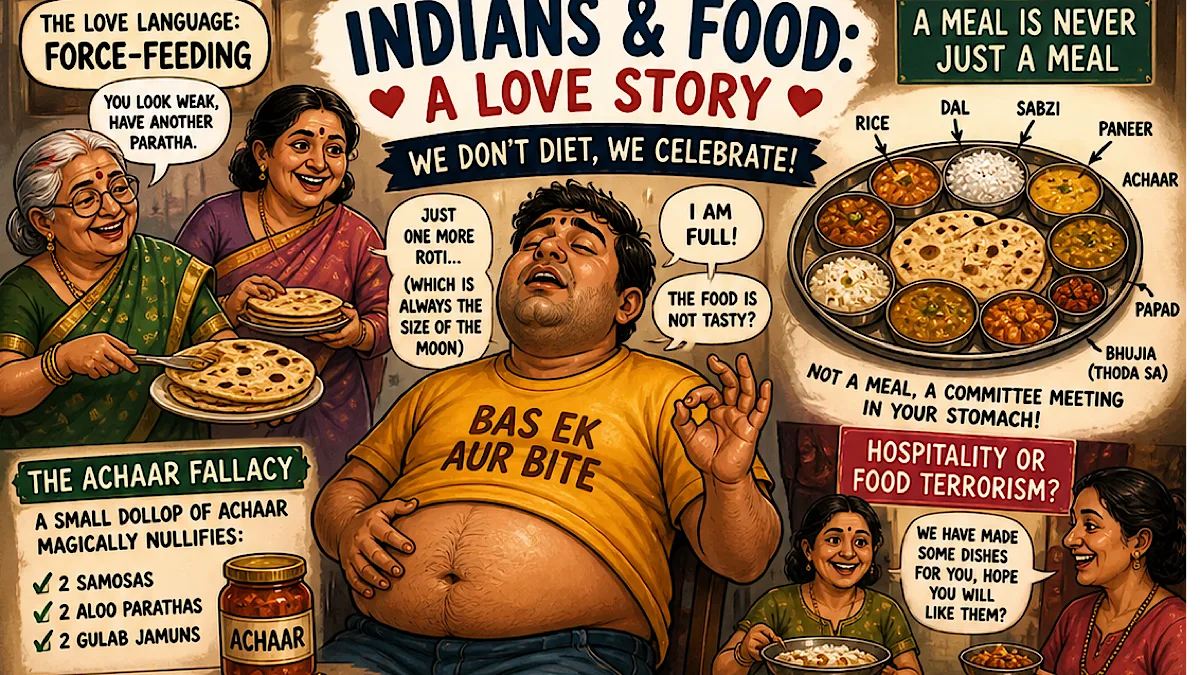
Photo:AI
If there is one thing Indians love more than arguing about politics, cricket, or why our neighbor’s child got 99% in exams, it is food. Not just food—but the art of consuming food until our jeans cry out for mercy. Do we Indians overeat? The answer is a resounding “Yes,” but it’s not our fault. It’s a cultural duty. In most parts of the world, you eat until you are full. In India, you eat until you can no longer hear your own thoughts over the sound of your stomach struggling to accommodate that one last bite of paneer.
The “Love Language” of Force-Feeding It is not just that we eat; it is that we are genetically programmed to view food as a lifelong, emotional relationship rather than a functional necessity. In India, affection isn’t expressed through words; it is shoved down your throat. Our mothers, aunts, and grandmothers possess a superpower—the ability to look at a fully stuffed human being and say, “You look weak, have another paratha.” Refusing food is considered a direct insult to the ancestral bloodline. Then, there is the infamous “one more roti” protocol. It is impossible to say no to Indian mothers. It’s not just a polite request; it’s a form of soft coercion. “Just take half a roti,” they say, which is always, invariably, a full, ghee-laden roti the size of a satellite dish. If you tell an Indian mother, “I am full,” what she will hear is “The food is not tasty”. So, we eat. We eat not for hunger, but to prevent emotional trauma to our elders.
Advertisement
The And Culture An Indian meal is never just a dish. It is a committee. It is not “I am having rice.” It is, “I am having rice and dal and sabzi and bhujia and papad and achaars and a small helping of paneer.” An Indian meal doesn’t just meet your calorie requirement; It introduces your metabolism to its new best friend, ‘overdrive’; it calls its friends over and throws a party in your belly. The primary culprit is the sheer variety. When a waiter says, “Sir, our special thali is unlimited,” Indians don’t hear “you can eat a lot.” They hear, “It is your patriotic duty to challenge the structural integrity of your waistband.” The Achaar Fallacy We are masters of justification.
Advertisement
We believe that if a meal is followed by a walk—or even just standing up—it digests the entire meal. Furthermore, we believe in the “Achaar Fallacy”—the idea that a small dollop of pickl emagically nullifies two fried samosas, two aloo parathas and two gulab jamuns. Our love for pickles is a real pickle— we can’t stop, even if it brings a tear to our eyes (and a fire to our stomach). Hospitality or Food Terrorism? Overeating is ingrained in our hospitality style. When we go visiting friends, they don’t ask, “Are you hungry?” They say, “We have prepared some dishes for you, hope you will like them?” If you don’t eat heartily, you have insulted the host.
If you eat more than you should to please them, you have insulted your health. Indians choose to insult their health, because at least the host is happy. The Buffet Strategy Attending an Indian wedding is a tactical exercise in gluttony. We take a plate, put a little bit of everything on it, and then proceed to make three more trips. The goal isn’t just to eat; the goal is to get your money’s worth— even if you are a guest and not paying for the food. Our philosophy is simple: Why eat just a big meal when you can eat the equivalent of a small farming village’s combined lunch in one sitting? The Cultural Guilt of Food Waste Another major reason for our expande d waistlines is the deep, spiritual fear of wasting food.
The rule is simple: If it is on the plate, it must be consumed, even if it brings physical discomfort. This often turns every meal into a high-stakes endurance challenge. We aren’t eating that last roti; we are protecting our karma from the sin of wasting leftovers. The Healthy Indian Diet We also pride ourselves on “ghar ka khana” (home-cooked food). However, that “healthy” home food often involves a generous drenching of ghee and oils, accompanied by a mountain of white rice or roti. It is a delicious way to consume calories, but it turns out that our metabolism must work overtime just to turn that “healthy” dal into pure joy—and, unfortunately, fat. The Mythical Half-Plate Recently, there have been revolutionary ideas about ordering “half-plates” at restaurants. To the average Indian, this is blasphemy. A “half-plate” is just a teaser.
It is a snack. The only time we order a half-plate is when we plan to order four different types of half-plates, one by one. Four half-plates means you can try everything, get comfortably stuffed, and tell yourself you only ate ‘half’ a meal. Conclusion: A Labor of Love So, do we overeat? Absolutely. We eat for joy, we eat for sorrow, we eat because it’s hot today and we eat because it might rain tomorrow. But we do it with love, affection, and immense passion. In a world of dieting and portion control, we remain warriors, holding our stomachs and saying, “Bas ek aur bite.” (Just one more bite). While this approach may cause a slight upward trend on the weighing scale, it brings a downward trend in our emotional baggage. After all, a full stomach is a sign of a fully-loved Indian.
Advertisement