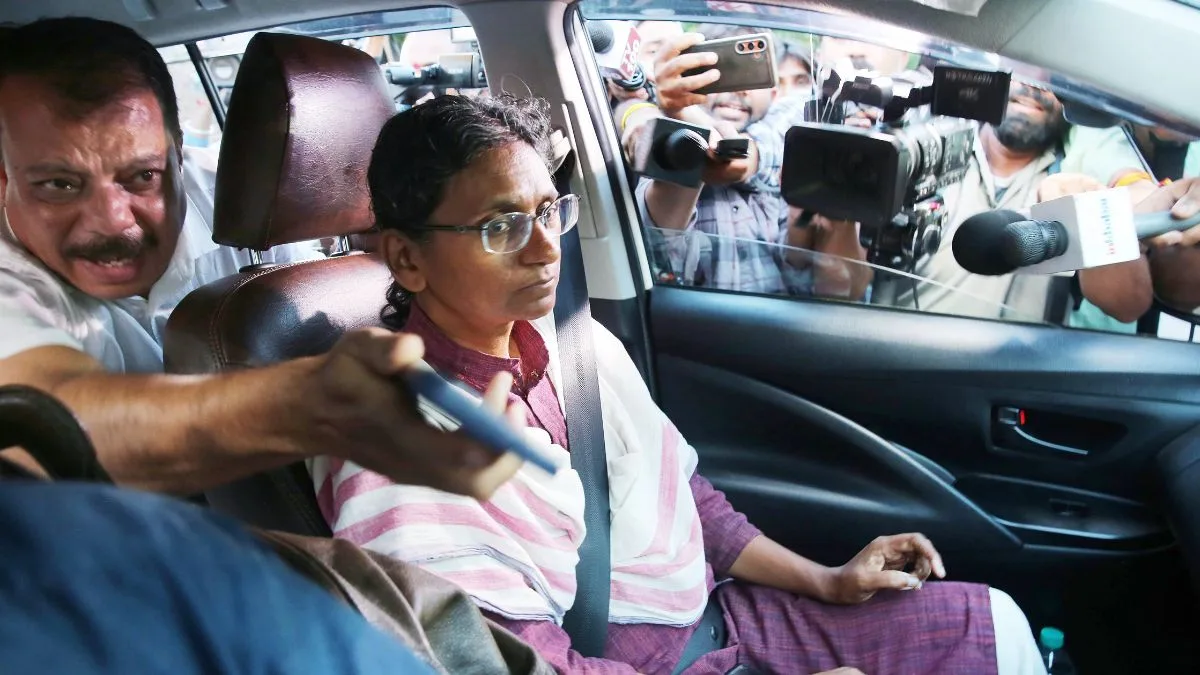
Eggs-plained: How egging became a mode of protest
Ever since Suvendu Adhikari-led government came into power, there have been multiple instances of angry citizens pelting eggs on Trinamool Congress leaders.
Now in her third term, Chief Minister Mamata Banerjee faces an electorate that has as yet not demonstrated a clear appetite for upheaval. Will BJP’s much touted ‘Poriborton’ come?




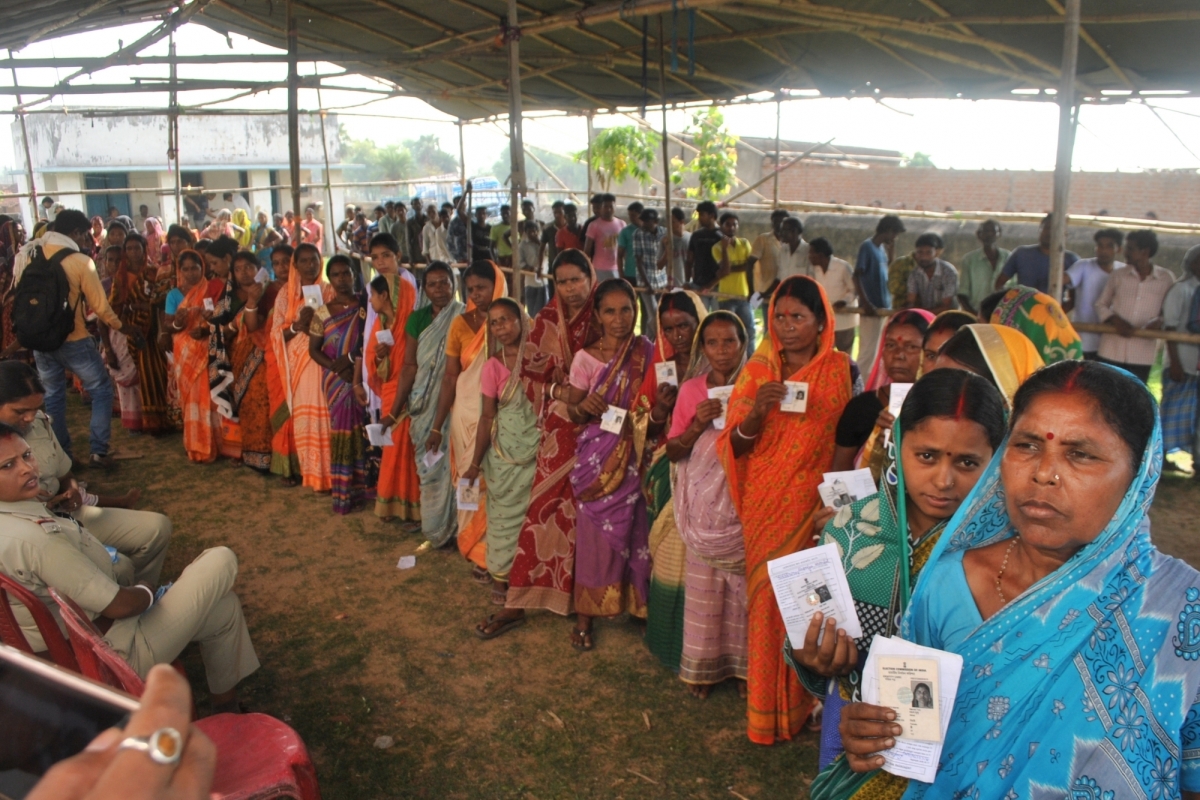
LS polls: Fear of low voter turnout dogs Hyderabad among 12 Telangana constituencies(Photo: IANS)
Loudspeakers blared instructions to polling officers and security officers who have gathered from nearby polling stations at Kolkata’s more than a century old St Lawrence School, for last minute instructions.
Row after row of busses stand to transport these election officers stand by on one side of Ritchie Road, a usually sleepy street of houses and flats, opposite the football field at Maddox Square.
Advertisement
This scene is being repeated at numerous focal points in South Bengal as preparations for the second and final phase of a keenly contested election plays out.
Advertisement
Less than half of West Bengal’s Assembly constituencies, 142 seats across South Bengal, the state’s political and demographic core, including Kolkata, Howrah, Hooghly, the North and South 24 Parganas, and parts of Nadia will go to the polls on Wednesday.
However, this phase of elections to the 294-seat Bengal assembly promises to be the more decisive one, according to most analysts. South Bengal which covers roughly about a third of the state’s land mass, is the most densely populated region with almost half of West Bengal’s population living here, owing to its rich alluvial soil, port infrastructure and industrial townships.
This has also been the region where TMC had its best performance in the 2021 polls, winning 123 seats as against BJP’s mere 18 wins. Which also explains the huge competition here in the plains of South Bengal where Trinamool has been making desperate attempt to guard its turf. While the BJP has been on the attack, flying in Prime Minister Narendra Modi almost daily, as also half is cabinet and virtually all BJP chief ministers.
“Large numbers of migrant labourers and Matua community people who along with Muslims have faced the brunt of name deletions in the special intensive revision exercise are from this region,” pointed out Jawhar Sircar, former Rajya Sabha MP in a conversation with UNI.
This is also the region which has been the area which has suffered most from Bengal’s de-industrialisation. “So both anger against vote deletions and anti-incumbency are likely to play out here and impact the elections,” said Ranabir Samaddar, former head of the Maulana Abul Kalam Azad Centre for Asian Studies.
The last census in 2011 estimated that nearly 5.8 lakh people migrated from West Bengal to other states in search of work, the fourth largest stream of internal migrants from any state after UP, Bihar and Rajasthan. Analysts believe the number has since gone up several-fold, but in the absence of verifiable data, educated guess-estimates place it at between 3-4 million.
Anecdotal evidence shows overcrowded trains, buses and even flights are bringing back migrant workers back to their homes for the elections slated for April 29. Recognising the electoral weight of migrant workers, the Left, led by the CPI(M), has deployed party workers at railway stations along their routes home to reach out to them.
At the same time, both the TMC and the BJP have mobilised their cadres to persuade families to call back their sons to cast their ballots on July 8, when the state goes to the polls for its panchayat elections.
Comparatively, TMC had a far more tenuous hold in the 152 seats in North Bengal and the forested stretches of Jangalmahal, including Darjeeling, Jalpaiguri, Cooch Behar, Purulia and Bankura which went to polls in the first phase of elections on April 23.
These regions have long been politically competitive, and in 2021 they tilted noticeably towards the Bharatiya Janata Party, buoyed by tribal demographics and promises of durable political solutions in the hills and borderlands.
Trinamool Congress won 92 of the 142 seats from this region in 2011, while the BJP claimed 59. An outcome that underscored both the ruling party’s resilience and the opposition’s growing foothold. Even so, the region defies easy categorisation; it is neither uniformly pro-BJP, nor firmly aligned with the Trinamool, unlike
That north-south divide was reinforced in the 2024 Lok Sabha elections. The Trinamool secured 29 of the state’s 42 parliamentary seats and led in a majority of Assembly segments, sweeping much of South Bengal and regaining ground in Jangalmahal. The BJP’s influence, by contrast, remained largely concentrated in pockets of the north.
The feeling that corruption, lack of Bengal’s industrial heft as compared to its golden period of 1950s and early 1960s, and the need to migrate out of the state to get jobs, may help BJP’s cause.
“Today the economic situation is such that we have to depend on National Rural Employment Guarantee Scheme to provide jobs. We see this election as Bengal’s last battle to turn around and regain its position industrially, to bring back industry to the ‘Ruhr of Bengal’ – the Kolkata, Hooghly and Howrah region,” said Shishir Bajoria, one of Kolkata’s leading industrialists and BJP leader.
However, the question of anti-incumbency remains quite ambiguous. In West Bengal, political change has historically unfolded slowly. The Communist Party of India (Marxist) governed the state for 34 uninterrupted years before being voted out in 2011; before that, the Congress and its offshoots held power for nearly three decades.
Now in her third term, Chief Minister Mamata Banerjee faces an electorate that has as yet not demonstrated a clear appetite for upheaval. Will BJP’s much touted ‘Poriborton’ come?
The second and final phase will be the definitive clincher that is likely to determine the outcome of the election, and, with it, the direction of West Bengal for the next five years.
Advertisement