Iran’s Foreign Minister Abbas Araghchi arrived in Islamabad on Tuesday after wrapping up talks in Russia, continuing a rapid round of diplomacy aimed at easing tensions with the United States. His latest visit, the third to Pakistan within 48 hours, according to Press TV, underlines Islamabad’s growing role in backchannel contacts between Tehran and Washington.
The flurry of visits comes as a proposal from Iran to end hostilities and reopen the Strait of Hormuz is now under discussion in Washington, with the White House confirming that President Donald Trump has taken it up with his national security team.
Advertisement
Pakistan emerges as a key channel in Iran-US exchanges
Araghchi’s repeated stops in Islamabad follow engagements in Russia and Oman as part of what officials describe as a broader regional outreach. The visits point to Pakistan acting as an intermediary in indirect exchanges between Iran and the US, particularly after Washington cancelled a planned visit by its envoys.
According to Iranian state media, the proposal outlines a framework to reopen the Strait of Hormuz, a critical route for global energy supplies, and bring the conflict to an end, with nuclear negotiations deferred to a later stage.
White House Press Secretary Karoline Leavitt confirmed discussions were underway. “The proposal was being discussed,” she said, adding that further details would be shared by the President.
‘War and aggression’ focus of Putin Araghchi talks
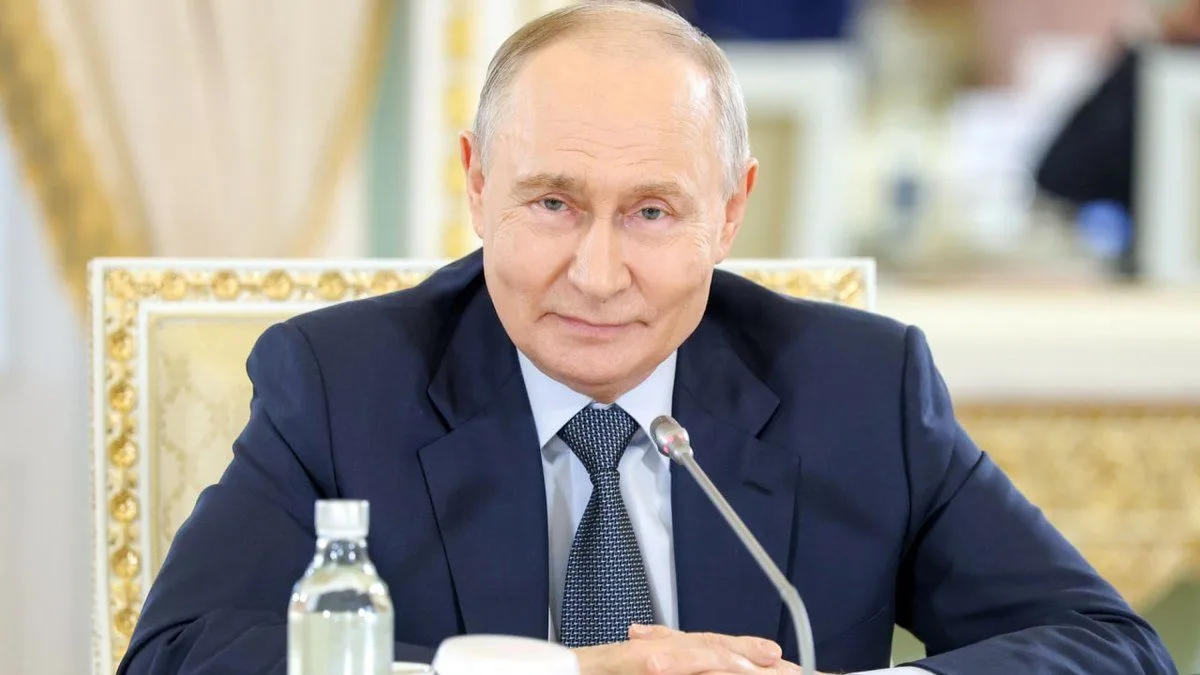
Before arriving in Islamabad, Araghchi held talks with Russian President Vladimir Putin in St Petersburg, where the conflict involving the US and Israel figured prominently.
“We had a very good meeting with Mr Putin. It probably lasted more than an hour and a half. All issues, both in bilateral relations and regional issues, as well as the issue of war and aggression by the US and Zionist regimes, were discussed and examined in detail,” Araghchi said in a statement shared on Telegram.
He added that proposals were discussed to expand cooperation between Tehran and Moscow, describing ties as a “strategic partnership”. “In the recent war, it became clear that Iran has great friends and allies like Russia; we thank you for your positions and support,” he said.
Russian officials, including Foreign Minister Sergey Lavrov and presidential aide Yury Ushakov, were present at the meeting. On the Iranian side, Deputy Foreign Minister Kazem Gharibabadi and Ambassador Kazem Jalali attended the talks.
Russia backs peace push, signals support for Iran
According to Iranian state media outlet Press TV, Putin said Moscow would support efforts to restore peace in West Asia and back Iran’s interests.
“I received a message from the Leader of the Islamic Revolution, Ayatollah Seyyed Mojtaba Khamenei. Russia will do what it can to support the interests of Iran and other regional countries and help bring peace to West Asia as soon as possible,” Putin said.
He also expressed hope that stability would return to the region soon, amid the ongoing crisis.
US weighs proposal as nuclear tensions persist
In Washington, the Iranian proposal has added a new dimension to the conflict, even as differences over Tehran’s nuclear programme remain unresolved.
Leavitt reiterated that the administration’s position on Iran’s nuclear ambitions had been clearly conveyed. President Trump has maintained that Iran must not acquire nuclear weapons, with officials describing his red lines as “very, very clear”.
Reports indicate that the proposal was conveyed to the US through Pakistani intermediaries, outlining Iran’s conditions, including easing US naval restrictions, before talks proceed. Washington, in turn, has demanded that Iran halt uranium enrichment and relocate its nuclear stockpile.
Araghchi, during his Pakistan visit, also shared Tehran’s red lines related to its nuclear programme and the Strait of Hormuz, though officials clarified that this was not part of direct negotiations.