Congress demands strong action against US over killing of Indian seafarers, questions Modi’s silence
The Congress party on Monday strongly condemned the killing of three Indian seafarers in a United States attack.
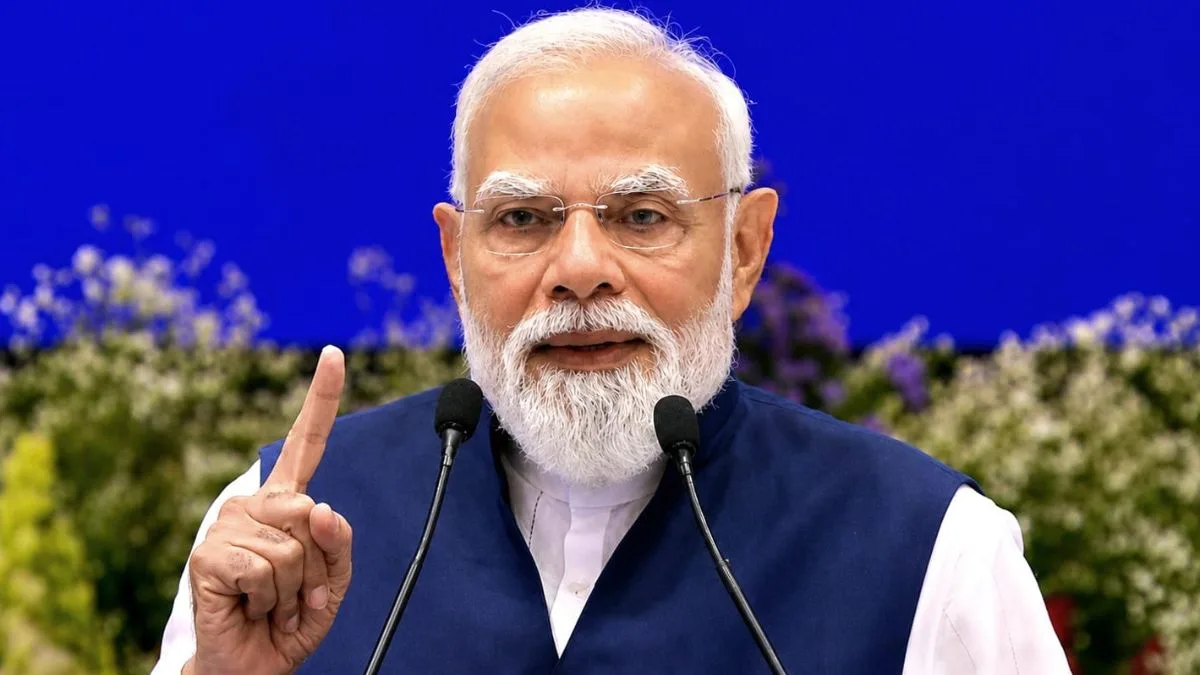
Prime Minister Narendra Modi will embark on a two-day visit to Sikkim on April 27-28 to attend the concluding ceremony of the state’s 50th year of statehood celebrations and roll out a comprehensive development package exceeding Rs 4,000 crore, aimed at strengthening infrastructure and promoting inclusive growth.





File photo: Prime Minister Narendra Modi in West Bengal. | ANI
Prime Minister Narendra Modi will embark on a two-day visit to Sikkim on April 27-28 to attend the concluding ceremony of the state’s 50th year of statehood celebrations and roll out a comprehensive development package exceeding Rs 4,000 crore, aimed at strengthening infrastructure and promoting inclusive growth.
Officials said that the Prime Minister will arrive in Gangtok on April 27 afternoon. On April 28 morning, he is scheduled to visit the Orchidarium, where the Swarnajayanti Maitri Manjari Park — conceived as a world-class Orchid Experience Centre — will highlight the state’s rich biodiversity and floral wealth.
Advertisement
Later in the day, at around 10 am, Modi will participate in the closing ceremony at Paljor Stadium, where he will inaugurate, dedicate and lay foundation stones for projects spanning connectivity, healthcare, education, power, tourism, urban development, environment and agriculture. He will also address a public gathering.
“These initiatives are aimed at accelerating holistic and inclusive development in Sikkim,” officials said, underlining the Centre’s continued emphasis on the Northeast as a priority region for investment and growth.
Advertisement
In healthcare, the Prime Minister will lay the foundation stone for a 100-bed Ayurveda hospital in Yangang in Namchi district and inaugurate a 30-bed Integrated Sowa Rigpa hospital at NIT Deorali, expanding access to traditional systems of medicine.
The education sector will see multiple inaugurations, including the permanent campus of Sikkim University at Yangang, facilities at Netaji Subhash Chandra Bose University of Excellence, Helen Lepcha Medical College, and Dentam Professional College. Model residential schools, a new degree college in Mangan district, and IT-enabled infrastructure across 160 schools will also be launched.
To enhance connectivity, the Prime Minister will lay the foundation stone for two steel arch bridges over the Teesta river linking key districts, and inaugurate the upgraded road from Birdhang to Namchi, expected to ease travel and improve movement of goods.
In the power sector, an upgraded transmission and distribution network in Gangtok will be unveiled to ensure reliable electricity supply. Urban development initiatives include the inauguration of the Jan Seva Sachivalaya in Lumsey and the Civil Service Officers Institute in Gangtok, alongside housing projects for economically weaker sections and government personnel.
Environmental initiatives will include the foundation stone for a sewerage system upgrade in Singtam and the launch of a river pollution abatement project for the Rani Chu river system, aimed at improving sanitation and preserving local ecosystems.
Tourism and pilgrimage infrastructure will also receive a boost with projects such as the redevelopment of the Ridge precinct in Gangtok, eco-tourism facilities in Soreng, and infrastructure linked to the Kailash Mansarovar Yatra. Plans also include a Yatri Niwas in Namchi and an eco-pilgrimage complex in Gyalshing district.
Additionally, Modi will inaugurate the Sikkim IFFCO Processing Plant to strengthen agro-processing and farmer incomes, and indoor cricket facilities in Pakyong district to encourage youth participation in sports.
The visit coincides with a landmark year for Sikkim, which became India’s 22nd state in 1975. Officials said the Prime Minister’s presence at the concluding ceremony reflects the government’s “continued commitment to the rapid and sustainable development of Sikkim and the Northeast region.”
Advertisement