The Thespians’ Tome
Ananda Lal: In our traditional theatre, a single episode from the Mahabharata may take all night. What made you decide your time frame?
In the nuanced realm of legal fiction, where the interplay between truth and its provability continues to engage both jurists and writers alike, Dr. Sujay Kantawala’s latest book “The Verdict: Who Killed Sonia Verma?” emerges as a thoughtful and measured narrative.




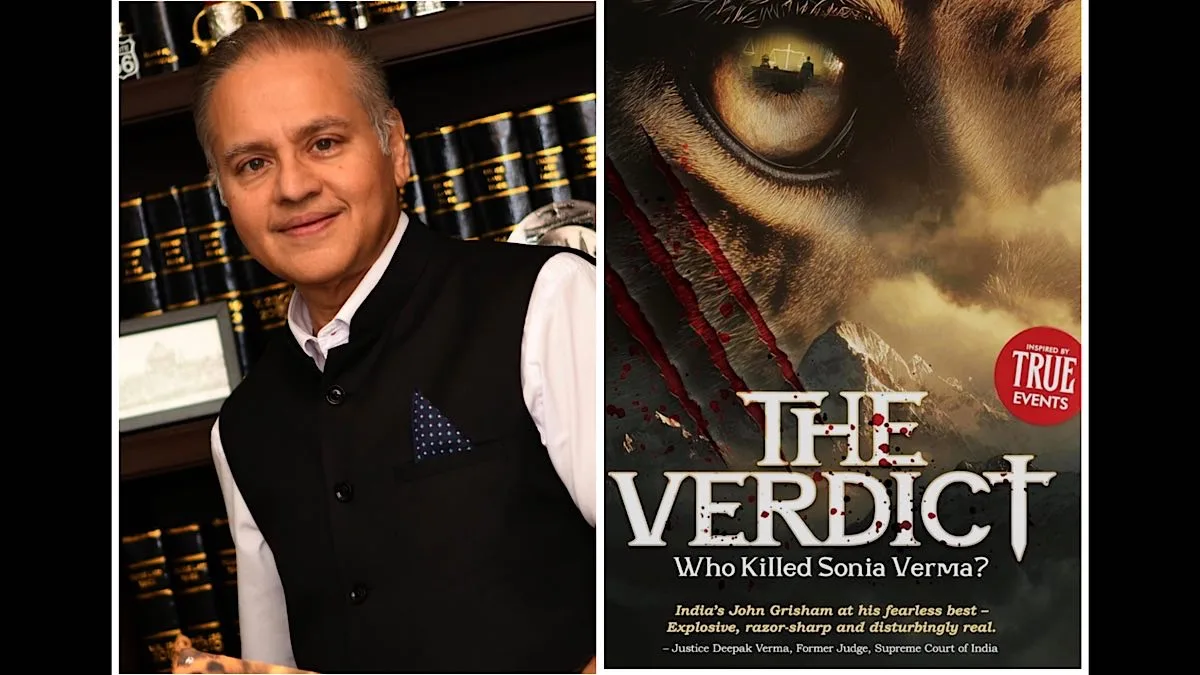
Photo:SNS
In the nuanced realm of legal fiction, where the interplay between truth and its provability continues to engage both jurists and writers alike, Dr. Sujay Kantawala’s latest book “The Verdict: Who Killed Sonia Verma?” emerges as a thoughtful and measured narrative. It positions itself within that familiar yet complex space where evidence is constructed, contested, and often found wanting in its pursuit of absolute truth.
As the narrative unfolds, we are provided with the disturbing piece of news about the painful death of seventeen year-old Sonia Verma, a case which is hurriedly dismissed as a leopard attack. It, indubitably, reveals a bureaucratic inclination towards closure rather than a proper investigation into the mystery shrouded death. However, as public pressure intensifies and a Commission of Inquiry is formed, the narrative gradually metamorphoses into a deeper examination of facts, silences, and institutional responses.
Advertisement
At a broader literary level, a literary critic would certainly like to draw a restrained comparison with John Grisham, particularly in the legal scaffolding that underpins the narrative. Yet, unlike Grisham’s often fast-paced courtroom drama, Kantawala adopts a more reflective and process-oriented approach which makes his book absolutely unique. There are also subterranean reverberations of the moral unease which mark the narratives of Fyodor Dostoevsky where the inquiry extends beyond the external to engage with deeper and moral questions of guilt, responsibility and conscience.
Advertisement
The character of Karan Negi, a retired judge living in seclusion, has been delineated with a remarkable adroitness. Kantawala does not choose to depict him merely as a dramatic investigator but as a figure of quiet introspection who has both the requisite attributes of professional discipline and personal distance. His meticulous analytical abilities lends the narrative a sense of credibility and intellectual profundity which make plot really plausible and help the readers resonate with it. Here the idea of Aristotle about the element of probability in plot construction stands fully incorporated and justified.
The setting of Pelling, with its mist-laden stillness, acts symbolically. It rather reinforces the ambiguity which floats around the case. Here, one is instantly reminded of the atmospheric use of setting in Bleak House by the Victorian novelist Charles Dickens, where environment reflects institutional opacity. Here too, the landscape becomes an extension of the narrative’s uncertainty, pushing the readers to proverbial tenterhooks.
The fact can not be refuted that this work is indeed thematically quite rich as it throws a flood of light on the prevalent contemporary concerns such as gendered violence, media scrutiny and the fragility of institutional mechanisms without taking recourse to overt polemics. The book, most pertinently, raises the question of whether the system entrusted with justice can remain insulated from the pressure that surrounds it or it succumbs and eventually is reduced to smithereens. Readers familiar with Kantawala’s earlier works like “Love Knows No Boundaries” and “Curse of Suspicion” will certainly be able to discern a growing maturity in narrative control and thematic focus. The present work can be adulated for being more assured which prefers depth to display.
While certain passages are dense with exposition, they contribute to the overall realism of the text. The dialogues, particularly within the inquiry framework are clear and purposeful and retain the ability to intellectually stimulate and engage the readers. In a nutshell, “The Verdict: Who Killed Sonia Verma?” transcends the boundaries of a conventional crime narrative and gives us a contemplative meditation on justice and its limitations. The resolution may answer the immediate question, yet it leaves behind a subtle and lingering discomfiture which is suggestive of the fact that while a verdict may conclude a case, it rarely resolves the deeper questions.
Advertisement