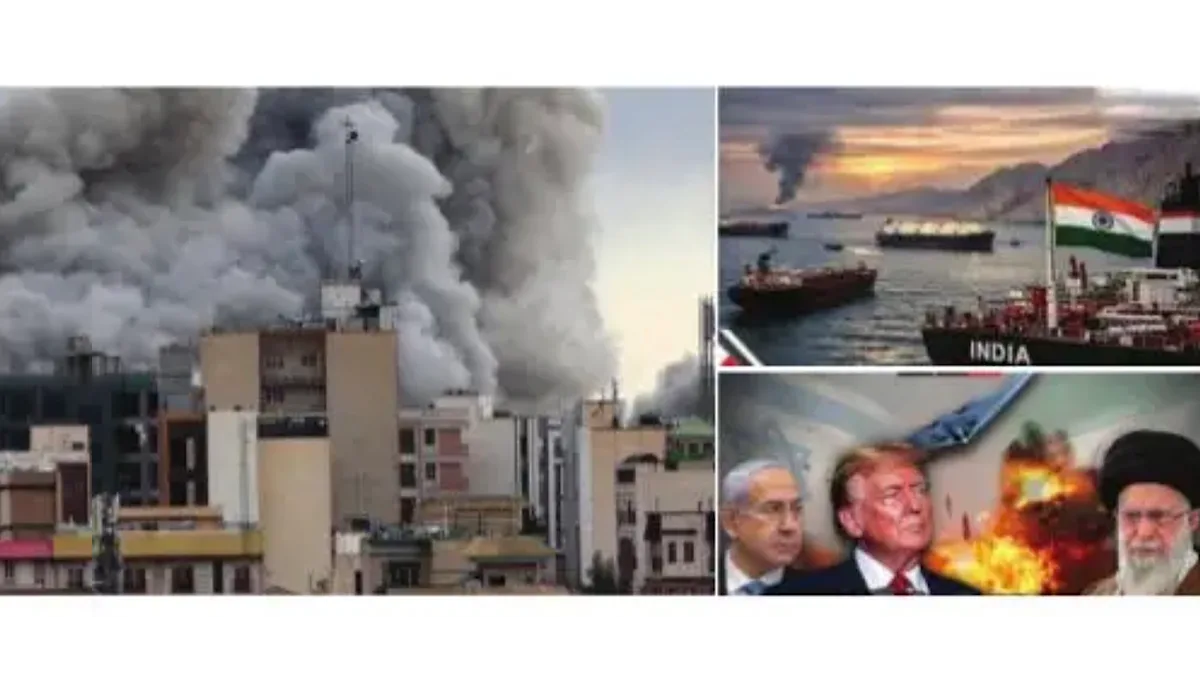
The US-Israel coalition is currently engaged in an intense, sustained, and escalatory military campaign against Iran, described by some observers as an “existential war” or a “war of choice”. The US and Israel have launched intense bombardments targeting thousands of Iranian military targets and infrastructure, including locations in Tehran and nuclear facilities. Attacks have targeted the Iranian leadership, military infrastructure, and naval bases, with reports of over 10,000 damaged homes.
The current war follows a 12-day conflict in June 2025 and is part of a broader, long-term effort by the US and Israel to dismantle Iran’s nuclear and missile programmes. Initiated on 28 February, the conflict is now in its third week, with no immediate signs of a ceasefire. Iran has responded with missile and drone strikes against Israel and US assets in the region, alongside accusations that Western forces are undermining regional security. President Donald Trump’s policy regarding Iran centres on a strategy of “maximum pressure” aiming for “strategic submission”.
Advertisement
This approach involves using intensified economic sanctions, coordinated military strikes with Israel, and a “divide and conquer” strategy targeting the Islamic Revolutionary Guard Corps (IRGC) to force Iran to halt nuclear development and reduce regional activity. The strategy is built in close cooperation with Israeli Prime Minister Benjamin Netanyahu to coordinate military actions and intelligence gathering. The objective is to force the Iranian leadership to accept permanent constraints on its nuclear programme and regional influence through overwhelming pressure. While aiming for quick submission, the strategy carries the risk of a protracted, uncontrollable conflict if the regime remains resilient, and there is no guarantee of achieving long-term stability in the region.
Iran is utilizing a pre-planned “mosaic defence” structure, allowing provincial command centres to continue operating despite the loss of top-level leadership. It has warned that it will strike back against any attack on its energy infrastructure or ports, and has warned Gulf nations against aiding the U.S. and Israel. The conflict is threatening to disrupt global energy markets, particularly in the Strait of Hormuz, causing a spike in oil prices and has resulted in over 2,000 reported fatalities across the region. The current situation is defined by a “maximum pressure” campaign that has escalated into an active military conflict, making diplomatic solutions difficult to achieve.
The U.S. demand for “unconditional surrender” and total dismantling of Iran’s enrichment programme has led to a stalemate, with Iran showing defiance and capacity for sustained conflict. Trump has stated he is “not ready” to make a deal because current terms offered by Tehran are insufficient, while Iranian officials have dismissed the idea of a ceasefire. Analysts in the US are becoming increasingly critical of Trump, saying that the country is now trapped in a conflict with no clean exit. The war has pushed up global energy prices and caused significant economic disruption due to threats against shipping in the Strait of Hormuz.
Iran has largely blocked this vital waterway, leading Trump to call for a naval coalition of countries including China, the UK, and Japan to keep shipping lanes open. To pressurise Iran to keep the Strait of Hormuz open, the U.S. military has struck critical infrastructure like Kharg Island, which handles 90 per cent of Iran’s oil exports. In this background, the situation is a “nightmare strategic scenario” where multiple pathways hold significant risks of catastrophic outcomes. One scenario involves continuation of the US-Israel bombing of Iranian nuclear sites and infrastructure which risks global destabilization.
The scenario, marked by the 12-day War in June 2025 and subsequent escalations in February/March 2026, has seen the US under President Trump, moving to dismantle Iran’s nuclear capabilities entirely while Iran has continued its retaliatory measures. This option includes the potential for killing massive numbers of civilians and triggering a “long war” that disrupts global energy markets. A second scenario is Boots on the Ground. However, sending American soldiers into Iran, a country of over 90 million people with mountainous terrain and a “martyrdom” mindset, is seen as a potentially disastrous option, similar to or worse than the 20-year Afghanistan war, resulting in massive troop casualties.
Iran’s vast, mountainous geography ~ specifically the jagged Zagros Mountains ~ favours decentralized “mosaic defence” tactics, which could immediately stall heavy armour. A Boots on the Ground strategy would likely lead to sustained U.S. casualties in a hostile environment. While the U.S. possesses the military capability for such an invasion, it could require hundreds of thousands of troops to occupy the country, transforming a limited campaign into a “forever-siege”. A third option is easing military pressure or pulling back, which would lead to Iran expanding its regional influence, leaving Israel to fight alone against Tehran and its proxies such as Hezbollah and the Houthis and portraying American weakness.
This path could result in the loss of US influence in the Middle East, leaving Israel to face Iran and its proxies alone, and potentially causing the U.S. dollar to lose its oil backing. It may be mentioned that the “oil backing” of the U.S. dollar, known as the petrodollar system, is a 1970s arrangement where OPEC nations, primarily Saudi Arabia, agreed to price oil exclusively in USD, ensuring global demand for the dollar. This system replaced the gold standard, creating a massive, consistent need for dollars, strengthening its reserve currency status. In fact, far from pulling back, the U.S. is reportedly deploying an additional 2,500 Marines to West Asia, augmenting the 50,000 personnel already in the region.
Could Trump push the nuclear button? His administration maintains that “all options are on the table” to prevent Tehran from acquiring a nuclear weapon, a phrase historically used to include nuclear contingencies without explicitly naming them. However, while Trump has authorized major conventional military operations against Iran, he has not publicly signalled the use of nuclear weapons. The administration’s current doctrine emphasizes “decisive force” and “coercive diplomacy,” relying on its massive conventional air and naval buildup in the Middle East to achieve its objectives without crossing the nuclear threshold. Without doubt, ending the conflict faces severe challenges. President Trump has stated that Iran is “totally defeated and wants a deal”.
On the other hand, Iran has officially rejected ceasefire negotiations, with Foreign Minister Abbas Araghchi stating that Tehran is prepared to defend itself “as long as it takes,” thus denying that they are seeking a deal. Iran has also set specific demands for ending the war, which include official recognition of its political standing and rights, reparations for damage from airstrikes, and strong international security guarantees. Moreover, the Islamic Revolutionary Guard Corps (IRGC) is actively seeking retaliation for the killing of its commanders, making a rapid halt unlikely.
The IRGC has vowed to pursue and kill Israeli Prime Minister Benjamin Netanyahu, whom they have described as a “child-killing criminal.” Against this backdrop, the big question is: how to end the Iran war? A shift away from continued attacks by the Trump administration is essential to preventing a deeper, more protracted war and allowing for an exit. The restoration of shipping safety in the Strait of Hormuz is a key priority for the U.S., which may offer a focal point for ceasefire negotiations, despite Iran’s ability to maintain pressure through naval drones and mines. The conflict requires direct or indirect negotiations between Tehran and Washington to establish a ceasefire.
Third-party mediation involving international actors, particularly those with diplomatic influence, may be needed to facilitate a truce between the parties. India is increasingly viewed by regional actors as a potential mediator in the escalating conflict between Iran, Israel, and the United States, though it has not formally accepted a lead mediation role. India maintains robust, independent partnerships with all primary rivals ~ Israel, Iran, and the Gulf states. This unique positioning allows New Delhi to act as a neutral “back channel” for de-escalation. The United Nations Human Rights Office specifically identified India as a country with the global influence necessary to play a constructive role in de-escalating the conflict.
UN official Ravina Shamdasani noted that India, alongside other influential nations, could encourage a recommitment to the UN Charter to bring the regional crisis to an end. Several high-profile diplomatic figures and military experts have also called on Prime Minister Narendra Modi to intervene and mediate an end to the hostilities. Hussain Hassan Mirza, a former UAE Ambassador to India, made a widely reported statement that “one phone call from PM Modi” to his counterparts in Iran and Israel could resolve the conflict. He emphasized that Modi commands unique respect across the Gulf and holds credibility with both warring sides. In a widely shared interview, retired U.S. Army Colonel Douglas Macgregor suggested that President Trump should call PM Modi to help stop the war, noting India’s strong relations with both Israel and Iran.
Prime Minister Modi has engaged in active “telephone diplomacy” to push for a cessation of hostilities. On 1 March, PM Modi spoke with the Israeli Prime Minister, expressing deep concern over regional developments and stressing the priority of civilian safety and an early end to fighting. On 12 March, he held a conversation with the Iranian President, advocating for dialogue and diplomacy to defuse the “serious situation”. He has also held discussions with UAE President Sheikh Mohamed bin Zayed Al Nahyan and the President of France to coordinate peace efforts. India has a critical, multi-faceted stake in ending the ongoing conflict between Iran, Israel, and the United States, as the instability threatens its energy security, economic stability, and diaspora in the Gulf region.
The conflict has disrupted shipping routes through the Strait of Hormuz – through which 90 per cent of India’s LPG imports pass – creating shortages in cooking gas and pushing up energy prices. Over 10 million Indian citizens live in the region. The war puts roughly $50 billion in remittances at risk and presents a massive challenge for the protection and potential evacuation of Indian nationals.
Prolonged instability will negatively affect India’s growth and it will require complex, intense diplomacy to safeguard its interests. Given the high stakes, India should leverage its multi-aligned policy to facilitate de-escalation through quiet diplomacy and back channels. While a public, high-profile mediation attempt might be risky, a passive stance would be detrimental to India’s national interest. Therefore, a proactive, balanced, and behind-the-scenes role that advocates for dialogue (as shown by recent diplomatic engagements) is the most logical path forward.
(The writer, a retired IFS officer, served as India’s Ambassador to Kuwait and Morocco and as Consul-General in New York)