‘Totally unacceptable’: Donald Trump blames Iran for attack on Indian ships
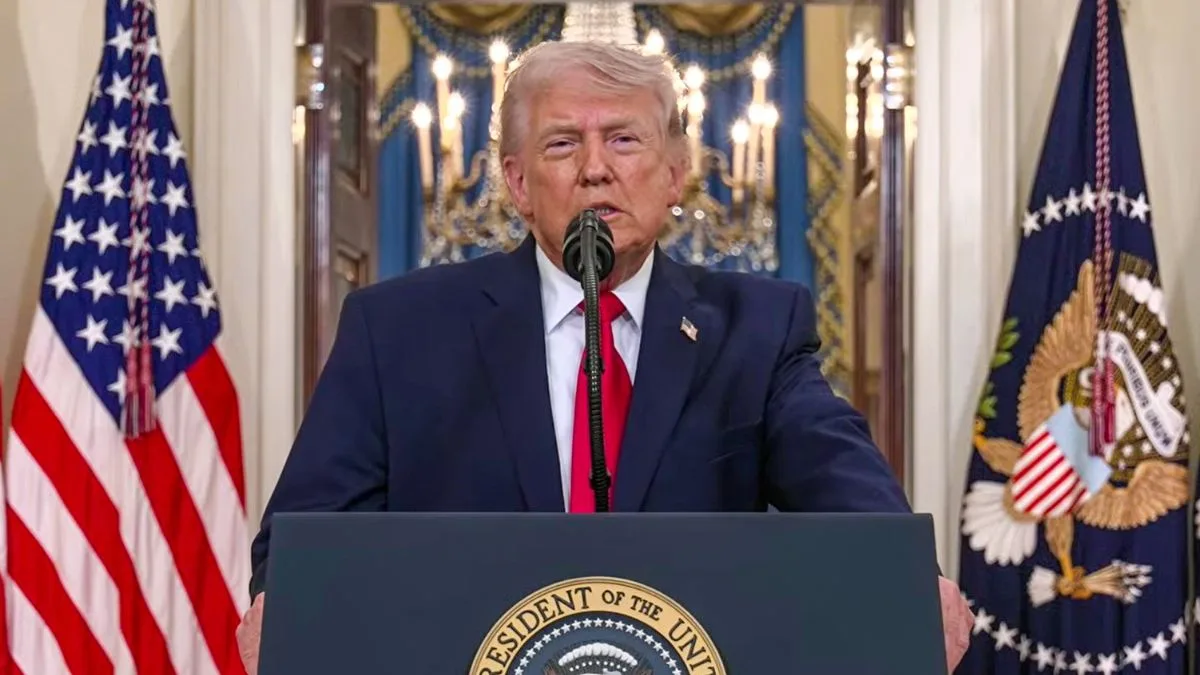
In a post on his Truth Social platform, Trump stated that this was "totally unacceptable."
India’s shipping authorities say several Indian-flagged vessels have moved to safer waters in the Arabian Sea as tensions rise near the Strait of Hormuz, a key route for global oil trade.





Iranian soldiers patrol the Strait of Hormuz in southern Iran on April 30, 2019. The waterway carries about 20% of global oil supply and remains a key global energy chokepoint. (Photo: Xinhua/IANS)
In a significant development for India’s energy supplies, a crude oil tanker heading to India has successfully crossed the Strait of Hormuz and reached Mumbai Port, even as maritime movement in the region remains severely disrupted following recent attacks on Iran.
The Liberian-flagged tanker was commanded by an Indian captain.
Advertisement
The ship, Shenlong Suezmax, carried Saudi Arabian crude and became the first tanker bound for India to safely cross the route since maritime traffic slowed sharply following the US and Israeli strikes on Iran.
Advertisement
The vessel had loaded crude oil at Ras Tanura in Saudi Arabia on March 1 and departed two days later. Maritime tracking data from Lloyd’s List Intelligence and TankerTrackers indicated that the tanker was within the Strait of Hormuz on March 8 before continuing its journey towards India.
The passage of the vessel comes after diplomatic engagement between India and Iran aimed at keeping the vital shipping corridor open. According to sources, the issue of ensuring safe movement of tankers through the Strait of Hormuz figured prominently during a recent conversation between External Affairs Minister S Jaishankar and Iran’s Foreign Minister Abbas Araghchi, as tensions in West Asia continue to affect global shipping.
As per sources familiar with the development, India-flagged tankers Pushpak and Parimal have been allowed to pass through the strategic waterway even as vessels from the United States, Europe, and Israel continue to face restrictions in the region.
#WATCH | Liberia-flagged tanker ship ‘Shenlong’ enters Indian waters near Mumbai Port. It was captained by an Indian and was loaded with crude oil from the Saudi port Ras Tanura.
Latest visuals from Mumbai Port pic.twitter.com/4BWABAsZ88
— ANI (@ANI) March 12, 2026
The tanker’s arrival is expected to ease some concerns about India’s energy security. The country depends heavily on shipments that pass through the Strait of Hormuz, with more than half of its crude oil and natural gas imports travelling through the narrow sea passage.
Even so, several Indian vessels remain close to the sensitive maritime corridor.
As per the Directorate General of Shipping, at least 28 Indian-flagged ships have been operating in or near the Strait of Hormuz since tensions escalated in the region.
Officials said eight of these vessels were positioned east of the strait when hostilities began and were later moved to safer areas.
A situation report issued by the Directorate General of Shipping said seven vessels – Swarna Kamal, Jag Viraat, Vishva Prerna, Desh Mahima, Desh Abhiman, Jag Lokesh and LNGC Aseem – have now moved out into the Arabian Sea. Another vessel, Jag Lakshya, has continued its journey towards Angola.
Despite some ships managing to pass through safely, tensions in the region remain high.
Tensions in the region remain palpable. On March 11, a Thai-flagged cargo ship came under attack near the Strait of Hormuz shortly after leaving the United Arab Emirates, the Royal Thai Navy said.
The vessel, Mayuree Naree, had departed from Khalifa Port and was headed towards Kandla Port in Gujarat when the incident occurred while it was passing through the narrow waterway.
Officials are closely tracking the situation as the Strait of Hormuz remains one of the world’s most critical routes for the movement of oil and other energy supplies.
Advertisement