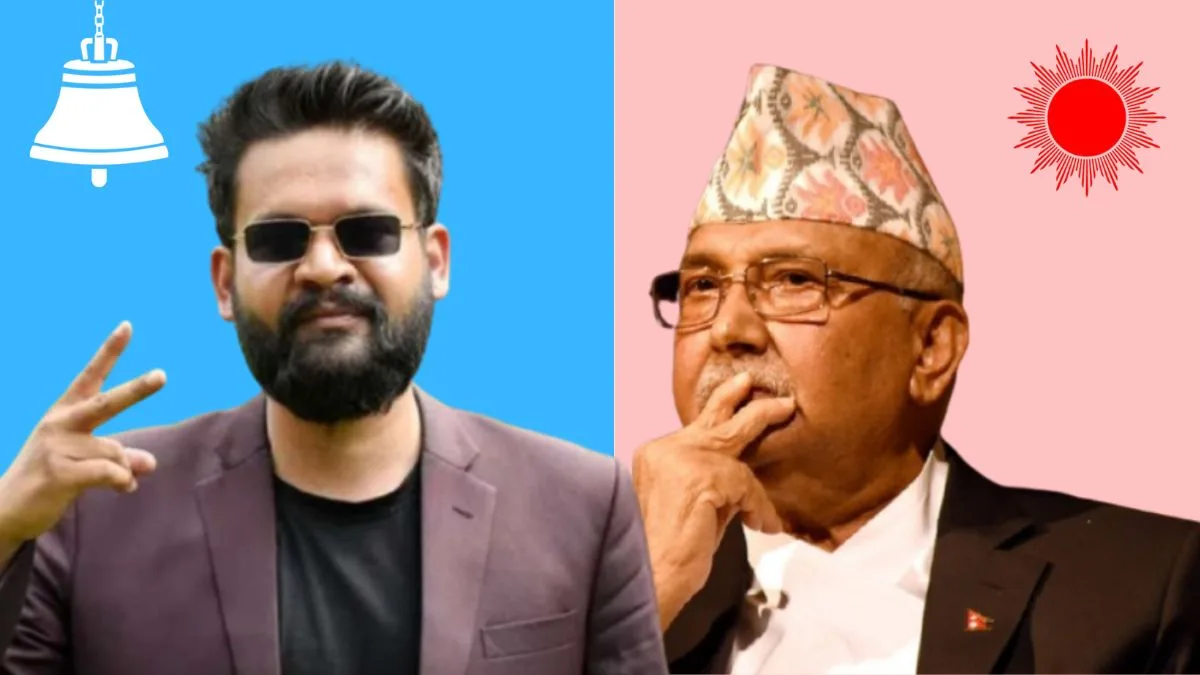
Nepali politics has always been a drama, but the 2026 elections gave the country a plot twist worthy of a Netflix political thriller. From Kathmandu to Jhapa, the name on everyone’s lips is Balen Shah, the independent-turned-Rastriya Swatantra Party (RSP) firebrand who unseated former Prime Minister KP Sharma Oli, a man who had dominated eastern Nepal for decades. This is not just a local upset; it’s a seismic shift, a wake-up call to the old political order, and a moment that has political gossip buzzing from tea shops to social media threads.
Balen’s rise is the story of a man who went from rapper and architect to Kathmandu mayor, to national political contender in record time. Oli, a seasoned political titan and former Prime Minister, faced defeat in Jhapa-5, a constituency that was effectively his electoral fortress.
Advertisement
In 2026, Balen received 68,348 votes for his election symbol, the bell, while Oli got 18,724 votes for the sun.
Previous Jhapa-5 election in numbers
The 2022 general election results from Jhapa-5 tell a story of change:
– KP Sharma Oli (CPN-UML): 52,319 votes (55.74%)
– Khagendra Adhikari (Nepali Congress): 23,743 votes (25.29%)
– Suresh Kumar Pokharel (Rastriya Swatantra Party): 11,759 votes (12.53%)
At first glance, Oli appears to maintain a majority. But compared with his 2017 tally of 57,139 votes, the decline is evident. The Nepali Congress also lost some ground, while the newly formed RSP disrupted traditional voting patterns.
The emergence of RSP energised anti-establishment voters, particularly young voters dissatisfied with mainstream parties. In a constituency that had been practically synonymous with Oli, this result was a shock.
Few politicians in Nepal have dominated as long or as decisively as Oli. His career in Jhapa is a story of near-unbroken electoral success:
1991, House of Representatives, Jhapa-6: 21,049 votes – Elected
1994: 18,861 votes – Elected
1999: 23,749 votes – Elected
Jhapa-2: 18,909 votes – Vacated
2008, Constituent Assembly, Jhapa-7: 14,959 votes – Lost
2013: 19,287 votes – Elected
2017, House of Representatives, Jhapa-5: 57,139 votes – Elected
2022, House of Representatives, Jhapa-5: 52,319 votes – Lost
Oli had mastered the art of Nepali politics: mega-rallies, personal branding, strategic party control. His campaigns didn’t require door-to-door canvassing; voters came to him. He wasn’t just a candidate. He was an institution. Until Balen Shah arrived on the scene.
Oli’s strategy and the Gen Z protests
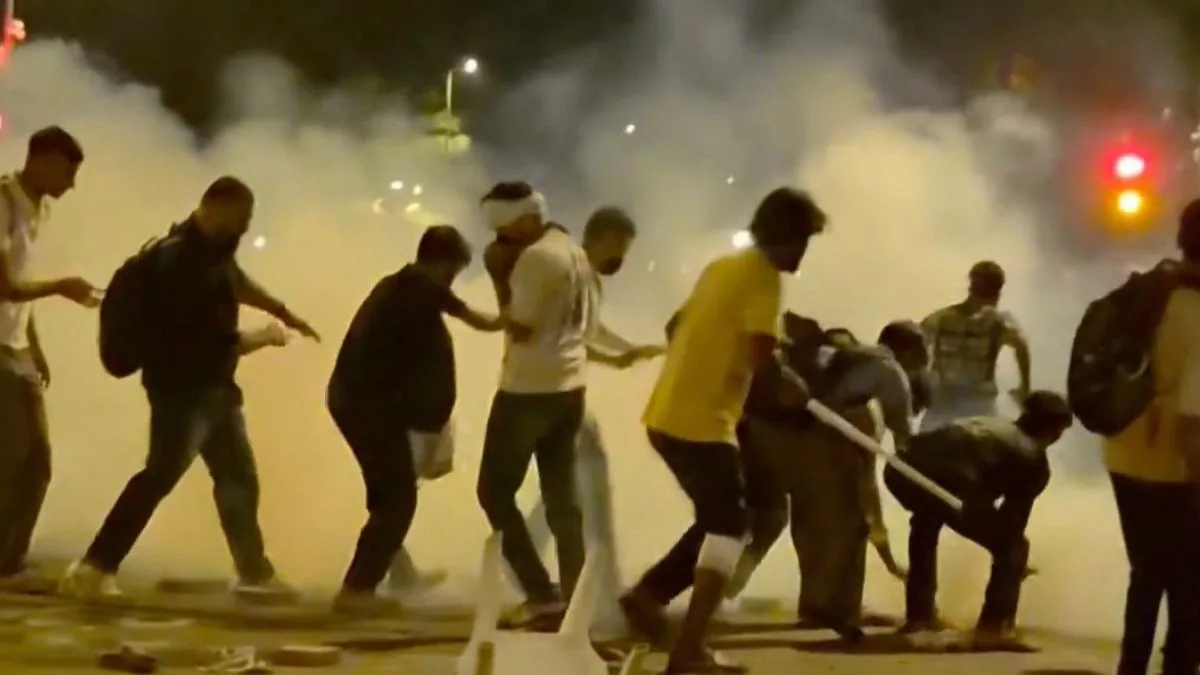
Oli’s 2022 campaign was heavily influenced by his stance on the September 8-9 Gen Z protests. These protests demanded transparency, accountability, justice. They mobilised thousands of young voters. Oli and the CPN-UML positioned themselves firmly against the movement, framing it as foreign-influenced and destabilising.
Inside the party, Oli reinforced discipline. Dissenters were marginalised and even branded as foreign agents. His narrative emphasised stability versus chaos, “country builders” versus “country burners”.
This approach alienated young voters. It failed to address widespread dissatisfaction with corruption, unemployment, governance failures. The electorate was shifting. And Oli’s old formula was losing traction.
Balen Shah as Kathmandu’s maverick mayor
He first made national headlines as Kathmandu’s mayor in 2022, where he won against experienced politicians:
– Balen Shah (Independent): 61,767 votes (38.6%)
– Sirjana Singh (Nepali Congress): 38,341 votes (24%)
– Keshav Sthapit (CPN-UML): 38,117 votes (23.8%)
Shah’s style was unapologetically bold. He bulldozed illegal structures, rerouted waste management, and publicly criticised government inefficiency.
But it wasn’t just his governance style that made him a sensation. It was his personality, social media presence, and ability to challenge authority directly.
In November, he posted on Facebook: “F*** America, F*** India, F*** China, F*** UML, F*** Congress, F*** RSP, F*** RPP, F*** Maobaadi. You guys all combined can do nothing.”
The post was deleted in less than half an hour, but it captured the essence of his political style. Controversial and unfiltered. For young voters disillusioned with bureaucracy and traditional politics, he became a figure of hope and rebellion.
Then from mayor to Prime Ministerial candidate
After resigning as mayor, Balen joined the Rastriya Swatantra Party (RSP), forming a political alliance with Rabi Lamichhane. They announced a seven-point agreement to contest elections as a united anti-establishment front:
1. Balen Shah as the prime ministerial candidate.
2. Lamichhane retaining his role as RSP chairman.
3. A roadmap for governing Nepal for the next decade.
4. Anti-corruption, accountability, and transparency as central campaign themes.
5. Prioritisation of youth, innovation, reform.
6. Engagement with Gen Z voters and grassroots movements.
7. Promotion of a non-ideological, cooperative approach to governance.
Balen’s past controversies
Balen’s career is punctuated by headline-making controversies:
Traffic Confrontation: Stopped by police while his wife was in an official vehicle, he threatened to “set Singha Durbar on fire” if government vehicles were impeded again.
Nationalist Gesture: Displayed a “Greater Nepal” map in response to India’s “Akhand Bharat” mural. This caused diplomatic ripples.
Cultural Protectionism: Banned Indian films that misrepresented Sita’s birthplace.
Urban Governance Activism: Bulldozed illegal structures, rerouted waste, and publicly criticised government failures.
Critics called him reckless, supporters called him decisive. For young voters frustrated with bureaucracy and corruption, Balen’s audacity was quite appealing.
Oli’s legacy: Controversies and achievements
While Balen rose, Oli’s decades-long career faced increasing scrutiny:
– Four terms as Prime Minister in ten years.
– Internal party disputes often framing dissenters as foreign agents.
– Governance challenges including corruption allegations and failure to maintain two-thirds parliamentary majority.
– Constitutional crisis in 2020, when he dissolved the House of Representatives.
– Public perception as authoritarian and disconnected from youth and grassroots movements.
Oli’s strategy of central control and discipline which was effective in the past failed to resonate with a younger, more demanding electorate.
What role Gen Z protests played in Balen’s victory
The September 8-9, 2022 protests were turning point. Youth mobilised against corruption, demanding transparency. Balen aligned himself with these sentiments. He positioned himself as new voice for accountability and change.
Oli’s opposition to the movement and emphasis on stability alienated young voters turning elections into referendum on generational priorities.