Winter in Ladakh is never silent; it makes itself known. While one day it’s the barren brown landscape stunning you with its rugged, picturesque beauty, the next day you will find yourself buried deep under thermal layers, as you witness the jagged ridgelines of the Himalayas wearing a crown of snow. Ladakh during winter is otherworldly, and as the temperature hits minus, what remains alive is the soul of Ladakh- fiercely active because life here does not retreat within the four walls during winter; rather, it adopts.
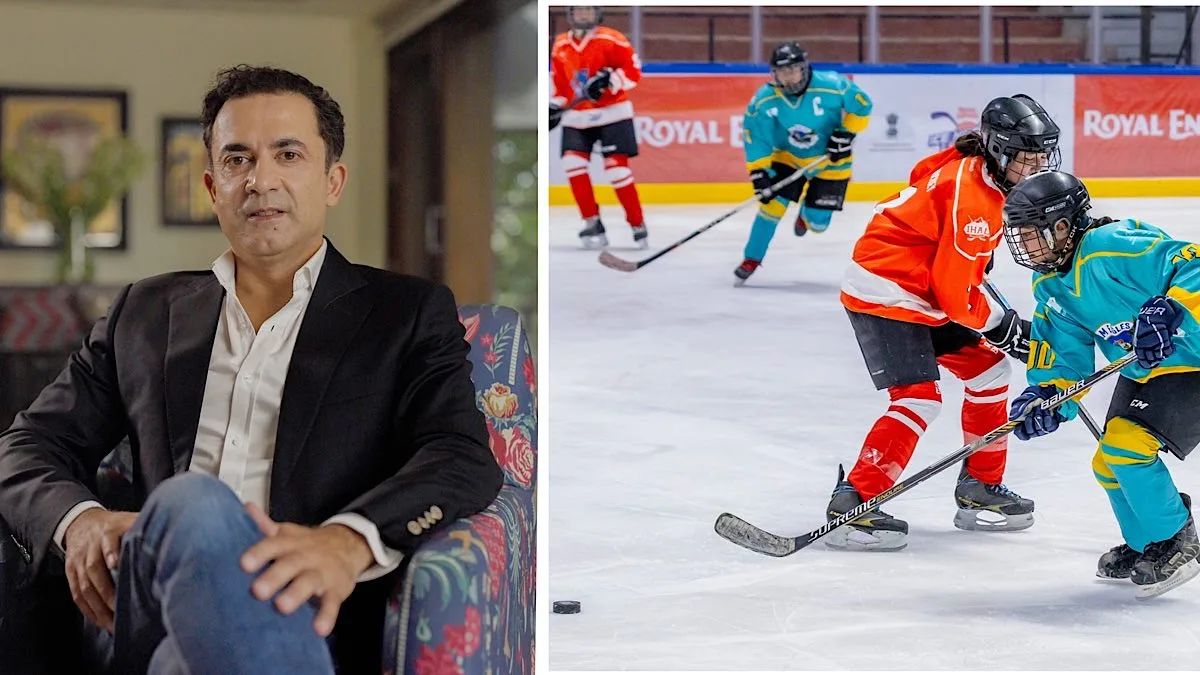
Winter sports gain traction during this time, and at the heart of this is The Royal Enfield Ice Hockey League (REIHL), which for the last three seasons, has created a professional platform for both men and women and has evolved into a structured competitive movement. A league that featured 11 men’s and 5 women’s teams from 29 January to 14 February this year, saw Humas Warriors under the men’s section and Sham Eagles under the women’s section become the unbeatable champions. As the matches attracted an enthusiastic crowd and delved into making the community bond stronger, The Statesman had a tête-à-tête with Vigyat Singh, Director, Eicher Group Foundation, Incharge RE Ice Hockey, on how the natural icy rinks become an arena of ambition, resilience and pride.
Advertisement
Q. Ice hockey has always been part of Ladakh’s winter life for generations. Why step into a sport that is already culturally rooted, rather than introducing something new?
Royal Enfield Social Mission has always been committed to working with Himalayan communities to build adaptive capacity and promote the region’s living heritage. In Ladakh and surrounding trans-Himalayas, Ice hockey has always been part of the cultural landscape and played on frozen ponds and lakes; what was missing was structure, continuity and a long-term player development pathway. Our work remains locally rooted, and with this spirit, we aim to support a sport that is integral to the region and the community but is underrepresented in the mainstream.
Q. With over 800 children participating in the Learn to Play programme, balancing scale with quality and individual attention in high-altitude, remote settings is tough. How do you work around that?
Learn To Play (LTP) forms the backbone of the Social Mission’s bottom-up development of the sport, in line with the Blueprint for the Development of Ice Hockey. For an Indian team to qualify for the Winter Olympics in 2042, as laid out in the Blueprint, children who are taking up the sport now, will be competing at their peak by 2042, 600 players have been trained in the previous year and over 1000 kids expected to participate this year, with number of villages having expanded from 10 to 24 this year.
While scaling up, focus on local capacity building is also equally important. A 10-day camp was conducted in Dehradun, where ex-IIHF coach instructor, Darryl Easson, took 39 male and female coaches from Ladakh, HP and Uttarakhand through key facets of organising LTP camps, setting curriculums, and encouraging kids to take up the sport. Player tracking and evaluation mechanisms have also been strengthened to enable more specialised interventions for the coming years. At the same time, coaches are groomed to support the personality development of kids, acting as local community leaders. Going ahead, there is intent to further evolve and specialise the programme and provide LTP-specific equipment.
Q. The programme is led by 24 trained local coaches. Why was it important for the coaching voice to come from within the community?
As participation grows across villages, we are investing in training local coaches, who are mentored by international experts and equipped to run structured sessions and track player development. Initiatives like the Train-the-Trainer programme aim to bring international best practices to the local community. Instructors like Peter Gebei and Darryl Easson, licensed instructors by the International Ice Hockey Federation (IIHF), have conducted capacity-building programmes for local coaches and referees.
These coaches then return to their own communities, creating a multiplier effect — one trained coach can support dozens of young players year after year, even in remote areas. This continuity ensures that more and more players are able to progress within a local Ice hockey ecosystem.
Q. Even with the Learn to Play programme, how important is it for young players to see a pathway beyond training?
LTP serves as an inclusive grassroots development programme, providing children an avenue to take up the sport, while also remaining fit and active during the harsh winter months. A league like this transforms the sport from a seasonal activity to a long-term aspiration with a visible pathway
With region-based teams representing diverse and far-off places like Drass, Zanskar, Nubra, Pin, etc., young players are actively scouted, followed by a rigorous training programme. A structured technical development programme – from grassroots participation and developmental leagues, thus translates training into real opportunity, providing a pathway for players to compete in elite competitions.
As developmental leagues, these competitions then provide a platform for players to test and fine-tune their learning.
Q. Season 3 is being described as the league’s most expansive and competitive edition yet. How has the League evolved from its first season in terms of intent, not just scale, but confidence and credibility?
For the first time, this league has transitioned to a complete league format, with every team playing each other. This has been made possible by the NDS rink in Leh evolving into a global-standard, all-weather rink—unlocking round-the-year ice time.
Over the years, we have seen a sharp rise in the quality and seriousness of the sport. Players, coaches, and support staff are training harder, planning better, and approaching Ice Hockey with real long-term intent. Teams have begun to build distinct identities—both on the ice and online—which has naturally fuelled rivalries and turned players into local heroes. This growth is clearly reflected in the significant rise in fan attendance and local community interest, with over 34,000 fans attending the league across the season this year.
Again, this season has expanded the sport to new regions and provided more players access to the game. The organic interest, raw passion and following of the league, as well as interest from players, have been a source of encouragement and inspiration, as the league has transformed into a true developmental league as well as an avenue for the community to come together and celebrate hockey. It is especially interesting to see newer regions like Shakar Chiktan, Sham, Zanskar and Nubra, who only knew basic skating in the first season, now squaring off confidently against more established regions and even getting positive results. Over the years, the level of technical and operational governance, salience and awareness has also steadily increased.
Q. What progress have you seen in the women’s category since the league began?
The League has significantly increased the pool of women players, especially from far-off regions in the UT. With this platform, players have got a chance to train and play regularly. Women’s games are played with the same seriousness and professionalism as the men’s. In fact, the commitment and passion seen in the women’s games is much more, which is also inspiring more women to take up the sport, including from the culturally conservative regions.
Q. How does REIHL avoid becoming ‘just a tournament’ and instead remain a cultural winter gathering for Ladakh?
As a developmental league, the REIHL has always been a platform for players to compete and the community to gather and engage. More than that, it is a celebration of hockey, bringing together fans from across the community. Teams from across regions come together to play and stay together, where refreshments, accommodation (for far-off teams) and training is provided by RESM. These players are part of a holistic training support programme which includes equipment support, coach capacity building, local training programmes, as well as administrative, marketing and operational capacity building. As interest, participation and fans grow rapidly, REIHL has the potential to become the largest community-led team sports competition in the Himalayas.
Q. The league draws teams from Leh, Nubra, Kargil, Zanskar, Changthang, and beyond. What does this geographic diversity say about the ecosystem that’s emerging?
This signals that ice hockey is no longer concentrated in small pockets. The sport is spreading as the availability of skilled coaches, structured training, equipment, and competition reaches more regions. Teams from farther regions like Shakar Chiktan, Zanskar, etc. are today competing confidently against the traditional regions like Leh and Changthang. This is also a testament to the seriousness, dedication and passion these teams bring forward. Through the league, some of the regions, for the first time, are getting a platform to train and come to Leh and compete equally against more established players.
Q. What gaps still remain in the Himalayan ice hockey ecosystem that require collective action?
Infrastructure still remains limited, with two all-weather rinks in Dehradun and Leh only. A third rink is coming up in Kargil, which will significantly boost the game in the region. More rinks will further provide a chance for more players to pursue the sport. Similarly, grassroots initiatives need to be tiered with age-specific equipment. A merit-based youth development ecosystem needs to come together with academies and structured teaching curriculums. A balance needs to be struck between training and competitions.