Now Kolkata and Mizoram are connected by train and in the New Year one can visit Mizoram, perched on the verdant hills of India’s Northeast, ready to welcome the New Year not with a single date on the calendar but through a rich cycle of festivals that mark renewal, gratitude, and collective joy. For the Mizo people, the idea of a “new year” is deeply intertwined with nature, agriculture, community life, and ancestral memory.
Each festival carries echoes of an older time when seasons, not clocks, governed human rhythm. Even today, as modern calendars and global celebrations enter daily life, the traditional New Year festivals of Mizoram continue to shape cultural identity and social harmony. The most prominent among these festivals is Chapchar Kut, often regarded as the Mizo New Year in spirit if not in strict chronology. Celebrated usually in February or March, Chapchar Kut marks a pause in the agricultural cycle, when the labor of clearing forests for jhum cultivation is complete and sowing has not yet begun.
Advertisement
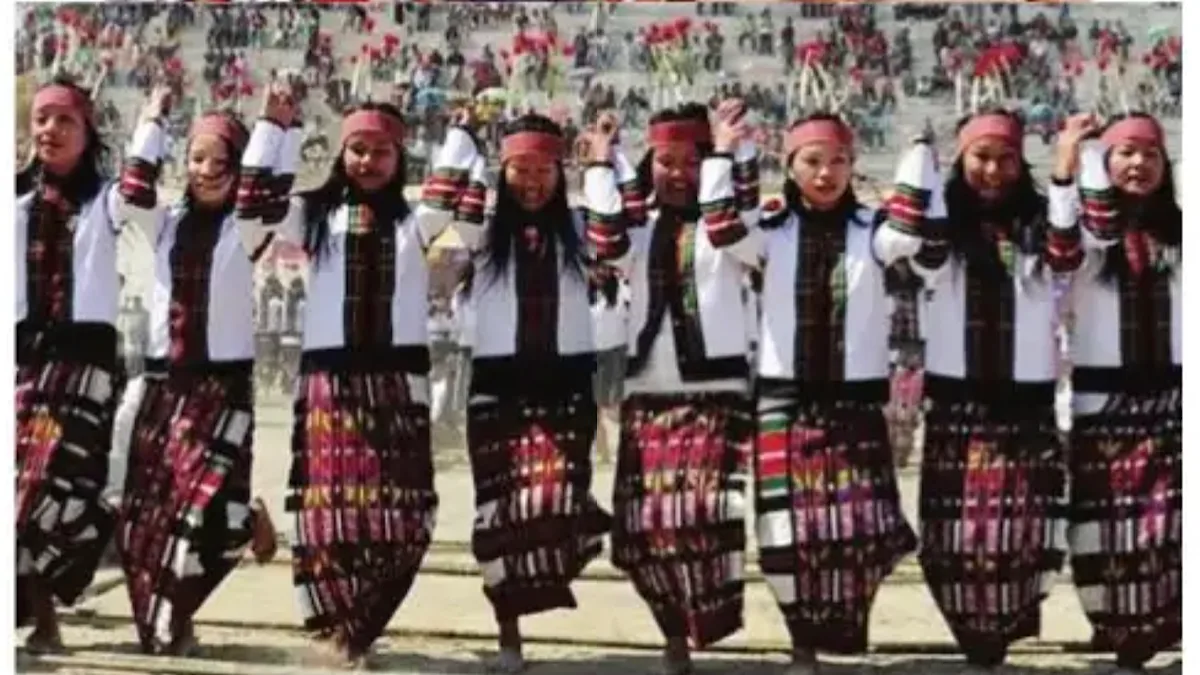
This interval of rest is seen as a fresh beginning, a moment to celebrate survival, hope, and the promise of abundance. Villages come alive with music, dance, and color as people don their finest traditional attire. The famed Cheraw or bamboo dance becomes the beating heart of the festival, where rhythmic clapping of bamboo staves is matched with agile footwork, symbolizing harmony between human energy and natural rhythm. Chapchar Kut is not merely festivity; it is a communal affirmation that life renews itself through cooperation and patience. Chapchar Kut also embodies the Mizo philosophy of Tlawmngaihna, a moral code emphasizing selflessness, courage, and respect for others.
During the festival, families open their homes, food is shared without distinction, and elders pass on stories of the past to the younger generation. The New Year spirit here is less about individual resolution and more about collective renewal. It is a time when social bonds are strengthened, conflicts are forgotten, and the community moves forward together. Another important festival associated with renewal and New Year consciousness is Mim Kut, observed around August or September. Mim Kut is linked to the harvest of maize and is deeply spiritual in nature. It is a time to remember departed ancestors and offer thanks for the fruits of the earth.
While it may not be a New Year in the conventional sense, Mim Kut reflects the Mizo understanding that every harvest signals the closing of one cycle and the opening of another. The living and the dead are symbolically reunited through offerings of food and drink, reminding the community that continuity, not rupture, defines renewal. In this sense, the New Year is a moral and emotional passage rather than a mere change of date. Pawl Kut, celebrated in December, carries a more explicit sense of culmination and fresh beginnings. Marking the end of the harvest season, Pawl Kut is a thanksgiving festival that also looks forward to the coming year. It is a time of feasting, singing, and social gathering, when worries of scarcity are momentarily set aside.
Traditionally, it was believed that generous celebration during Pawl Kut would ensure prosperity in the year ahead. Thus, joy itself becomes an offering to the future. In modern Mizoram, Pawl Kut often coincides with the global year-end mood, blending traditional gratitude with contemporary anticipation of a new calendar year. Christianity, which plays a central role in present-day Mizoram, has also influenced how New Year celebrations are observed. Church services, prayer meetings, and gospel songs accompany traditional festivals or stand alongside them.
The New Year becomes a moment of spiritual introspection, where individuals seek divine guidance for the days ahead. This blending of indigenous tradition and Christian faith has not erased the old festivals; rather, it has reinterpreted them, giving Mizoram a unique cultural synthesis where ancient rhythms coexist with newer beliefs. Urbanization and modern education have inevitably changed the texture of these festivals. Government-organized celebrations, cultural shows, and tourism-driven events now accompany traditional observances. Young people participate with smartphones in hand, recording dances that once existed only in memory. Yet
, beneath these changes, the core meaning remains intact. The New Year festivals of Mizoram continue to emphasize community over individualism, continuity over rupture, and gratitude over excess. What makes Mizoram’s New Year festivals particularly significant in today’s fragmented world is their quiet resistance to haste. They do not rush into celebration at the stroke of midnight; they wait for the land to rest, the harvest to be gathered, or the community to be ready. Time here is circular, not linear. Each New Year festival is a reminder that life renews itself through balance, patience, and shared responsibility. In an era when New Year celebrations are often reduced to fireworks and fleeting promises, Mizoram offers a deeper, more rooted understanding of renewal. Its festivals remind us that a new beginning is not always loud or sudden. Sometimes, it arrives softly, with the sound of bamboo tapping, the taste of freshly harvested grain, the warmth of communal laughter, and the silent remembrance of those who came before. In celebrating the New Year through Chapchar Kut, Mim Kut, and Pawl Kut, Mizoram does more than mark time; it honors life itself, renewing not only the year but the spirit of the people who live upon its hills.
(THE WRITER IS A FORMER AFFILIATE FACULTY VIRGINIA COMMONWEALTH UNIVERSITY & EX ASSOCIATE PROFESSOR AND HEAD POST GRADUATE DEPT OF ENGLISH DUM DUM MOTIJHEEL COLLEGE.EMAIL PROFRATANBHATTACHARJEE@GMAIL.COM)