Ritu Rangam Film Festival hosted its eighth edition
Founded in 2015 by a then-21-year-old Rahul Biswas, Ritu Rangam began as a platform of creativity, encompassing short films, plays, recitations, and audio dramas.
Rituparno Ghosh, Calcutta’s cinematic genius, transformed Bengali and Indian cinema with stories that celebrated women, explored love, and honored Tagore’s legacy. From his early days at Jadavpur University to award-winning films, his vision left a mark on storytelling.




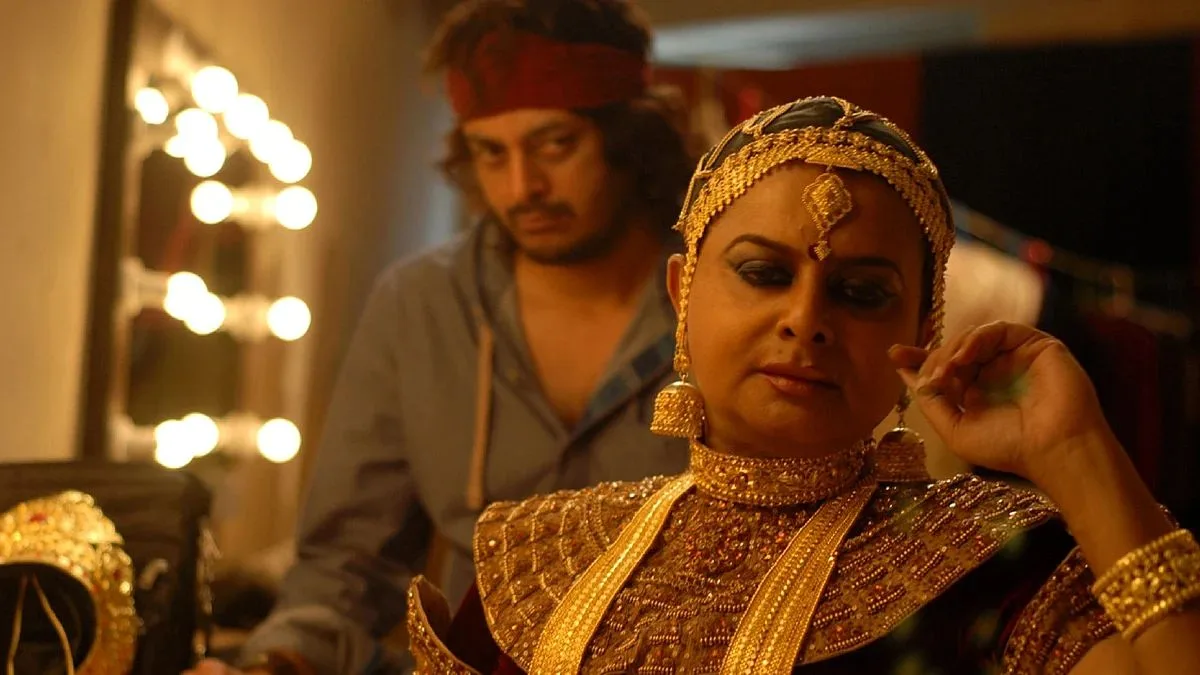
Image Source: Instagram
When it comes to Indian cinema, few names evoke as much admiration from everyone as Rituparno Ghosh.
The acclaimed Bengali filmmaker infused every frame with heart, intellect, sensitivity. Many often refer to him as heir to legendary Satyajit Ray. But Ghosh carved his own identity. He blended literary and cultural heritage of Bengal with modern sensibilities.
Advertisement
He was born and raised in Calcutta. But the connection with the city was more than just residential. It shaped him. It molded his vision. And, it went on to influence themes and characters that came alive through his films.
Advertisement
Let’s take an intimate walk through his cinema and world he created.
Rituparno often said that it wasn’t just Bengal that influenced him. It was Calcutta, the city in all its chaotic, pulsating glory. “Calcutta is critically important to my upbringing as a filmmaker, as a person, as who I am today,” he once remarked.
Unlike other cities, Calcutta was not merely high-brow or intellectual. It was warm, energetic, and incredibly alive. Streets always buzzing, people always reacting, emotions exaggerated, and art in every corner. This is the environment that nurtured Rituparno.
For him, Calcutta was a city that contained Satyajit Ray, Rabindranath Tagore, and yet far more. It was progressive, culturally rich, and surprisingly unaffected by the religious fundamentalist waves sweeping parts of India.
And it wasn’t just the vibe. Calcutta had substance. Ghosh often spoke about the city’s vast intellectual resources: the National Library, Asia’s largest library, the Asiatic Society, and numerous cultural institutions.
For anyone seeking serious intellectual engagement, Calcutta was a treasure trove. But at the same time, it remained approachable. Here anyone could mix with different people without the stiffness or bureaucratic coldness of other metros.
Rituparno’s childhood and adolescence were steeped in leftist culture of Calcutta. By mid- to late-1970s, the city was under left-leaning governance. Young Ghosh was exposed to it firsthand.
Reading Marx in university, attending political discussions, witnessing the city’s debates shaped his worldview. He often said that it was almost fashionable to be leftist, even without fully understanding the nuances. But for him, it was formative.
The cultural life of Calcutta, however, was equally influential. He attended Jadavpur University. Its spaces were known for its rebellious, art-oriented environment. It was here that he first watched films by Ritwik Ghatak and Satyajit Ray, explored theatre, and saw Habib Tanvir’s productions.
“Five years at Jadavpur,” Ghosh said, “shaped my life.” The university was a playground for the mind and soul, where exposure to literature, theatre, and cinema ignited his passion for storytelling.
Ghosh’s fascination with cinema started at home. His father, primarily a painter, dabbled in filmmaking, producing documentaries, including one on a famous sculptor who had been his teacher.
Rituparno, at just 14, accompanied his father on shoots, learning the ropes of filmmaking firsthand from operating a 16mm hand-crank camera to editing at the dining table.
This early exposure demystified the craft. He understood what a rush print was, the layers of sound, sync and non-sync sound, and even foley effects. Unlike his father, who preferred documentaries and unvarnished truth, Ghosh knew early that he wanted to be a storyteller, not just a recorder of reality.
His father’s approach was rigorous and factual. Young Rituparno already had a taste for interpretation, narrative, emotional resonance.
Rituparno’s cinematic journey officially began in Bengali cinema, where he wrote and directed 11 films, with all but one in his mother tongue. Some of his most celebrated works include ‘Unishe April’, ‘Dahan’, ‘Bariwali’, ‘Shubho Mahurat’, ‘Chokher Bali, ‘Raincoat’.
His films consistently glorified womanhood. They portrayed women’s lives, feelings, sufferings with sensitivity.
Ghosh’s earlier films focused on women and social issues. His later works challenged societal taboos. In ‘Arekti Premer Golpo’ (2010) and ‘Memories in March’ (2011), he explored queer relationships. He said in an interview: “Same-sex relationships are extremely soulful, emotional, and have the same pathos that any heterosexual relationship has.”
Even in his exploration of same-sex relationships, Ghosh maintained that storytelling should capture emotional depth, not merely physical desire. His work consistently challenged audiences to rethink norms, empathise with marginalised voices, and appreciate the complexity of human relationships.
Ghosh’s admiration for Rabindranath Tagore was well known. He created three films directly based on Tagore’s works. Notable onces include Chokher Bali (2003), Noukadubi (2010), Chitrangada (2012).
Even when Tagore didn’t appear directly, his influence was felt, such as in Asukh (1999), where Tagore played an invisible yet essential role.
In 2012, Ghosh made a documentary based on Tagore’s autobiography, Jiban Smriti, for the Government of India’s Ministry of Culture. He described Tagore as a lonely traveler, a man of profound thought, humour, and humanity, whom he presented in ways that even audiences unfamiliar with Tagore could appreciate.
Rituparno wasn’t confined to directing. He also acted in films, making his first screen appearance in the Oriya film ‘Katha Deithilli Ma Ku’ (2003). Later he performed in Bengali films like ‘Arekti Premer Golpo’ and ‘Memories in March’. These roles mirrored his own progressive views on identity and love.
In acting, he brought the same emotional intelligence and sensitivity that showed his cinematic vision.
Life, however, was not always smooth for Ghosh. He battled type 2 diabetes for a decade, and pancreatitis for five years, along with insomnia for which he took medication.
Complications arose from hormone treatments after cosmetic procedures like abdominoplasty and breast implants.
Tragically, on 30 May 2013, Rituparno Ghosh suffered a massive heart attack at his Kolkata residence. His attendants, Dileep and Bishnu, found him unconscious, and despite efforts by Nirup Mitra, he was declared dead. Ghosh was just 49 years old.
Legendary Bengali filmmaker Mrinal Sen said that whenever he thought of direction, the name that came to mind was Rituparno Ghosh.
In the chaos of Calcutta streets, in the quiet corners of a woman’s world, in the subtle emotions of forbidden love, Ghosh found his magic. He listened to lives, understood hearts, and let us see ourselves through his eyes.
And somewhere between the rickety trams and yellow taxis of Calcutta streets, Rituparno Ghosh’s stories still whisper.
Advertisement