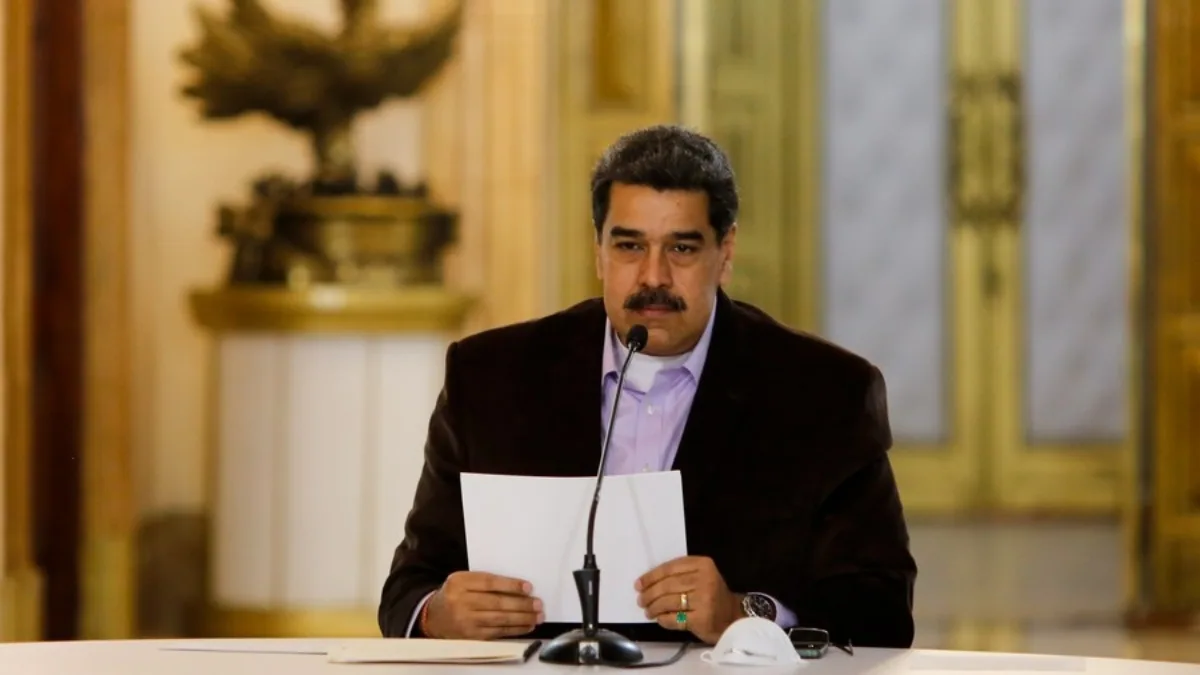
The capture of Venezuelan leader Nicolás Maduro by the United States has forced the international community to confront an uncomfortable reality: the widening gap between power and its justification. Mr Maduro’s removal did not occur in a political vacuum. His claim to democratic legitimacy was already gravely weakened by the disputed 2024 election, while allegations linking senior figures in the Venezuelan state to transnational drug trafficking are longstanding and widely acknowledged. Even critics of Washington’s actions rarely argue that these charges emerged without basis.
The question raised by recent events, therefore, is not whether Mr Maduro was a credible democratic leader, but whether the method used to remove him can be reconciled with the principles that ostensibly govern international conduct. That method matters. The US did not rely on diplomatic isolation, economic pressure, or recognition of an alternative authority. It conducted a direct military operation on foreign soil, seized a sitting head of state, and declared its intention to administer the country until a “safe and proper” transition could be arranged. In doing so, it moved decisively from influence to control. Regime-change operations, overt and covert, are not unprecedented. Powerful states have repeatedly acted beyond the strict confines of international law, particularly when strategic interests were at stake. What distinguishes the Venezuelan episode is not novelty, but its candour.
Advertisement
The intervention was openly claimed, publicly celebrated, and explicitly tied to strategic and economic objectives, including the management of oil infrastructure and reimbursement of costs. This openness sharpens the dilemma rather than resolving it. If legitimacy is conferred through criminal indictments and enforced by superior force, international law risks becoming conditional ~ applied when convenient and suspended when it is not. The argument that Mr Maduro forfeited sovereignty through misconduct may persuade some, but it establishes a principle that cannot be selectively contained. Many governments would reject the idea that their internal failures justify external seizure, however flawed their leadership. For Venezuela, the path ahead remains uncertain.
Removing an entrenched ruler does not automatically restore institutions weakened by years of misrule and economic collapse. An interim authority perceived as externally managed risks lacking domestic credibility, however compromised the previous regime may have been. Stability imposed from outside can prove brittle if not followed by a genuinely inclusive political reconstruction led by Venezuelans themselves. For US President Donald Trump, the operation signals a governing philosophy that privileges decisiveness over restraint. Whether such an approach produces durable order or accelerates global volatility remains an open question. Ultimately, the Venezuelan episode is less about the fate of one leader than about the trajectory of the international system itself.
Mr Maduro’s fall may be defensible on moral or practical grounds. But the manner of his removal ensures that the debate will not end with his arrest. It instead forces a reckoning with how far the world is willing to drift from rules toward results ~ and what that drift will cost when power shifts and today’s justifications are tested against tomorrow’s realities.