Explained: Why JP Nadda has become the Centre’s face to deal with CJP agaitation
Government sources said JP Nadda’s selection reflected both his stature and his reputation as a consensus-builder capable of handling sensitive situations.
Addressing the ‘Jandesh Parab’ programme in Janjgir-Champa, Nadda, recalling the Jhirm Ghati incident, claimed that information about the movement of Congress leaders had been leaked from within the party.




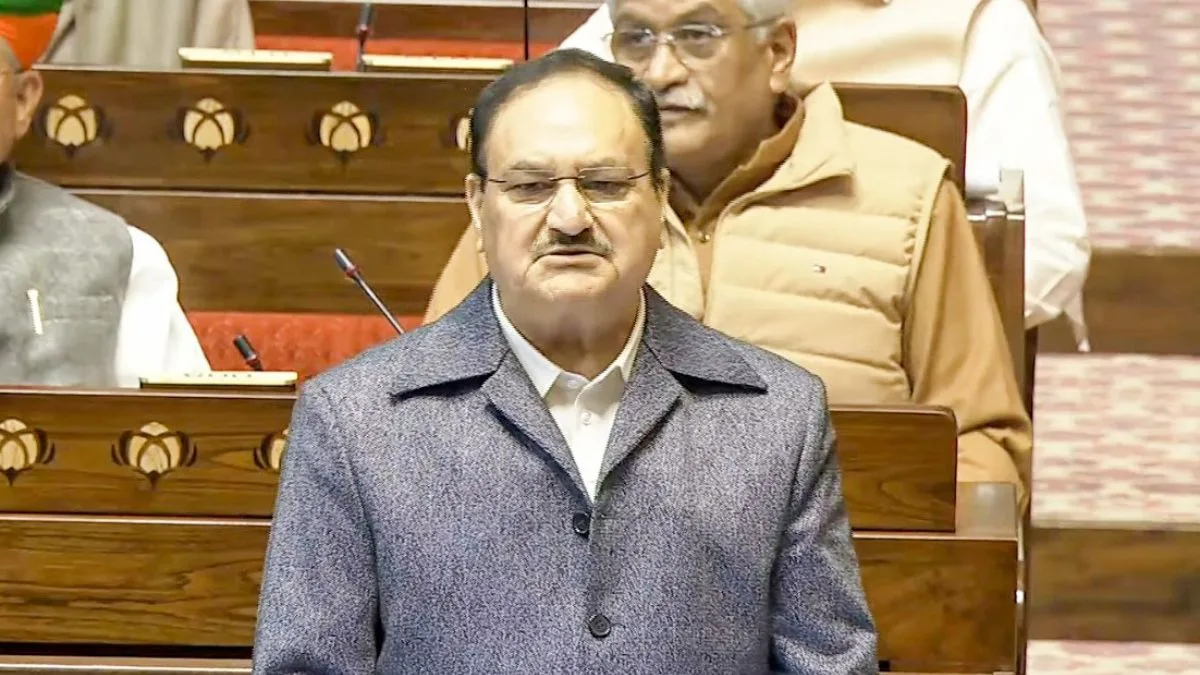
File Photo: IANS
Chhattisgarh’s political landscape witnessed renewed turbulence after Union Health and Family Welfare Minister J P Nadda alleged that Congress leaders were themselves responsible for the deaths of party colleagues in the May 2013 Jhirm Ghati Maoist attack, triggering a sharp rebuttal from the Congress and intensifying partisan tensions in the state.
Addressing the ‘Jandesh Parab’ programme in Janjgir-Champa, Nadda, recalling the Jhirm Ghati incident, claimed that information about the movement of Congress leaders had been leaked from within the party. He alleged that internal collusion had played a role in the Maoist attack and accused the Congress of maintaining a history of proximity with extremist groups.
Advertisement
Nadda further asserted that the present ‘double-engine’ government had launched a decisive campaign against Left Wing Extremism and said Maoist insurgency would be eliminated by March 2026.
Advertisement
The statement evoked an immediate response from Chhattisgarh Congress president Deepak Baij, who described the remarks as factually incorrect and deeply insensitive to the families of those killed. He accused the BJP of politicising a tragic episode in the state’s history and attempting to deflect responsibility. He pointed out that the BJP was in power in the state at the time of the attack and alleged that prior warnings had not been acted upon.
Baij further said that with a large number of Maoists having surrendered in recent months, the government should question them to establish the truth behind the Jhirm Ghati killings. He called for a transparent process and suggested that the proceedings be conducted publicly. He added that if the government is unwilling to pursue this course, the Congress should be allowed to question surrendered cadres to bring clarity to the case.
Senior journalist Rajat Vajpayee told The Statesman that Jhirm Ghati remains one of the most sensitive chapters in Chhattisgarh’s political history. He said revisiting such a tragedy through political discourse requires restraint and responsibility, as public trust depends on facts being established through credible institutional mechanisms rather than public statements. Observers note that how the political leadership navigates this moment may shape the tone of the state’s politics in the period ahead.
Advertisement