In a telling reflection of changing ground realities in Chhattisgarh’s Naxal-affected Sukma district, surrendered Maoist cadres are being guided towards dignified livelihoods through structured skill development, reinforcing the state government’s rehabilitation first approach alongside security measures.
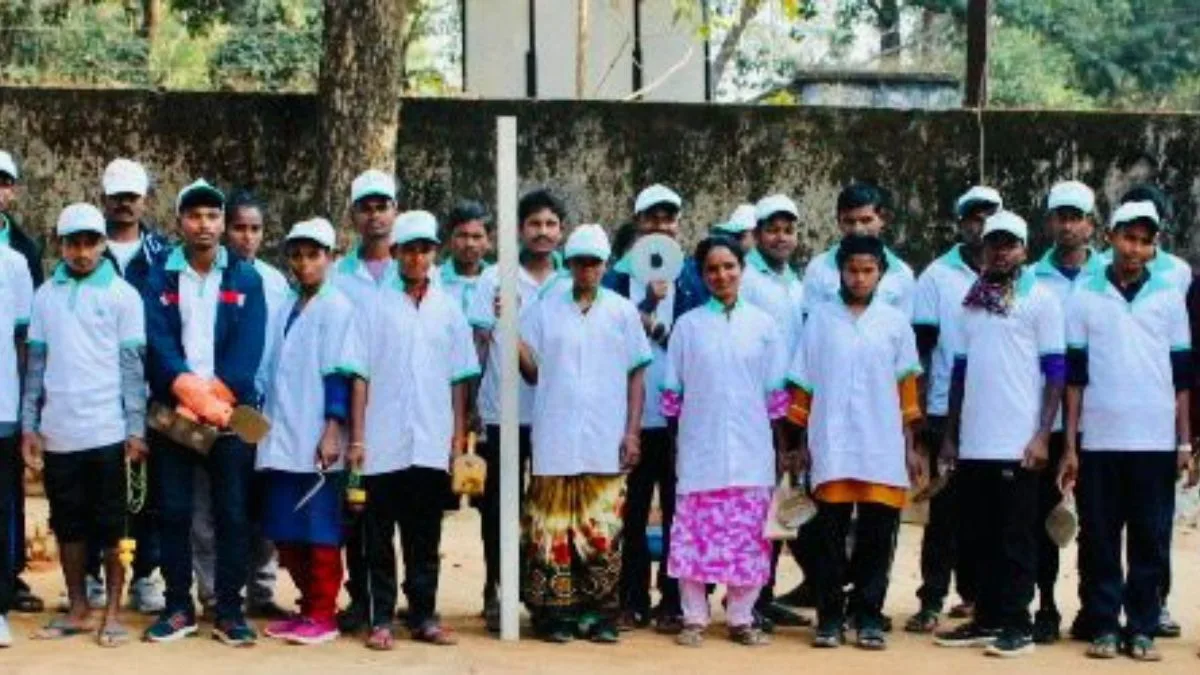
At a rehabilitation centre in Sukma, 35 surrendered Naxalites, comprising 15 women and 20 men, are undergoing vocational training as masons. The initiative, undertaken jointly by the district administration and SBI Rural Self Employment Training Institute (RSETI), aims to equip participants with practical construction skills, including foundation work, brick masonry, plastering, roof casting and adherence to quality standards. Officials said the training follows a systematic, hands-on methodology to ensure professional competence and employability.
Advertisement
District Collector Devesh Dhruv described the programme as a meaningful step towards social transformation. “Surrender is not merely about giving up arms. It is about becoming self-reliant and returning to the social mainstream with dignity,” he said, adding that the administration remains committed to providing skills, employment opportunities and essential facilities to rehabilitated youth.
The trained participants are expected to contribute to the construction of incomplete and new houses under the Pradhan Mantri Awas Yojana (Gramin) in Sukma district, addressing both livelihood needs and the shortage of skilled masons in remote areas. District Panchayat Chief Executive Officer Mukund Thakur said skilled human resources were crucial for effective implementation of development schemes, and the initiative linked employment with social responsibility.
Several rehabilitated individuals spoke of personal transformation. Podiyam Bhima, who was associated with the organisation for nearly three decades, said training and basic facilities at the centre had enabled him to rebuild his life with dignity. Muchaki Ranvati, who spent over two decades with the organisation, said rehabilitation had reunited her with her family and allowed her to benefit from government schemes. Ganga Vetti highlighted administrative support in facilitating identity documents, welfare cards and livelihood tools.
Chief Minister Vishnu Deo Sai said the state government remains firmly committed to establishing lasting peace in Naxal-affected regions through dialogue, sensitivity and development. He emphasised that rehabilitation, livelihood and dignity form the core of Chhattisgarh’s policy for those who abandon violence, asserting that such efforts lay the strongest foundation for sustainable peace in Bastar.