Punjab govt rolls out VB-G RAM G to strengthen rural employment guarantee
The Minister said that while MGNREGA remained operational till June 30, 2026, the VB G RAM G scheme came into effect from July 1.
The VB-G RAM G Bill, 2025 fundamental reforms include increased guaranteed work to 125 days per year, revised Centre-State funding, normative allocation of funds, mandated non-working agricultural periods, and decentralized planning through Gram Panchayats, aiming to modernize and align rural employment with Viksit Bharat 2047.




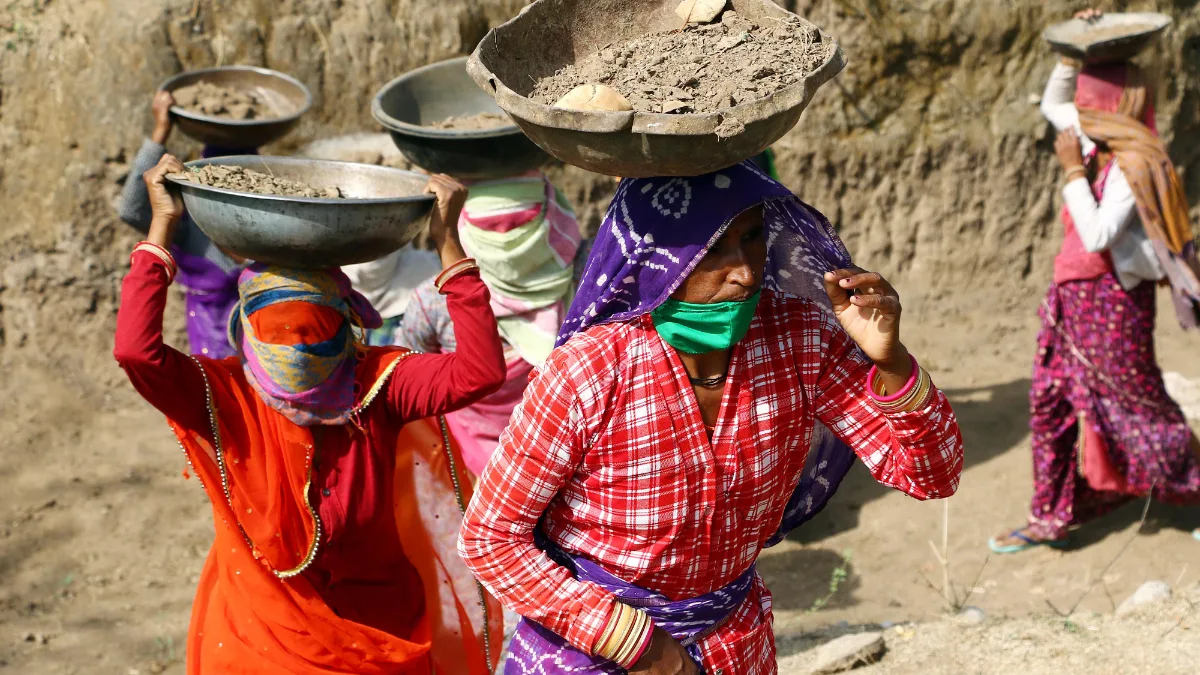
Rural employment (photo: ANI)
The Viksit Bharat–Guarantee for Rozgar and Ajeevika Mission (Gramin) – VB-G RAM G Bill, 2025, was passed by both the Houses of Parliament on Thursday, December 18, 2025 amidst Opposition uproar. Once accorded assent by the President, the bill will replace the two-decade-long Mahatma Gandhi National Rural Employment Guarantee Act (MGNREGA), 2005, with fundamental reforms required for the evolving socio-economic needs of rural employment.
As against MGNREGA, the new bill proposes the following key changes:
Advertisement
The minimum number of days of guaranteed work will now be 125 days per year per rural household, which was earlier “not less than 100 days” under MGNREGA.
Advertisement
While MGNREGA was funded 90 per cent by the Centre, under the proposed VB-G RAM G Bill, the bifurcation of fund disbursement will be as follows:
60 days each year must be declared by the States as peak agricultural seasons during which no work falling under the VB-G RAM G Bill will be carried out so as to avoid competing with agricultural labour requirements. No such explicit legislative ‘pause’ was mentioned under MGNREGA.
Gram Panchayats will propose works such as water-related works, supporting agriculture and groundwater recharge, which will then be consolidated into the Viksit Bharat National Rural Infrastructure Stack, which will further be integrated with the PM Gati Shakti Master Plan to strengthen decentralized planning and efficient implementation. Prior to this, under MGNREGA, the Gram Panchayat’s planning was centrally done.
Overall, the VB-G RAM G Bill seeks to bridge gaps and address issues in the previous ongoing MGNREGA, 2005 thereby aligning the scheme with the central vision of Viksit Bharat 2047.
Advertisement